Tirta Empul Temple
Nestled in the lush greenery of Tampaksiring in Gianyar Regency, Bali, Pura Tirta Empul is a magnificent expression of the island’s spiritual life, built around a natural spring whose waters are believed to hold sacred and purifying power. Visiting Tirta Empul is far more than sightseeing; it offers a living link to Balinese Hindu tradition, myth, ritual and architecture — a place where culture and nature meet. If you’re planning a tour of Bali that mixes culture, serenity and a touch of the extraordinary, this is one of those destinations you should build into your day.
In this detailed article, we’ll go through every aspect you and your tour guests might want to know: history, myths, architecture, the purification ritual (Melukat), visitor information (how to get there, opening hours, fees, dress code), practical tips, things to do nearby, and how to include it in a tour itinerary. This is tailored for a tour-website page, to help your guests understand why this place matters and how to experience it with respect and depth.
1. Historical Background & Mythology
Origins and foundation
Pura Tirta Empul was founded around the year 962 AD during the reign of the Warmadewa dynasty on Bali. The temple was built around a natural spring that issues clear water from the ground, hence the name Tirta Empul, which translates roughly as “holy water spring” or “water (tirta) that wells (empul) up from the land”.
Archaeological records preserved in the nearby Manukaya village (where the temple is located) show an inscription referencing the temple and the king of that era, confirming its long-standing place in local heritage.
Myth and meaning
According to Balinese Hindu myth, a powerful figure — the god Indra (Bhatara Indra) — created the spring at Tirta Empul to overcome the poison posed by the evil king Mayadenawa, who had contaminated the waters and threatened the spiritual and physical wellbeing of the realm. The pure spring water is thus considered to have healing, cleansing and sacred attributes.
Cultural significance
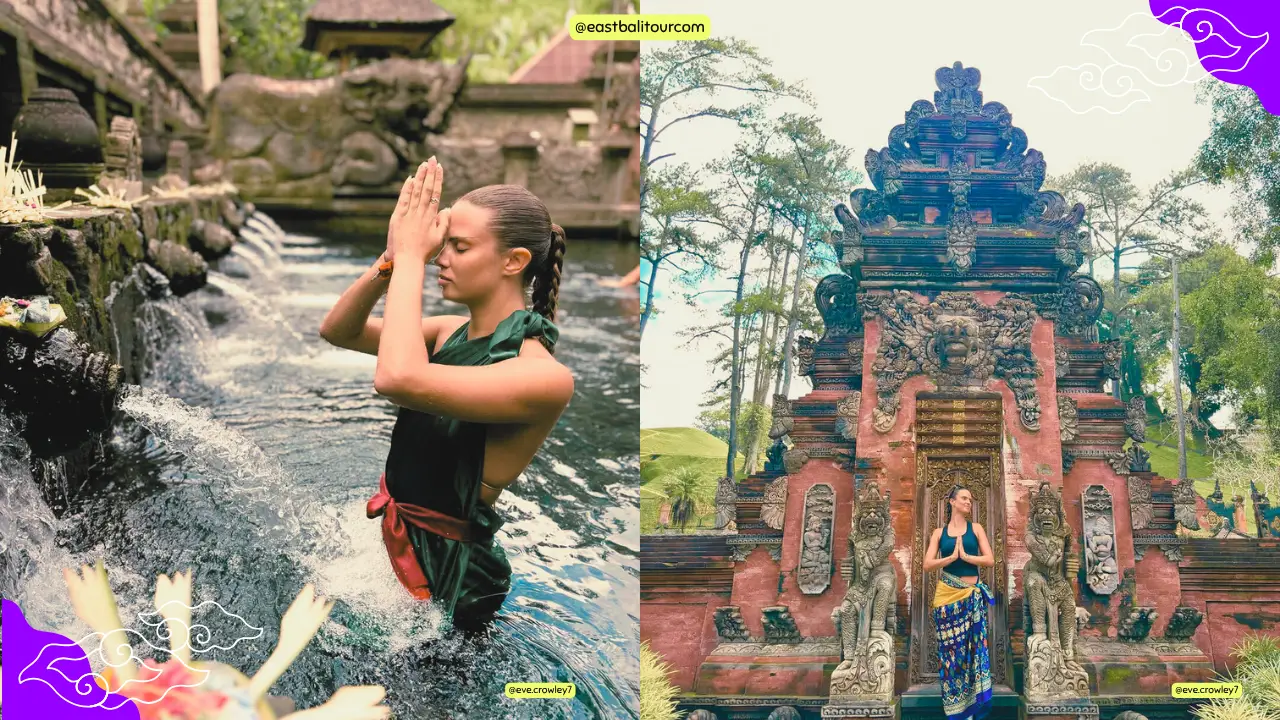
The temple is one of the most significant petirtaan (water temples) in Bali. Its waters continue to be used for melukat(purification) rituals by Balinese Hindus, drawing devotees and curious visitors alike. Because of its age, continued use, mythic associations and architectural richness, Tirta Empul holds both spiritual and heritage value.
2. Architecture and Layout
Overall layout
Tirta Empul is laid out in three main zonal areas typical of Balinese temple design:
Jaba Pura – the outer courtyard or front zone, where visitors first arrive and often can prepare themselves (e.g., don sarong).
Jaba Tengah – the middle zone, which houses the bathing pools and purification fountains. This is the busiest area when rituals are taking place.
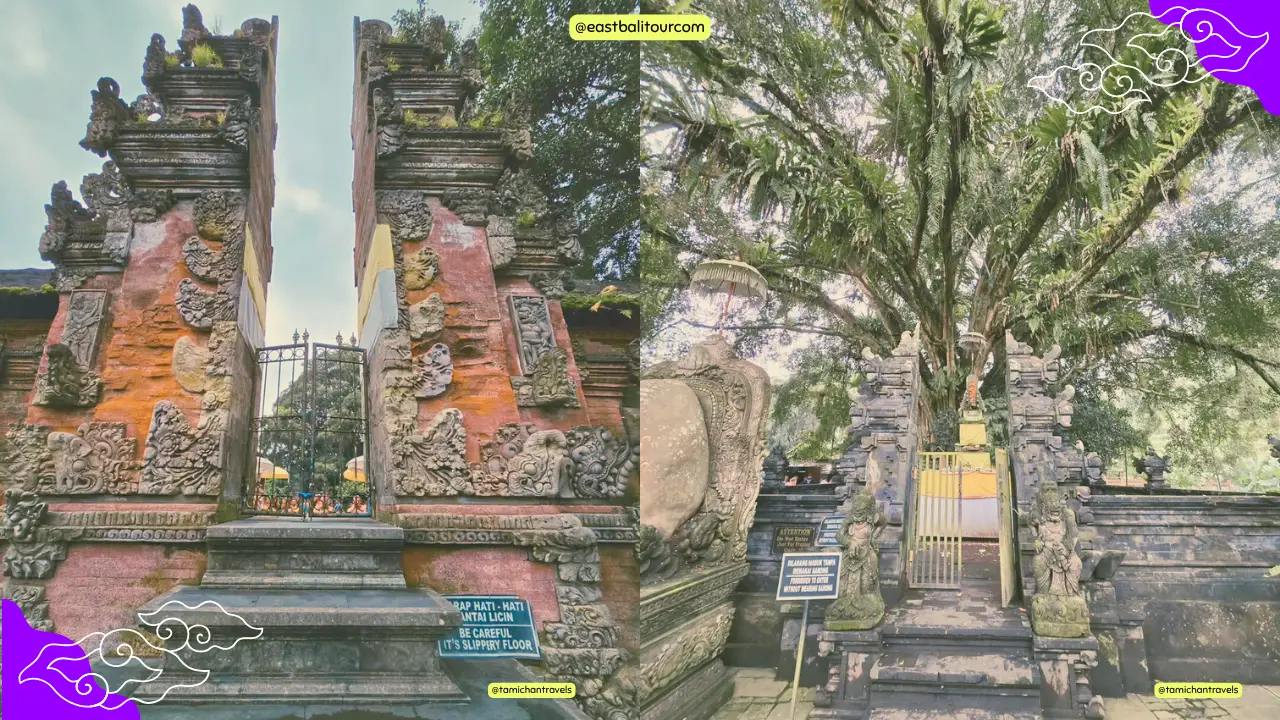
Jeroan – the inner sanctum, where shrines, temples and more secluded worship zones are located. This area is more sacred and quieter.
The spring and purification pools
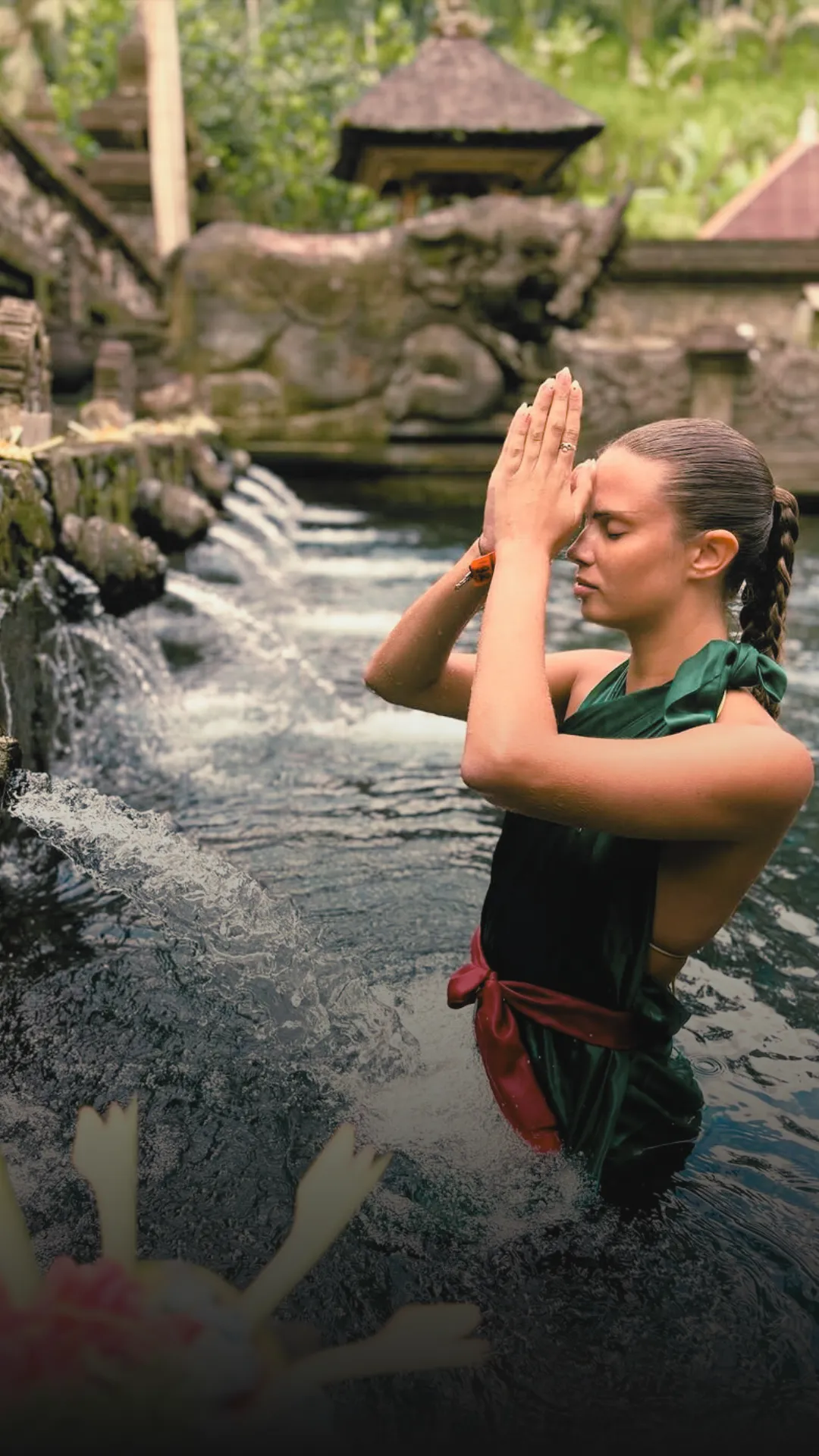
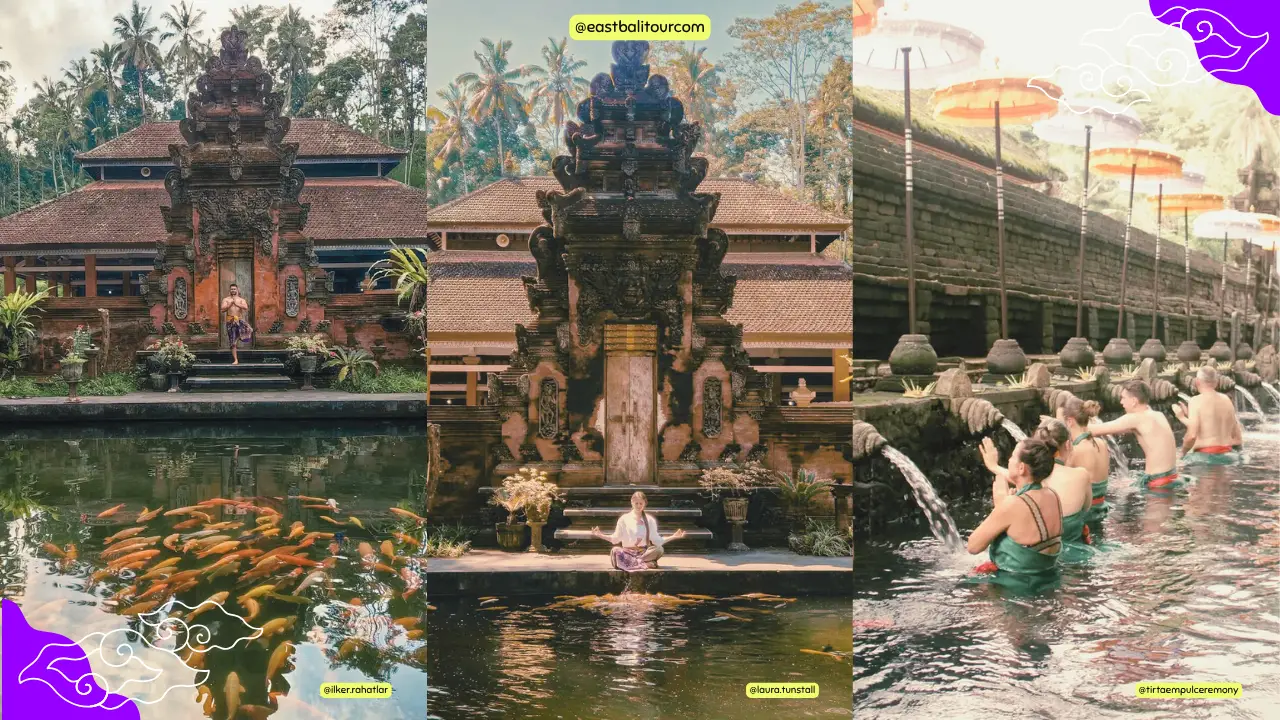
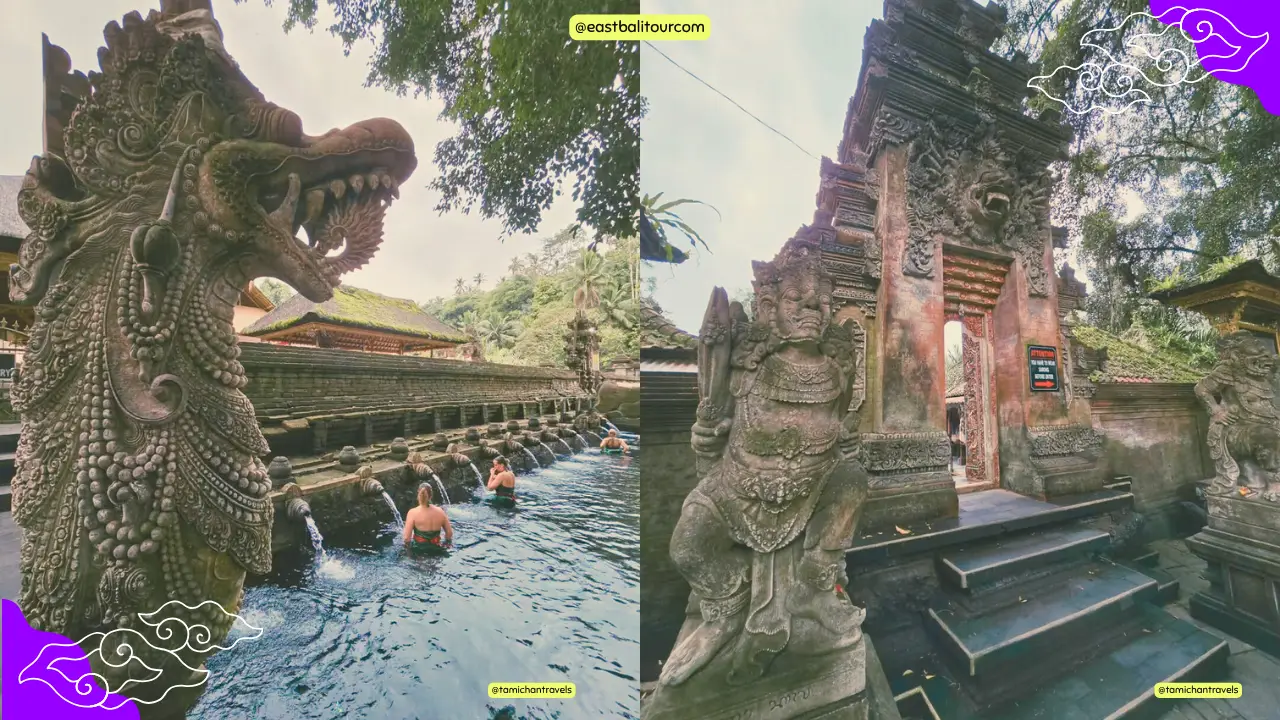
At the heart of the temple complex is the spring that feeds two substantial rectangular pools. From this spring flow 30 water spouts (showers) into the pools, each used for the ritual of cleansing. Visitors and devotees line up under the spouts, moving from one to the next in sequence. According to tradition, some of the spouts have special names and functions — for example, Mengelukatan (cleansing), Pebersihan (purification), Sudamala, and Pancuran Cetik (associated with poison) among them.
Other architectural and natural features
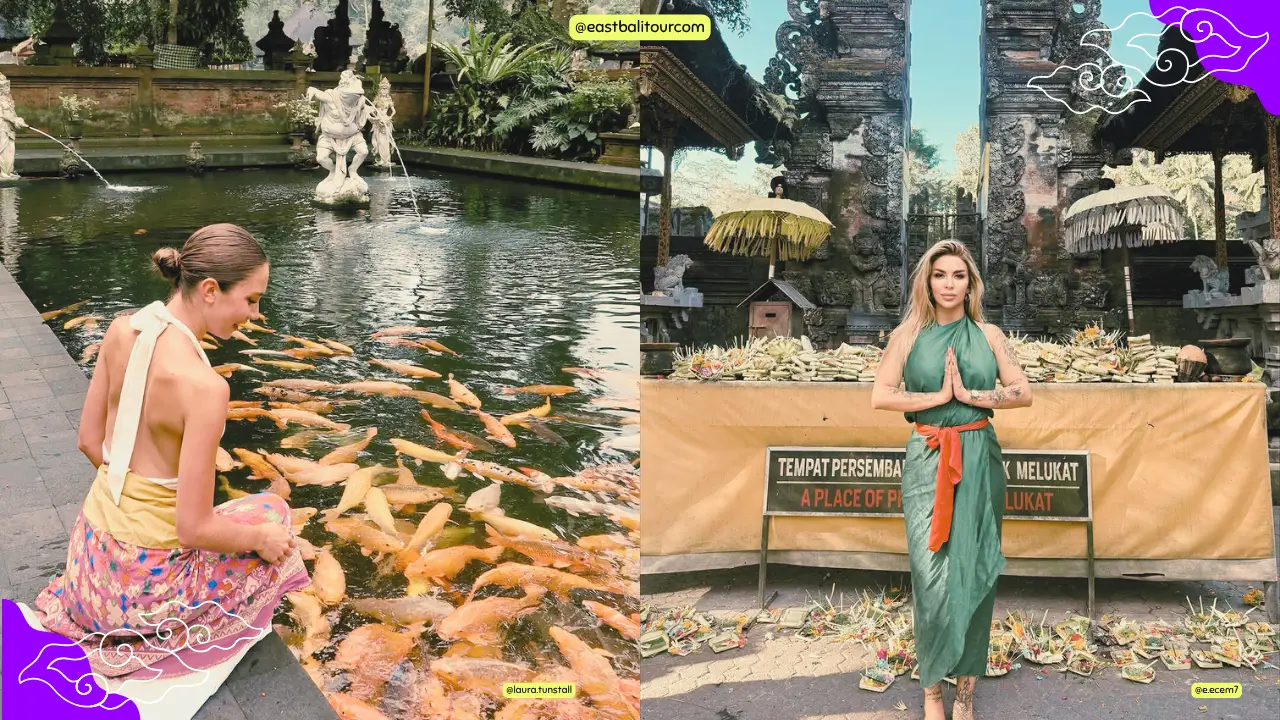
Beyond the main pools you’ll find striking Balinese carvings, ornate shrines, Lingga-Yoni statues (symbolic of fertility and life force), naga (serpent) motifs, and lotus ponds with koi fish. The setting is often lush, shaded by tropical vegetation, lending a serene and meditative atmosphere.
3. The Purification Ritual (Melukat)
One of the standout experiences at Tirta Empul is the opportunity to participate in (or at least observe) the purification ceremony known as melukat. Here’s what you need to know:
Meaning and spiritual value
The melukat ritual is about cleansing the body, mind and spirit: removing negative energies, renewing one’s spiritual state, and reconnecting with the sacred elements of water and nature. Although rooted in Balinese Hindu belief, many visitors of different faiths participate respectfully.
How it works
Visitors (and devotees) don a sarong (and sometimes sash) before entering the purification zone.
They enter the pool and begin at the left-most spout, proceed one by one under each of the 30 showers, moving through the sequence. Each spout corresponds to a certain blessing or cleansing point.
There are two spouts designated for cleansing the dead — these are not for use by living participants.
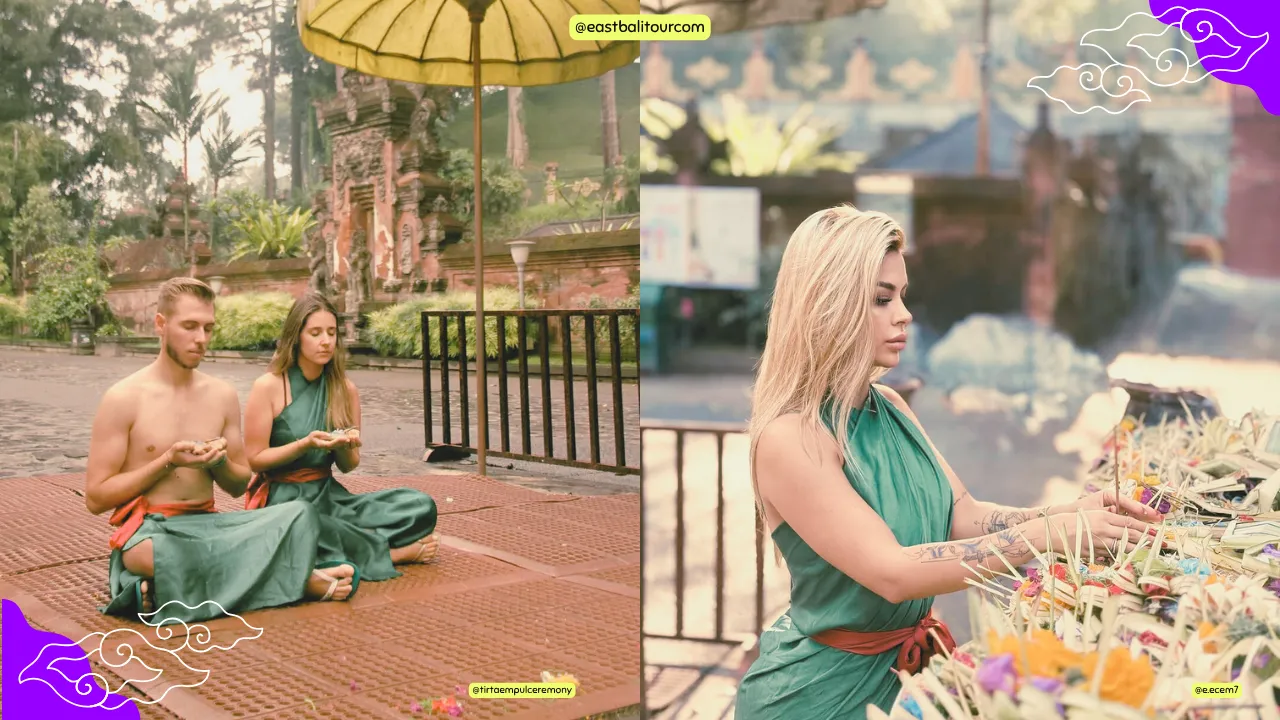
After the showers, visitors may proceed to the inner sanctum to offer prayers and incense.
Visitor participation & etiquette
Participation is optional: Even if you only wish to walk around the temple grounds and not do the ritual, that is perfectly fine.
You must wear the provided sarong and adhere to modest dress.
Enter with respect: the pools are part of religious practice; behave accordingly — quiet, serious, not disruptive.
Note that some traditions restrict entry to those who are menstruating (for certain inner zones or ritual participation) — it is important to be aware and respectful.
Time required
If you plan to do the ritual and enjoy the surrounding grounds, plan for about 1 to 2 hours. If you simply wish to see the temple and its pools, you might spend 30–45 minutes. Peak times or big groups may extend the queue.
4. Visitor Information & Practical Details
When organising a tour or guiding guests, you want to ensure all practicalities are taken care of. Here’s a breakdown.
Location & access
The temple is in Br. Manukaya, Desa Tampaksiring, Kecamatan Tampaksiring, Kabupaten Gianyar, Bali.
From Ubud it’s about 20–30 km (depending on traffic) and can be accessed by private vehicle, tour car or driver. Shared transport is possible but less convenient.
Because roads in Bali can be slow due to traffic, it’s wise for tour itineraries to allocate flexible timing.
Opening hours
As of recent reports, the temple is open daily from about 8:00 AM to 6:00 PM for visitors. Local devotees may have access outside these hours.
Note that special ceremonies or temple-only events may change access – always check ahead.
Entrance fee & additional costs
For international visitors, the entrance fee is around IDR 75,000; for children IDR 50,000 (may vary).
Domestic visitors or children may have a lower rate (e.g., IDR 50,000 adult).
A sarong is required (often included in ticket or available to rent) – budget around IDR 10,000–15,000 if you don’t bring your own.
If you intend to use lockers or participate in more elaborate ceremony packages, there may be extra fees.
Dress code and behaviour
Visitors must wear appropriate temple attire: shoulders covered, sarong tied, and sash if required.
Swimwear or shorts without sarong is not acceptable in sacred areas. One full-time visitor remark:
Respect quiet zones, especially around the pools and inner sanctum. No loud music or large groups blocking queues.
Best time to visit
Arrive early (8:00–9:00 AM) to avoid crowds. Many visitors note that by mid-morning the temple becomes crowded with tour groups. > “I went at 8 am and there were only two other tourists there… I spent about 45-60 minutes there”
Avoid peak arrival times if you want a more peaceful experience.
Combine the visit with nearby attractions in the area for maximum value.
Facilities
Parking available (for cars/scooters) though roads can be narrow near the temple entrance.
Lockers, changing rooms for the ritual, sarong rental, sometimes an ATM (although reliability may vary) – advisable to carry cash, as card payment may not always work.
Souvenir stalls and refreshments nearby; note that some visitors report aggressive vendor behaviours at exits.
5. Unique Highlights
The purity of the spring water and its mythic origin story: the poison of Mayadenawa vs the healing spring created by Indra.
The 30 purification fountains — an impressive visual spectacle as people line up under the water spouts.
The tranquil inner sanctum behind the main pools: here you find quieter worship spaces and richly carved architecture.
The natural setting — tropical vegetation, lotus ponds, koi fish — which enhances the sense of sacredness and serenity.
Authentic Balinese ceremony: Though a popular tourist destination, Tirta Empul continues to serve a living community of worshippers. For many visitors this blending of tourism and tradition is deeply appealing.
Accessibility: It’s located just outside Ubud, making it an excellent inclusion in Ubud-day tours or cultural rounds.
6. Nearby Attractions & Add-Ons
To make a full rich tour day around Tirta Empul, consider these nearby sites:
Tegallalang Rice Terraces – lush rice terrace views, great for photo stops.
Gunung Kawi Temple – ancient rock-cut temple nearby, for a more off-beat experience.
Coffee plantation tours in the Tampaksiring area – combine culture and local production.
The presidential palace of Tampaksiring – you can stop by for a quick view of the architecture and landscaping.
If time allows, extend to the north for waterfalls or jungle walks for contrast to the temple’s calm.
7. Why Tirta Empul Temple Should Be on Your Bali Itinerary
1. Sacred Water Rituals
At the heart of Tirta Empul lies its famous holy spring, where visitors can participate in the melukat purification ceremony. This ancient ritual, practiced by Balinese Hindus for over a thousand years, involves cleansing the body, mind, and spirit under 30 sacred water spouts. Each spout represents a specific blessing or purification point, offering a deeply spiritual and immersive experience. Even for travelers who don’t participate, witnessing the ceremony provides a unique insight into Bali’s living traditions.
2. Historic Heritage
Tirta Empul is over 1,000 years old, founded in 962 AD during the Warmadewa dynasty. The temple’s rich history is embedded in its inscriptions, legends, and enduring cultural practices. Exploring Tirta Empul allows visitors to step back in time and connect with Bali’s historical and spiritual roots, understanding how Hindu traditions have shaped the island’s identity and daily life for centuries.
3. Stunning Architecture
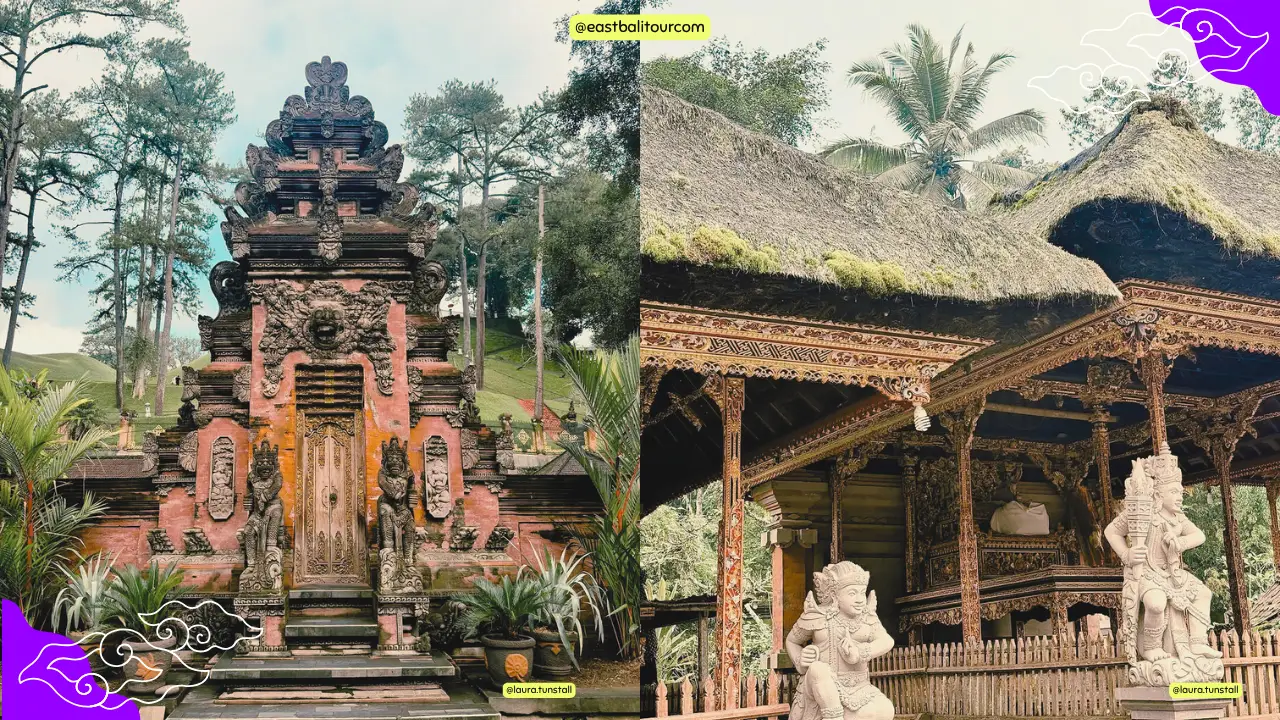
The temple complex showcases classic Balinese architecture, featuring intricately carved stone shrines, Lingga-Yoni statues symbolizing fertility, and naga (serpent) motifs. Two rectangular purification pools, lotus ponds, and serene walkways surrounded by ornate walls create a visually striking and harmonious space. Every corner of Tirta Empul reflects meticulous craftsmanship and spiritual symbolism, making it a feast for architecture lovers and photographers alike.
4. Serene Nature
Tirta Empul is surrounded by lush tropical vegetation, creating a peaceful and meditative environment. Koi ponds, lotus flowers, and shaded garden areas provide a calming backdrop to the spiritual activities. Visitors often describe a sense of tranquility as they explore the grounds, making it an ideal escape from the busy tourist areas and a place to reconnect with nature and inner peace.
5. Cultural Experience
Visiting Tirta Empul offers more than sightseeing — it’s a deep dive into Balinese Hindu culture. Guests can observe local worshippers, participate in rituals with respect, and learn about myths, legends, and the spiritual significance of water in Balinese life. The combination of tradition, ceremony, and daily religious practice provides travelers with an authentic cultural experience, helping them understand the island’s spiritual heritage beyond the guidebook.
8. Conclusion – The Essence of Tirta Empul Temple
Tirta Empul Temple is more than just a sightseeing spot — it’s a journey into the heart of Bali’s spiritual and cultural soul. The sacred waters, flowing for over a thousand years, invite visitors to cleanse the body and mind through the ancient melukat purification ritual. Surrounded by lush landscapes and centuries-old shrines, the temple offers a serene escape from the modern world while connecting travelers with the island’s deep spiritual traditions.
Whether you come for the history, architecture, or the peaceful atmosphere, Tirta Empul Temple leaves a lasting impression that embodies the true essence of Bali — harmony, devotion, and renewal.
Visiting this temple is not only a highlight of any Bali trip but also a reminder of the island’s timeless beauty and living culture.
✨ Join one of our Bali cultural tours and experience the sacred waters of Tirta Empul Temple — a place where faith, nature, and history meet in perfect harmony.