Ubud Sacred Monkey Forest Sanctuary
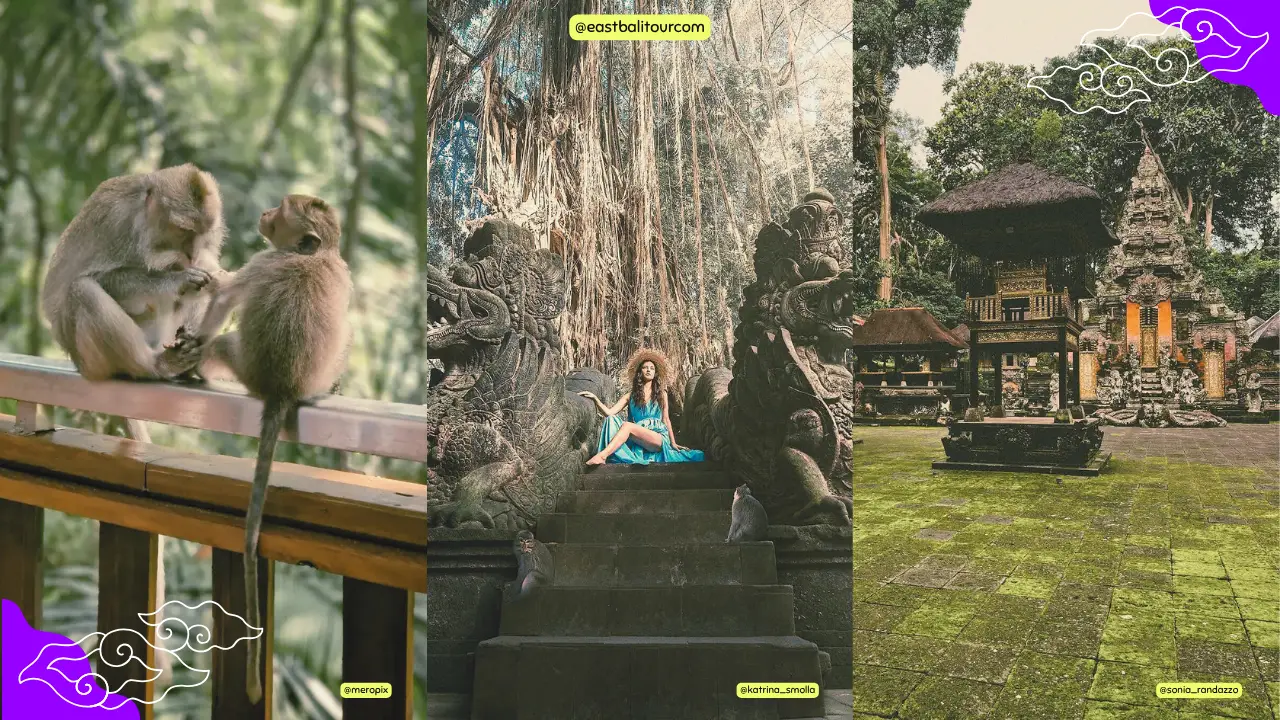
Hidden in the heart of Ubud, the Sacred Monkey Forest Sanctuary — locally known as Mandala Suci Wenara Wana — is one of Bali’s most enchanting natural and cultural attractions. This lush, centuries-old forest isn’t just home to hundreds of playful long-tailed macaques — it’s also a sacred spiritual site, dotted with ancient temples, moss-covered statues, and towering banyan trees.
Visiting the Monkey Forest is an experience that blends nature, spirituality, and culture. You’ll find yourself surrounded by tropical jungle sounds, wandering beneath the shade of ancient canopies, and coming face-to-face with Bali’s mischievous yet fascinating primate inhabitants. It’s a living sanctuary — not only for wildlife, but also for the spirit of Ubud itself.
If you’re planning a Bali cultural or nature tour, the Ubud Monkey Forest is one of those must-visit places that combines fun, learning, and deep cultural meaning.
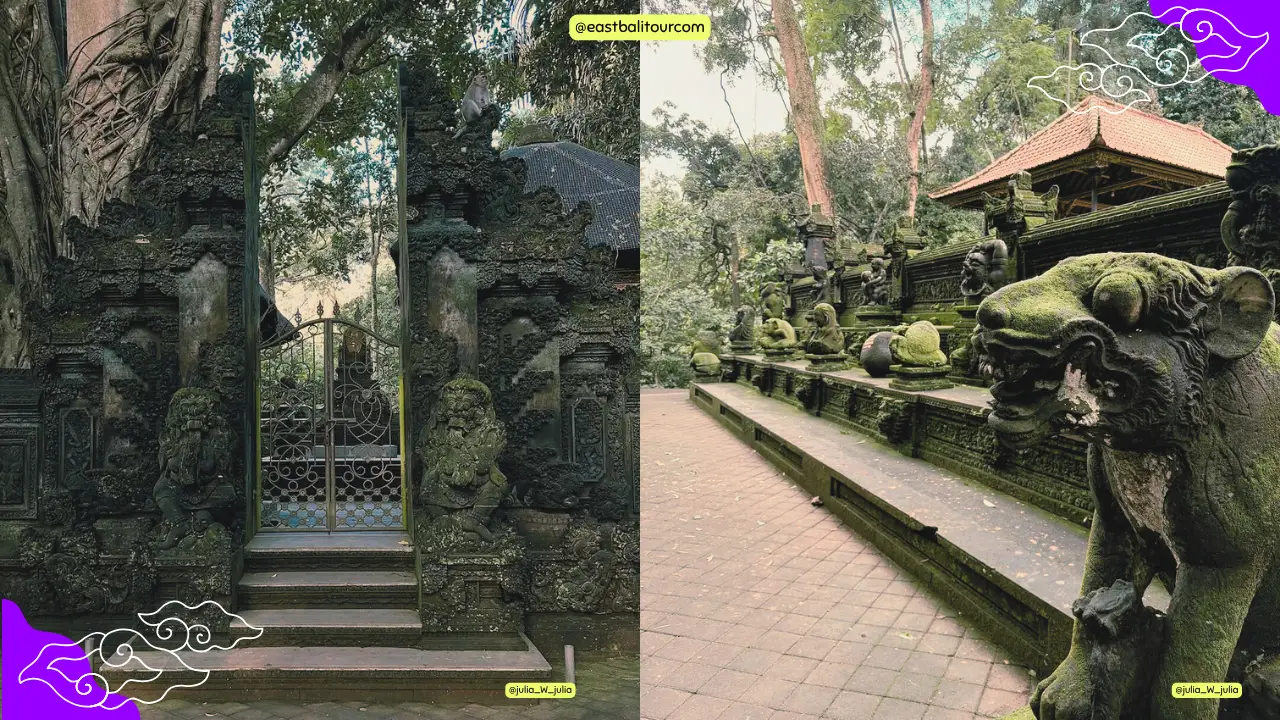
1. Historical & Cultural Significance
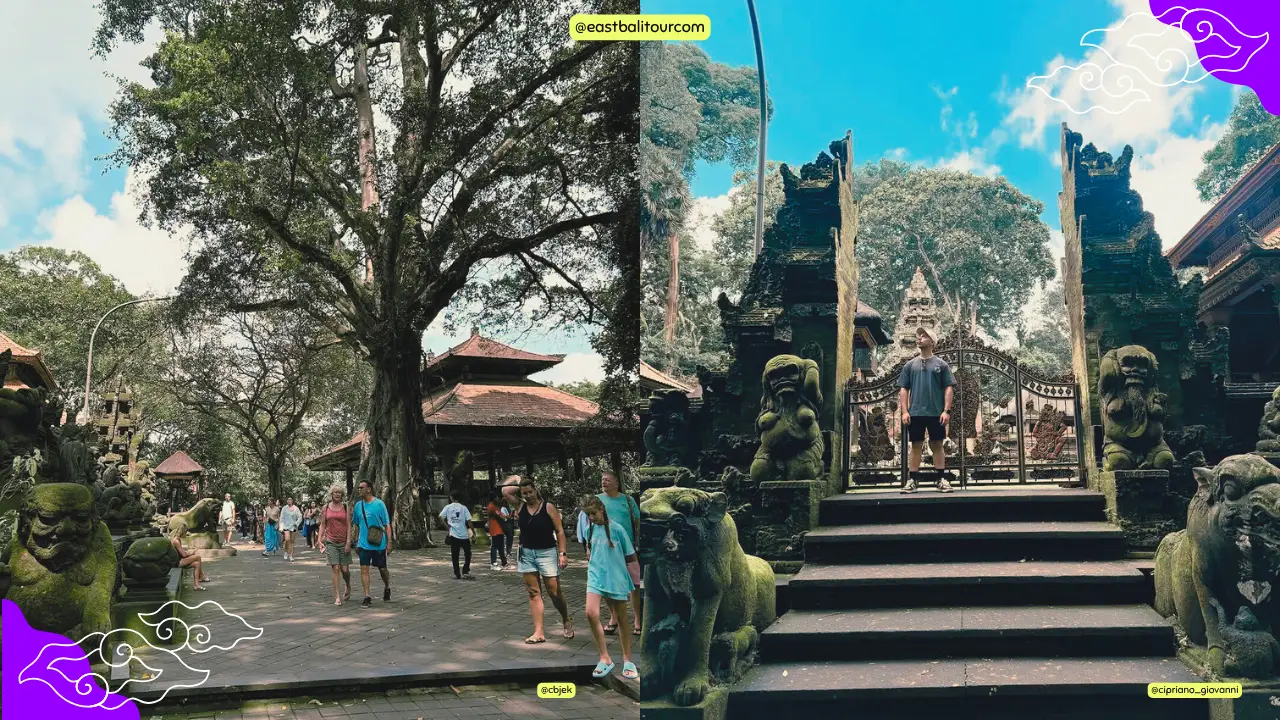
The Sacred Monkey Forest Sanctuary is not merely a tourist spot — it’s a deeply spiritual and ecological site managed by the Padangtegal Village community. The forest represents the harmonious relationship between humans, nature, and the spiritual world, known in Balinese philosophy as Tri Hita Karana.
Origins and Meaning
The sanctuary’s origins trace back to the 14th century, during the Pejeng dynasty. Its temples and shrines were built as places of worship and reflection, hidden among the towering trees. The Balinese believe that the forest serves as a protective spiritual buffer, keeping negative forces away from the village.
The name Mandala Suci Wenara Wana translates to “The Sacred Sanctuary of Monkeys in the Forest.” Each temple within the sanctuary plays a specific role in the village’s spiritual and ceremonial life.
Spiritual Symbolism
The presence of the monkeys symbolizes guardianship — in Balinese Hindu belief, animals often represent divine protectors. The forest is viewed as a living temple, where every tree, stone, and creature contributes to maintaining balance between the physical and spiritual realms.
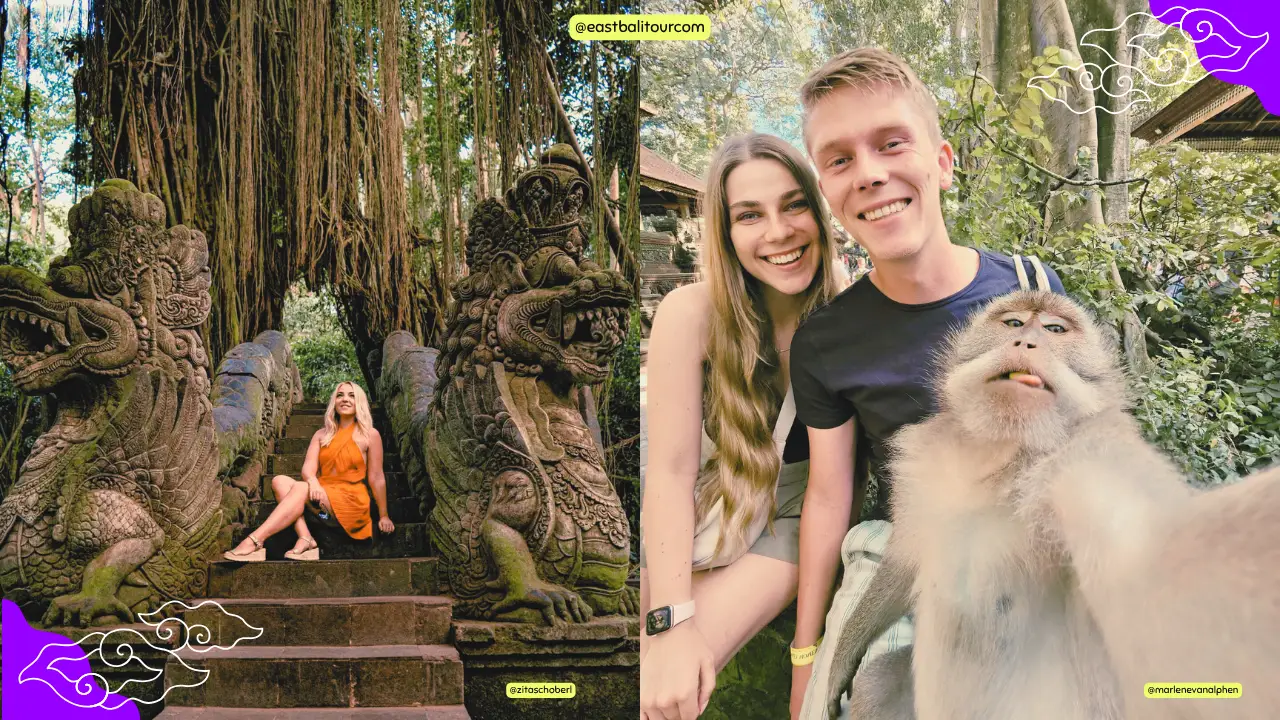
2. The Forest & Its Temples
Covering about 12.5 hectares, the Monkey Forest is a vibrant ecosystem filled with lush flora, winding paths, and serene streams. Within the forest, you’ll discover three ancient temples, each carrying its own sacred function.
🛕 Pura Dalem Agung Padangtegal (Main Temple)
Dedicated to the god Shiva, this temple is the spiritual heart of the sanctuary. It represents death and reincarnation — one of the key aspects of Balinese Hindu cosmology. The temple’s intricate carvings, mossy statues, and guardian demons create an atmosphere both mystical and awe-inspiring.
🌿 Pura Beji (Holy Bathing Temple)
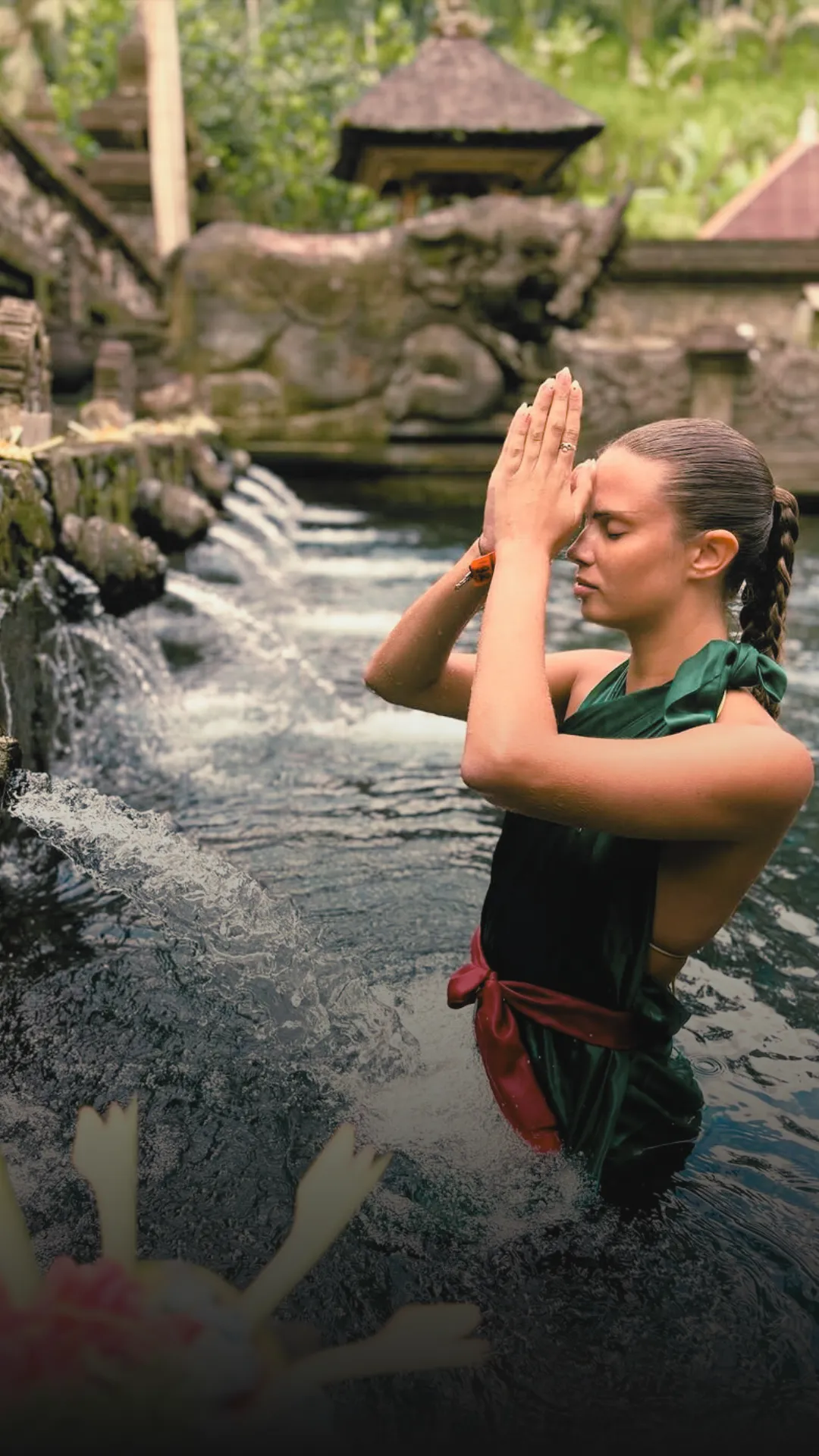
Located near a small stream, Pura Beji is dedicated to the goddess Gangga, the goddess of purification. Balinese people once used this area for spiritual cleansing before ceremonies. The temple’s tranquil setting, surrounded by water and foliage, makes it a peaceful spot for reflection and photography.
🌸 Pura Prajapati (Cremation Temple)
This temple is associated with the cycle of life and death and is connected to the village’s cemetery. Rituals for the deceased are performed here before cremation ceremonies, emphasizing the Balinese concept of the soul’s eternal journey.
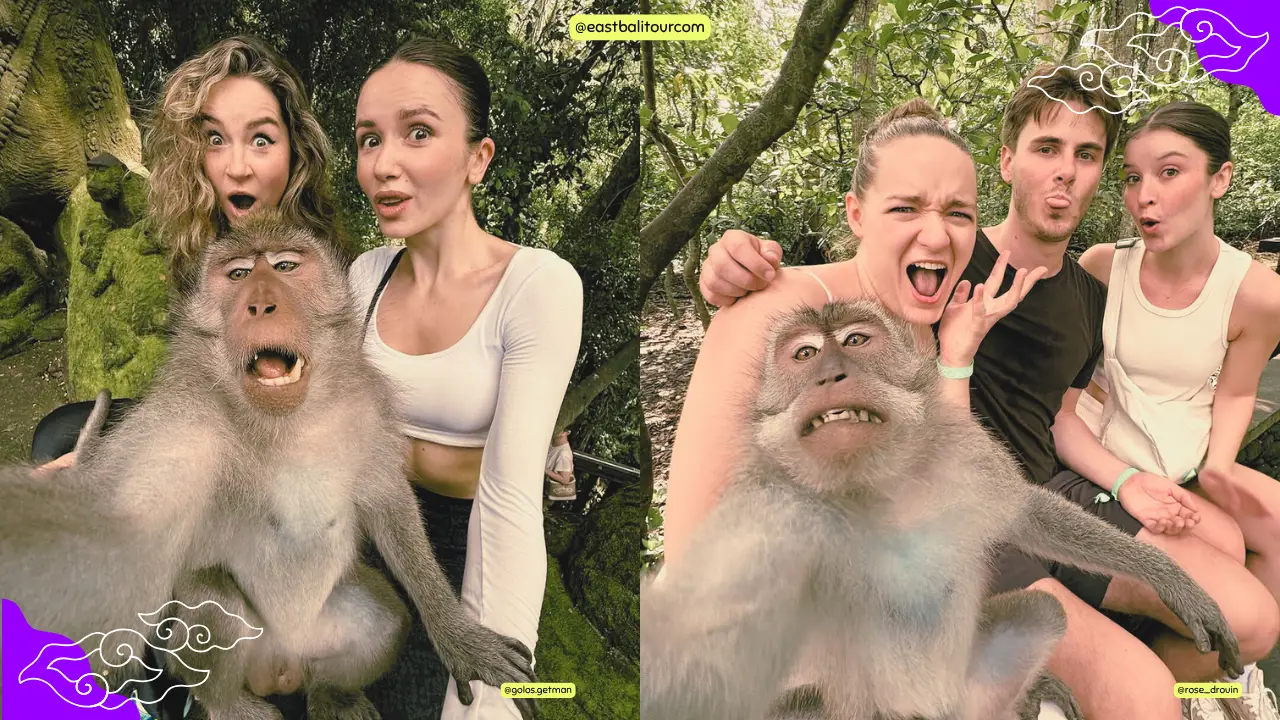
3. The Monkeys – Residents of the Forest
The sanctuary is home to over 1,200 Balinese long-tailed macaques (Macaca fascicularis), divided into several groups that inhabit different territories within the forest.
These monkeys are known for their playful and intelligent nature. Visitors can observe them grooming each other, leaping through trees, and occasionally interacting with tourists — often in humorous ways.
Behavior & Ecology
The macaques have a strong social hierarchy led by dominant males, and watching their interactions can feel like observing a mini jungle society. They feed primarily on fruits, leaves, and the food offerings brought by temple caretakers.
While they’re entertaining and photogenic, it’s important to remember that they are wild animals — curious, clever, and sometimes mischievous.
4. Visitor Information & Practical Details
When organising a tour or guiding guests, you want to ensure all practicalities are taken care of. Here’s a breakdown.
Location & access
The temple is in Br. Manukaya, Desa Tampaksiring, Kecamatan Tampaksiring, Kabupaten Gianyar, Bali.
From Ubud it’s about 20–30 km (depending on traffic) and can be accessed by private vehicle, tour car or driver. Shared transport is possible but less convenient.
Because roads in Bali can be slow due to traffic, it’s wise for tour itineraries to allocate flexible timing.
Opening hours
As of recent reports, the temple is open daily from about 8:00 AM to 6:00 PM for visitors. Local devotees may have access outside these hours.
Note that special ceremonies or temple-only events may change access – always check ahead.
Entrance fee & additional costs
For International Visitors
🧒 Child (Weekday): Rp80,000
🧒 Child (Weekend): Rp100,000
👨🦰 Adult (Weekday): Rp100,000
👨🦰 Adult (Weekend): Rp120,000
For Domestic Visitors
Typically lower rates apply — around Rp50,000 (adult) and Rp30,000 (child) depending on the season.
Additional Notes:
A sarong is not required for general entry, but if visiting sacred temple areas within the forest, modest dress is advised.
Locker rentals and ceremonial participation (if offered) may have small additional fees (Rp10,000–15,000).
Ticket prices may vary slightly based on public holidays or special events.
Dress code and behaviour
Visitors must wear appropriate temple attire: shoulders covered, sarong tied, and sash if required.
Swimwear or shorts without sarong is not acceptable in sacred areas. One full-time visitor remark:
Respect quiet zones, especially around the pools and inner sanctum. No loud music or large groups blocking queues.
Best time to visit
Arrive early (8:00–9:00 AM) to avoid crowds. Many visitors note that by mid-morning the temple becomes crowded with tour groups. > “I went at 8 am and there were only two other tourists there… I spent about 45-60 minutes there”
Avoid peak arrival times if you want a more peaceful experience.
Combine the visit with nearby attractions in the area for maximum value.
Facilities
Parking available (for cars/scooters) though roads can be narrow near the temple entrance.
Lockers, changing rooms for the ritual, sarong rental, sometimes an ATM (although reliability may vary) – advisable to carry cash, as card payment may not always work.
Souvenir stalls and refreshments nearby; note that some visitors report aggressive vendor behaviours at exits.
5. Rules & Etiquette – Respecting Nature and Culture
The Monkey Forest is not a zoo — it’s a living sanctuary with religious and ecological significance. To ensure safety and respect, here are the key guidelines every visitor should follow:
Do not feed the monkeys — they receive natural food from staff.
Avoid touching or staring directly into their eyes — they may perceive it as aggression.
Keep belongings secure — hats, sunglasses, and bottles attract curious monkeys.
No smoking or loud behavior — this is a sacred environment.
Respect temple areas — certain zones are reserved for worshippers.
Following these rules ensures a peaceful visit — both for you and for the monkeys.
6. Unique Highlights & Photography Tips
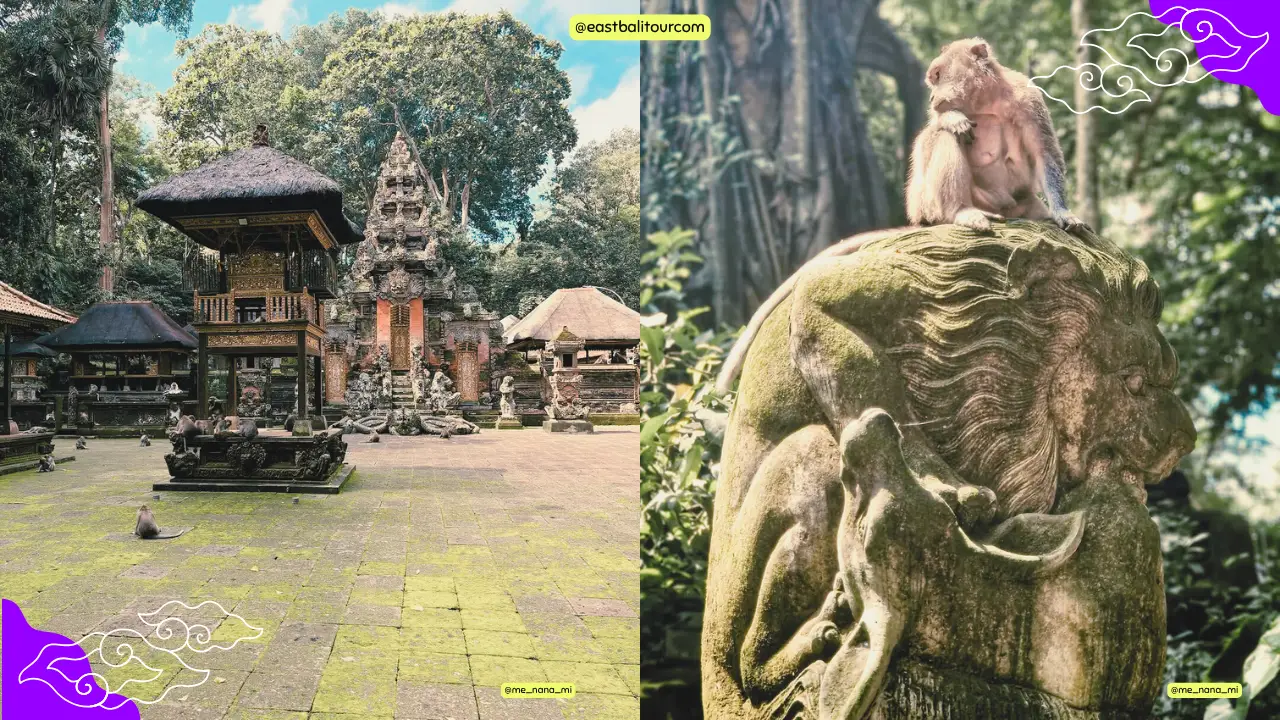
Ancient Temples under the Canopy: Capture the beauty of mossy temple ruins intertwined with giant banyan roots — a true Indiana Jones moment.
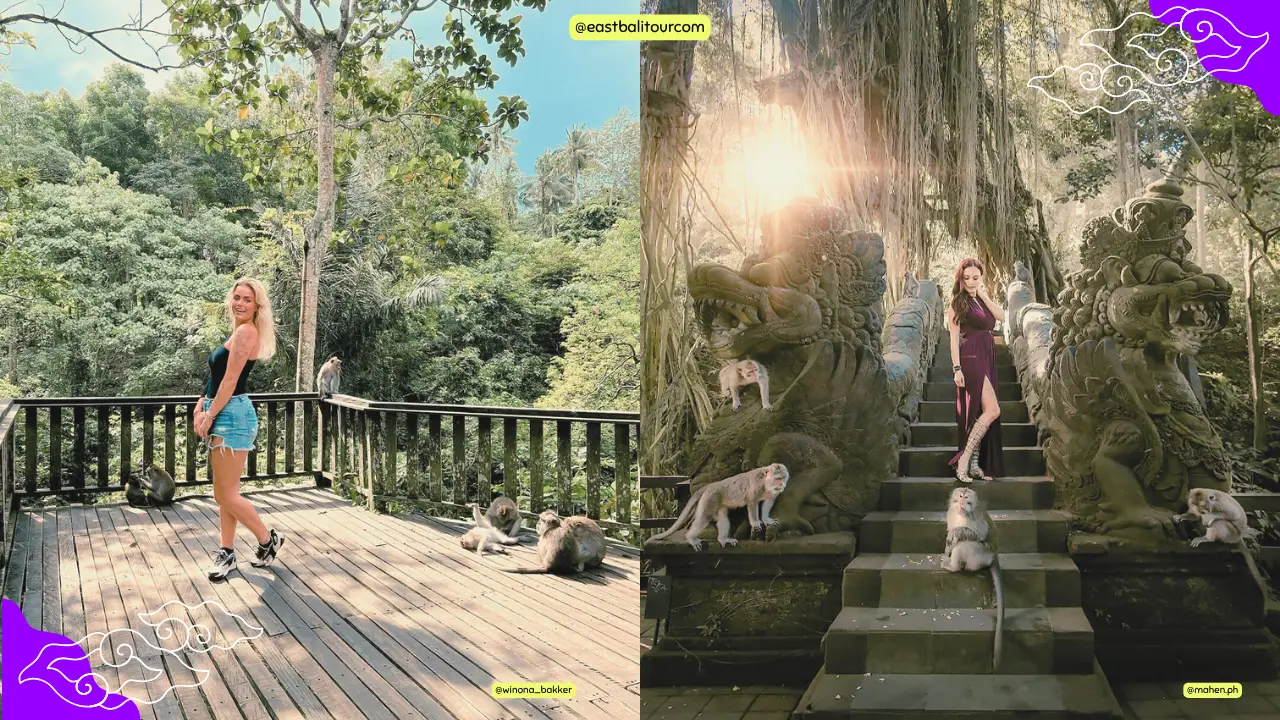
Playful Monkeys: Photograph monkeys grooming, climbing statues, or playing with fallen leaves — always at a respectful distance.
Stone Carvings and Guardian Statues: The mythical carvings and moss-covered sculptures are ideal subjects for creative photography.
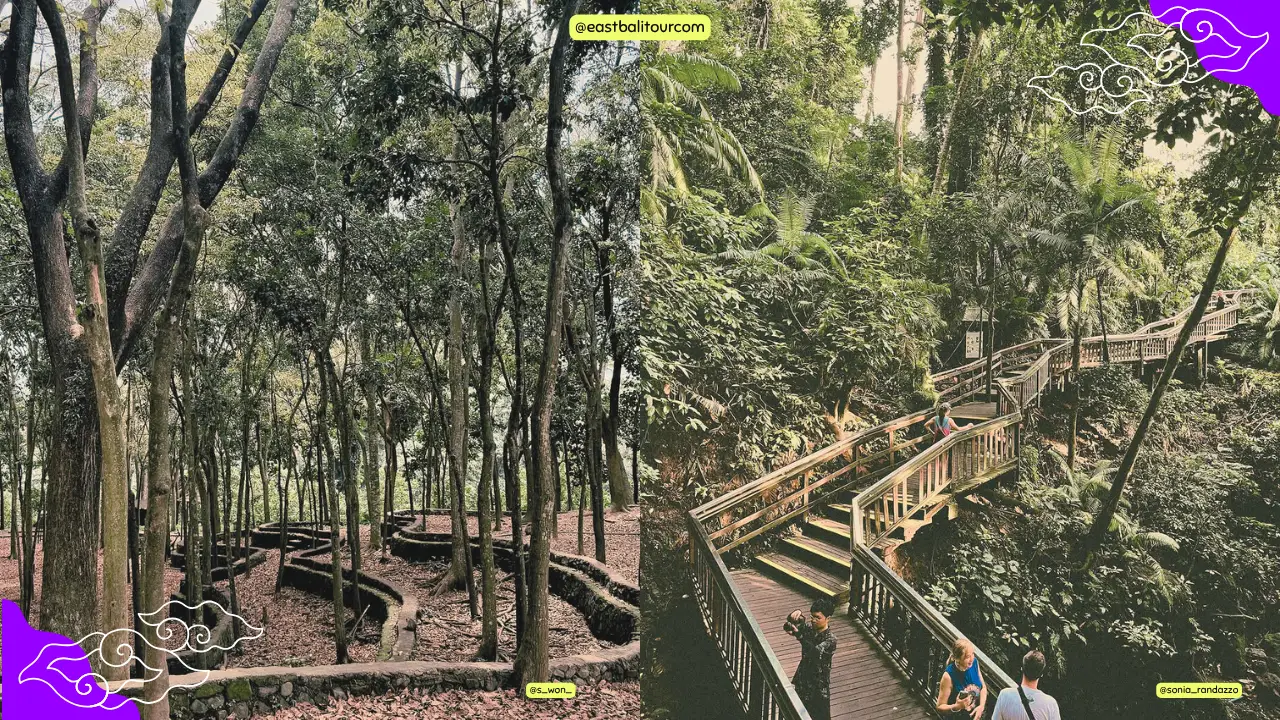
Suspension Bridge & Jungle Trails: The forest’s wooden bridges and shaded paths make for scenic, atmospheric shots — especially in the morning mist.
💡 Tip: Use natural light filtering through the trees for stunning depth and contrast in your photos.
7. Nearby Attractions & Tour Ideas
After visiting the Ubud Monkey Forest, you can continue exploring Ubud’s cultural heart or venture into nature nearby. Here are a few ideas to enrich your Bali tour itinerary:
Ubud Art Market – Discover local handicrafts, silver jewelry, and batik art.
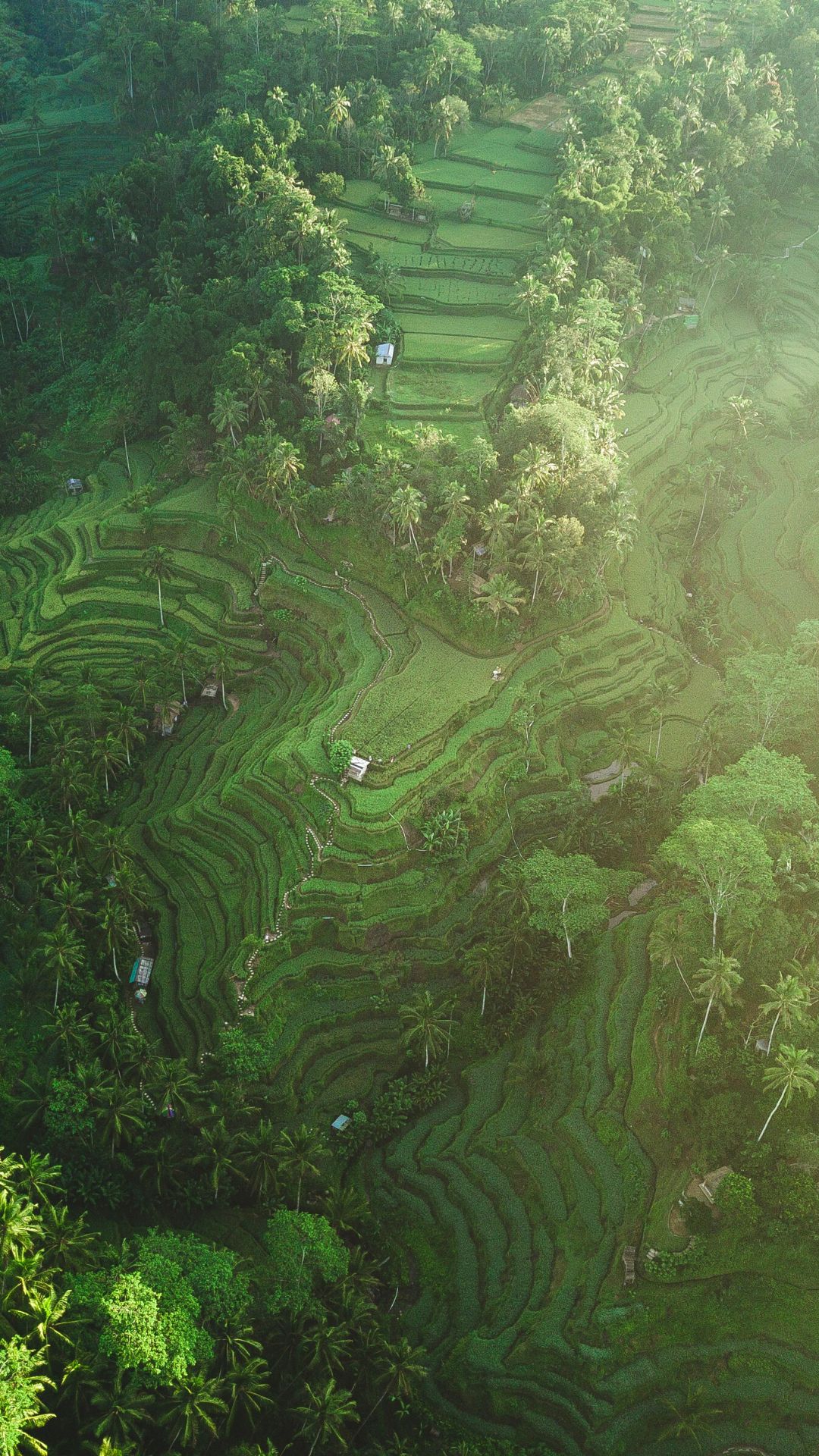
Tegallalang Rice Terraces – A short drive away, perfect for iconic Bali photos.
Campuhan Ridge Walk – Enjoy a scenic hike through Ubud’s lush valley.
Puri Saren Royal Palace – The cultural center of Ubud, often with traditional dance performances.
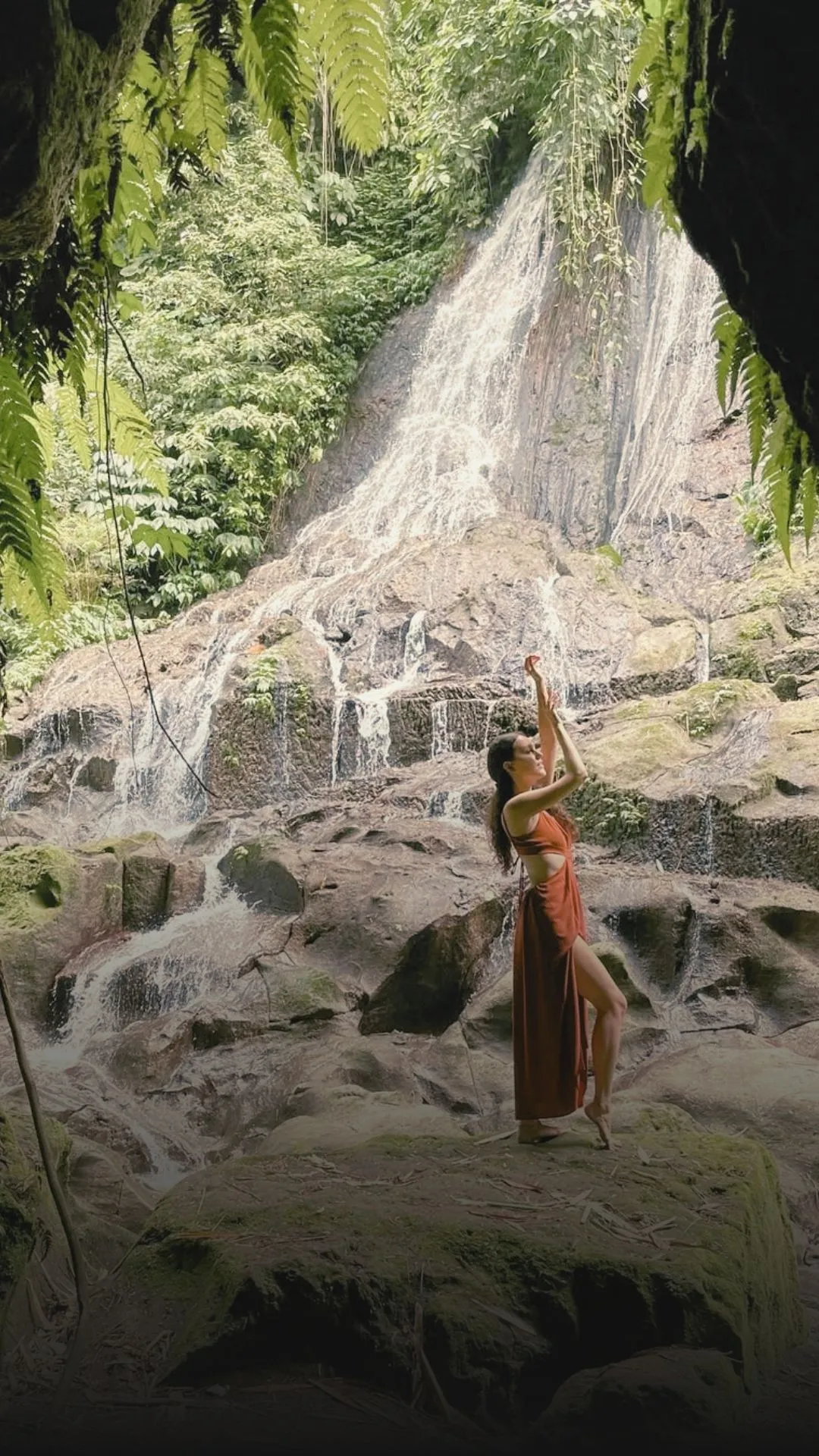
Tegenungan Waterfall – Combine your Monkey Forest visit with this nearby waterfall for a refreshing end to your tour.
Many private Ubud day tours combine these stops, offering a perfect mix of nature, culture, and relaxation.
8. Why You Should Visit Ubud Sacred Monkey Forest
- A Living Sanctuary
Unlike many tourist attractions, the Monkey Forest is a functioning spiritual site and a natural habitat, maintained by the local community. It’s both a conservation effort and a cultural heritage site.
- Close Encounters with Nature
Where else can you walk through an ancient temple forest while monkeys swing playfully above your head? It’s one of the few places in the world where humans and wildlife coexist so harmoniously.
- Architectural & Cultural Beauty
The forest temples — with their ornate carvings and sacred sculptures — offer insight into Bali’s artistic and spiritual traditions.
- Educational and Fun
Ideal for families and curious travelers, the sanctuary promotes conservation awareness and responsible tourism.
- Central Ubud Location
Located within walking distance of Ubud’s main area, it’s an easy and rewarding stop on any Bali itinerary.
9. Conclusion – The Heart of Ubud’s Wild Spirituality
The Ubud Sacred Monkey Forest Sanctuary is more than just one of Bali’s most visited attractions — it’s a living, breathing symbol of harmony between humans, nature, and the divine. Nestled in the lush heart of Ubud, this sacred forest invites travelers to step into a world where spirituality thrives amid towering banyan trees and moss-covered temples. Every rustle in the leaves, every reflection in the ancient ponds, and every playful glance from a monkey seems to whisper stories of an island deeply connected to its roots.
As you wander through the serene jungle pathways, you’ll feel the powerful spiritual energy that defines this sanctuary. The three ancient temples within — Pura Dalem Agung Padangtegal, Pura Beji, and Pura Prajapati — stand as timeless guardians of Balinese Hindu culture. They represent purification, protection, and the cycle of life and death — beliefs still practiced daily by the local community. It’s a reminder that Ubud is not just a place to visit, but a place to experience the rhythm of Balinese life itself.
Every visit offers a new perspective: one moment you’re captivated by the sight of long-tailed macaques swinging through the trees, the next you’re reflecting quietly in front of a temple gate covered in ancient carvings. You might even witness local ceremonies — simple, beautiful acts of devotion that blend seamlessly with the forest’s natural beauty.
There’s also a playful charm here. The monkeys, intelligent and curious, remind visitors that joy and spirituality can coexist — that even in sacred places, laughter and life abound. But beyond their antics, they embody the balance Bali holds so dearly: a connection to the earth, to each other, and to something greater than ourselves.
For travelers seeking more than just sightseeing, the Ubud Monkey Forest is a journey inward — an encounter with Bali’s spirit at its purest. It’s where nature’s beauty meets ancient wisdom, where the sacred breathes through every stone and tree.
✨ Join one of our Ubud cultural tours and experience the magic of the Sacred Monkey Forest — where centuries-old temples, untamed jungle, and the heart of Balinese spirituality unite to create a truly unforgettable experience.