Ubud Palace
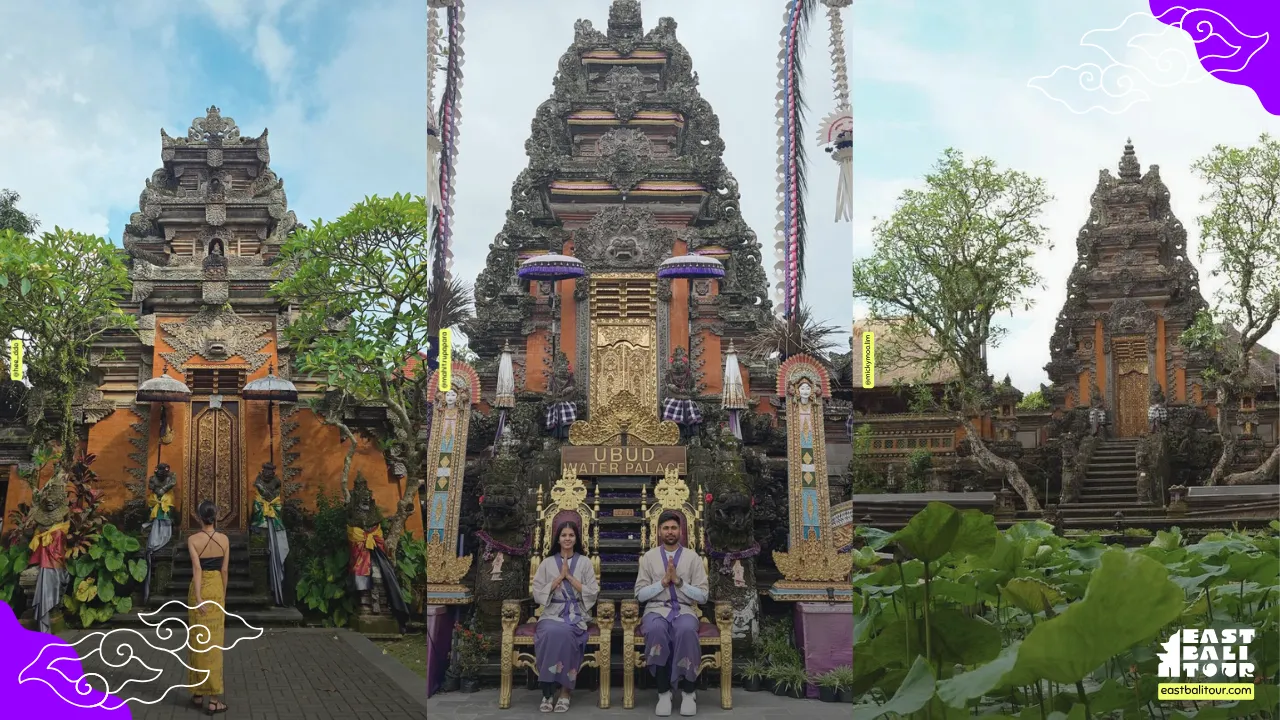
Ubud Palace. Standing proudly at the epicenter of Bali’s cultural heartbeat, the Ubud Palace—known locally as Puri Saren Ubud—is more than just a historical monument; it is the enduring soul of the town. For travelers seeking to connect with the island’s regal past and vibrant present, this palace offers an intimate glimpse into the traditions, artistry, and spirituality that continue to define Ubud as the “cultural capital” of Indonesia.
To understand Ubud is to understand the palace. While the surrounding region is famous for its emerald-green rice terraces and avant-garde art galleries, the history of this evolution is intrinsically tied to the walls of Puri Saren. It is a place where royal heritage meets the daily rhythms of local life, serving as both a living residence for the descendants of the Ubud Royal Family and a prestigious stage for the world’s most mesmerizing traditional arts.
1. Introduction to Ubud Palace
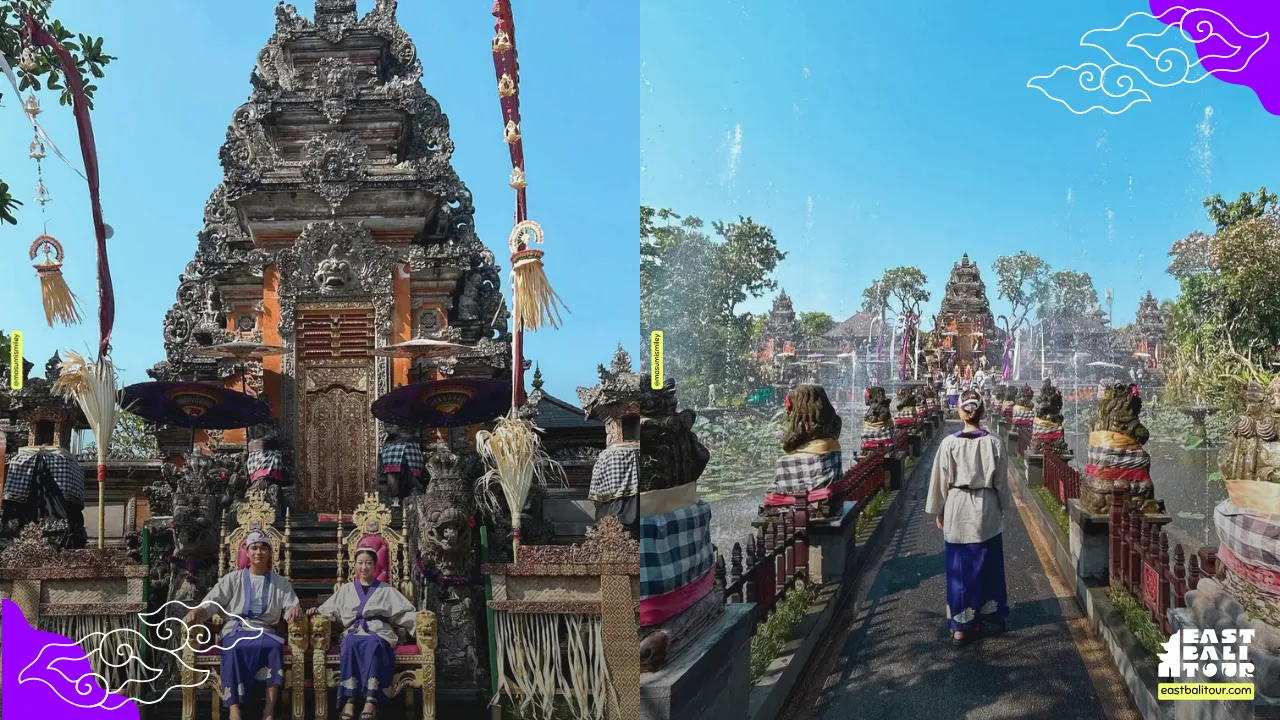
Puri Saren Ubud is the official residence of the Tjokorda family, the hereditary rulers of Ubud. In the hierarchy of Balinese society, the palace is not just a building; it is the Puri, a term reserved for the dwellings of the nobility. Its significance transcends its architectural beauty, as it acts as a silent witness to the cultural shifts that have transformed Bali over the last two centuries.
Located at the iconic intersection of Monkey Forest Road and Raya Ubud, the palace acts as the geographical and spiritual anchor of the town. Unlike many palaces in other parts of the world that have been converted into cold, static museums, Puri Saren remains a “living” landmark. Here, the royal family still resides within the inner sanctums, maintaining the ancestral traditions and spiritual rituals that have been passed down through generations. For the modern visitor, it offers a rare opportunity to step into a space where history is not just preserved in textbooks, but honored in daily prayer and ritual.
2. Historical Background
The story of Puri Saren Ubud is inextricably linked to the rise of the Ubud Royal Family. Historically, the area of Ubud—once a dense, malaria-ridden jungle—began to gain prominence in the late 19th century under the rule of the lords of Gianyar. The palace was constructed primarily during the reign of Ida Tjokorda Putu Kandel (1800–1823), a pivotal figure who solidified the family’s influence in the region.
As the 19th century gave way to the 20th, the palace evolved from a private seat of political power into a sanctuary for the arts. The Ubud Royal Family, particularly the late Tjokorda Gede Agung Sukawati, became legendary patrons of the arts. They recognized the unique spiritual and aesthetic value of their home and the surrounding landscape, actively inviting international artists, musicians, and thinkers to reside in Ubud. This period of patronage was the catalyst for the “Ubud School” of painting and the professionalization of Balinese dance, effectively transforming a quiet village into a global creative hub.
3. Architecture and Design
The architecture of Puri Saren Ubud is a breathtaking manifestation of Asta Kosala Kosali, the traditional Balinese philosophy governing the design of homes, temples, and sacred spaces. The layout follows the principle of Tri Hita Karana—the harmonious relationship between humans, nature, and the divine.
The Sacred Layout
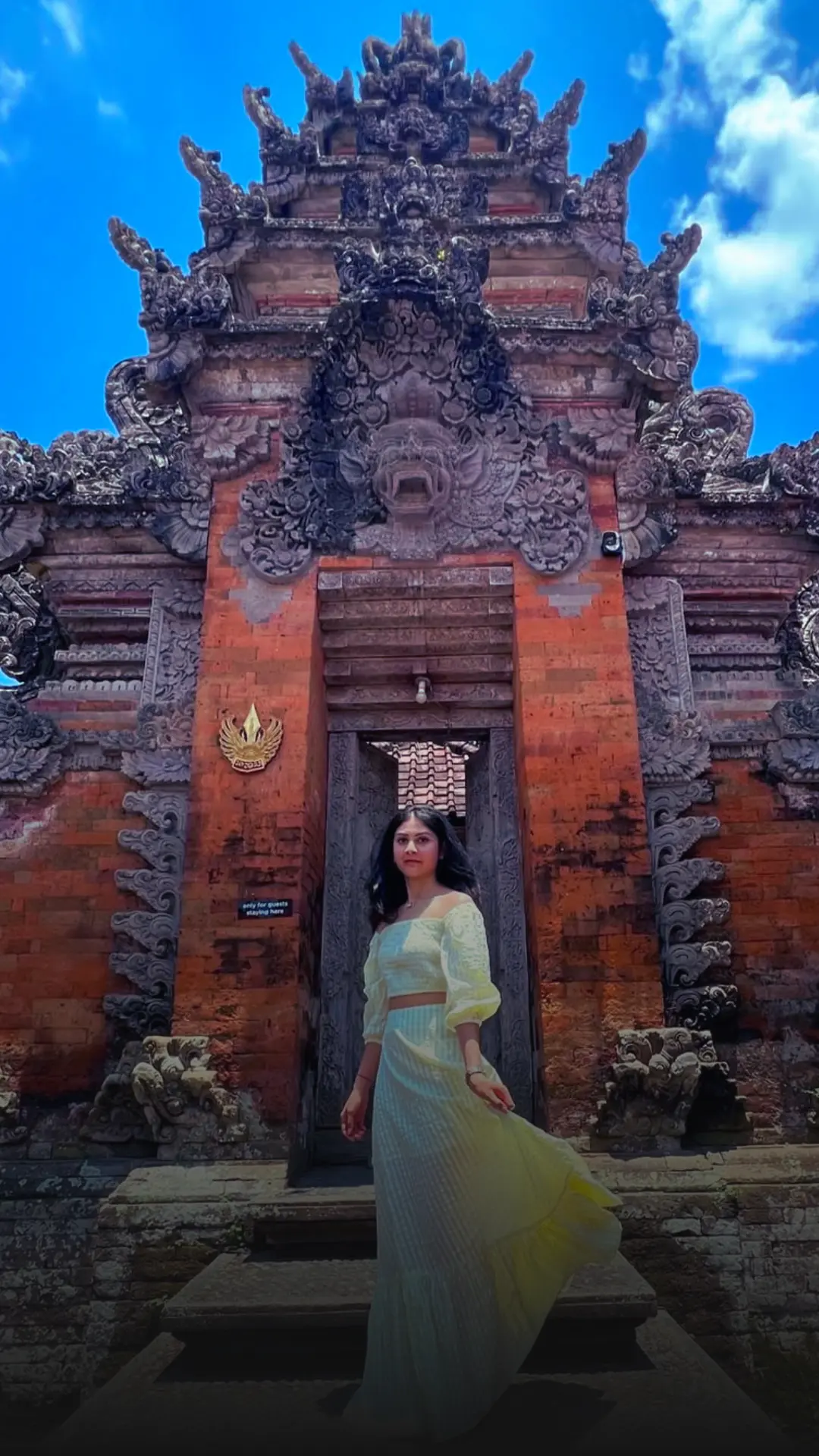
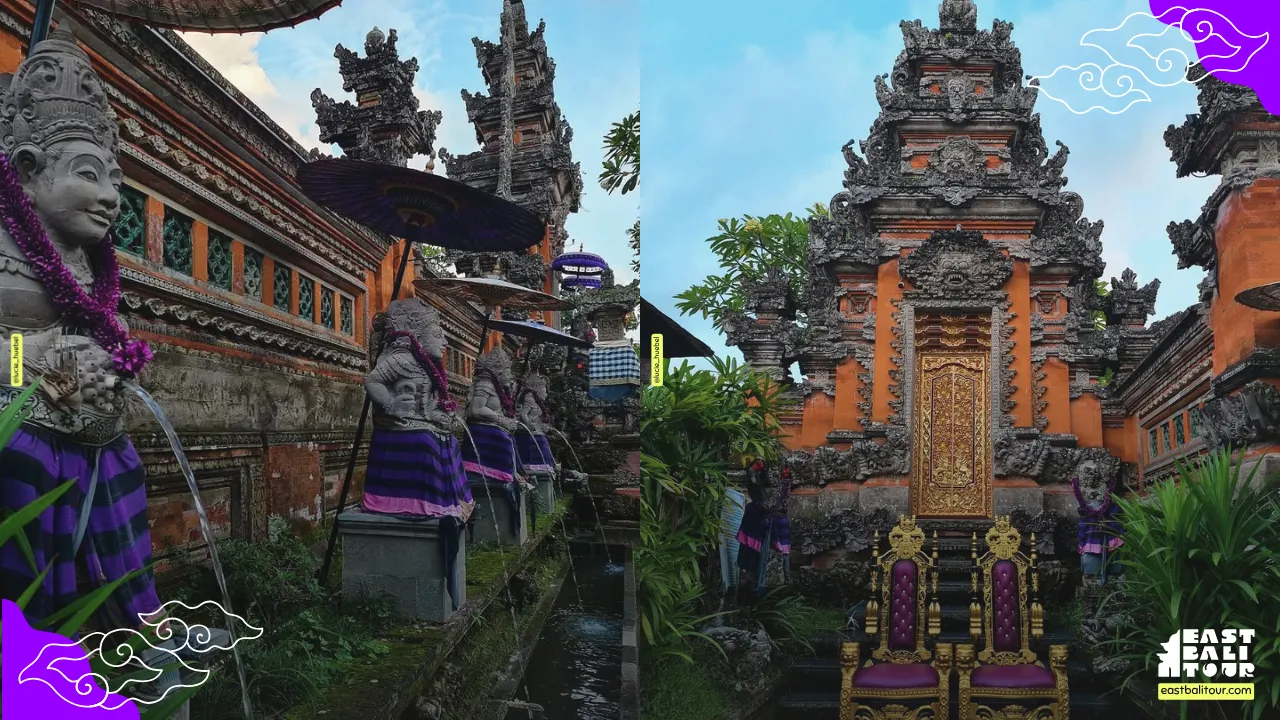
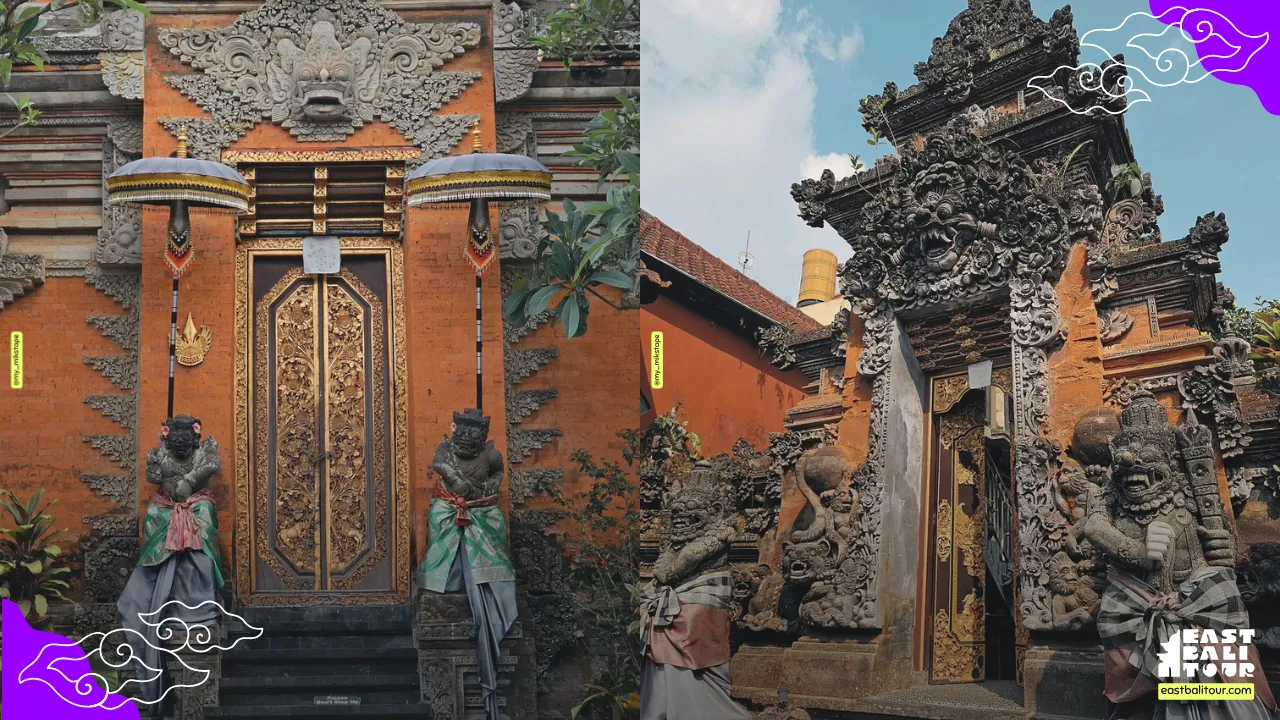
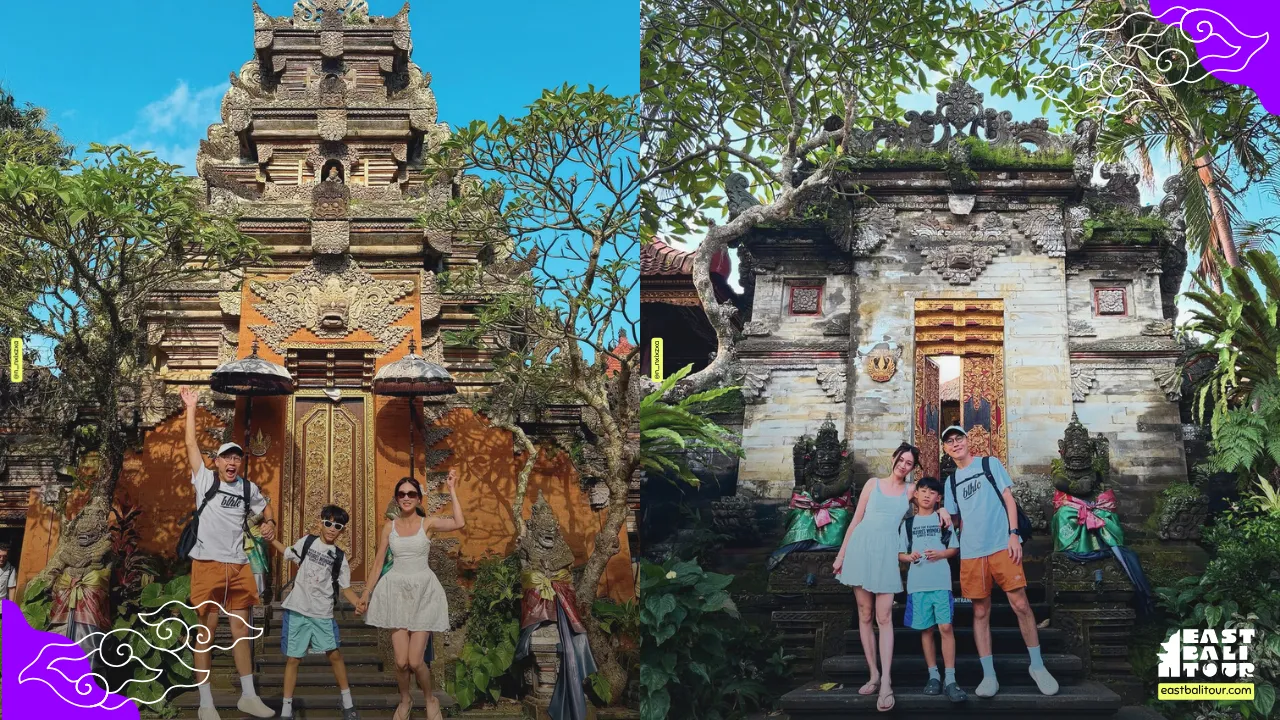
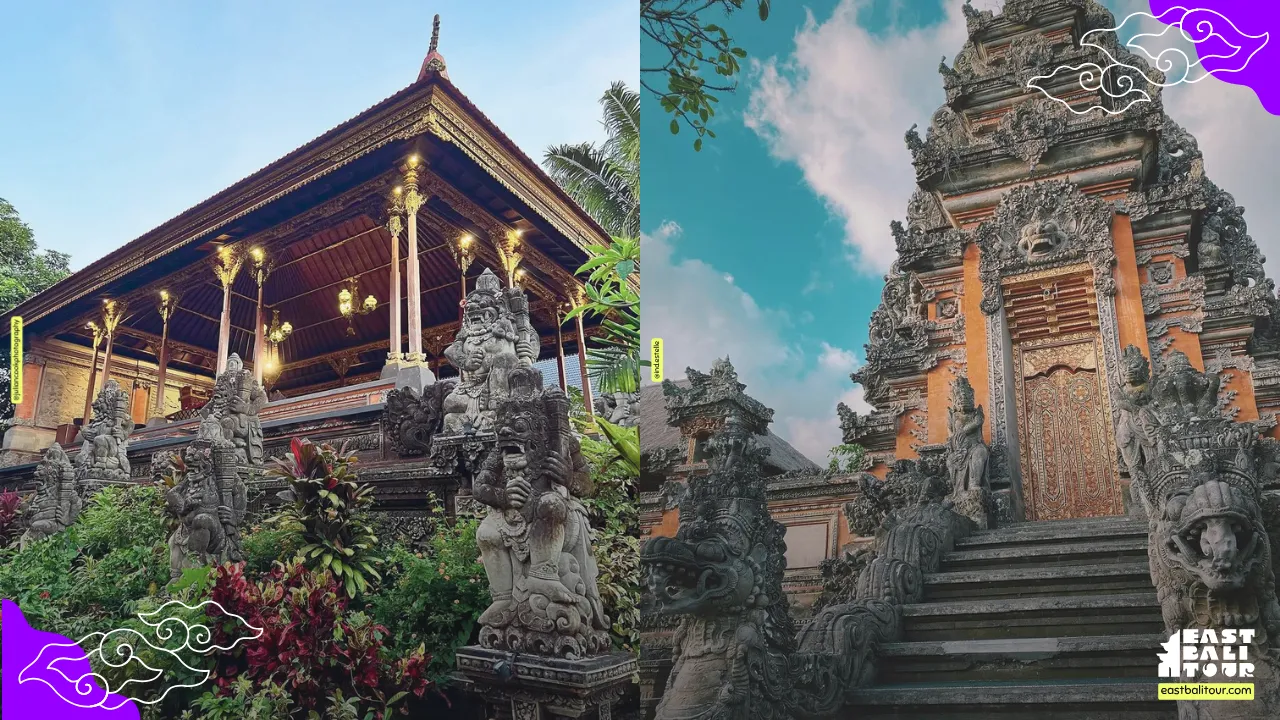
The palace complex is divided into distinct zones. Upon entering, visitors are greeted by the angkul-angkul (the main gate), a masterpiece of traditional stonework. As you move deeper into the compound, the space transitions from public areas to increasingly private and sacred courtyards.
Materiality and Artistry
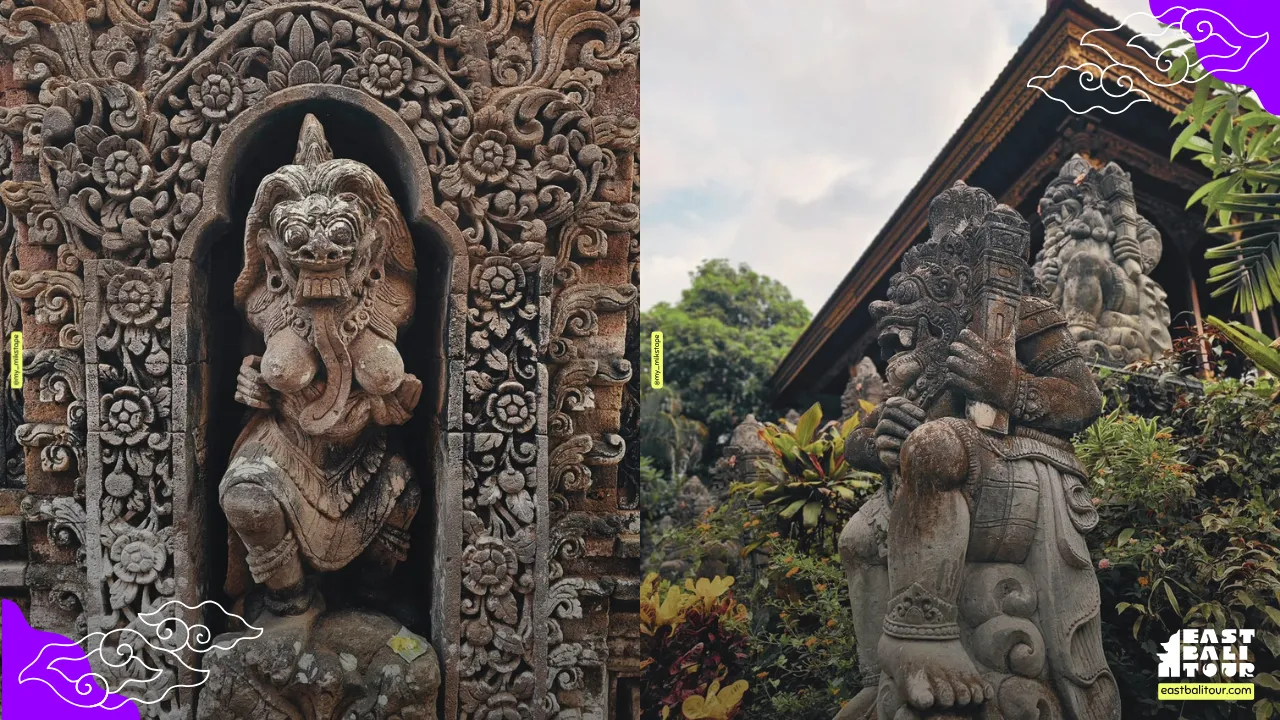
Volcanic Tuff Carvings: The palace walls are adorned with intricate, hand-carved motifs featuring floral patterns and mythical entities like the Karang Boma (a protective guardian). These carvings are not mere decoration; they are protective talismans carved from local volcanic stone, designed to ward off negative energies.
The Roof Structures: You will notice the distinctive, multi-tiered roofs covered in ijuk (black palm fiber). This material is essential for Balinese sacred architecture, as it provides cooling and longevity while maintaining a connection to the natural landscape.
Gold-Leaf Detailing: The ornate wooden doors and pillars within the inner pavilions are frequently finished with prada (gold leaf), symbolizing the status of the royal family and the divine light of the gods they serve.
4. Visitor Experience and Highlights
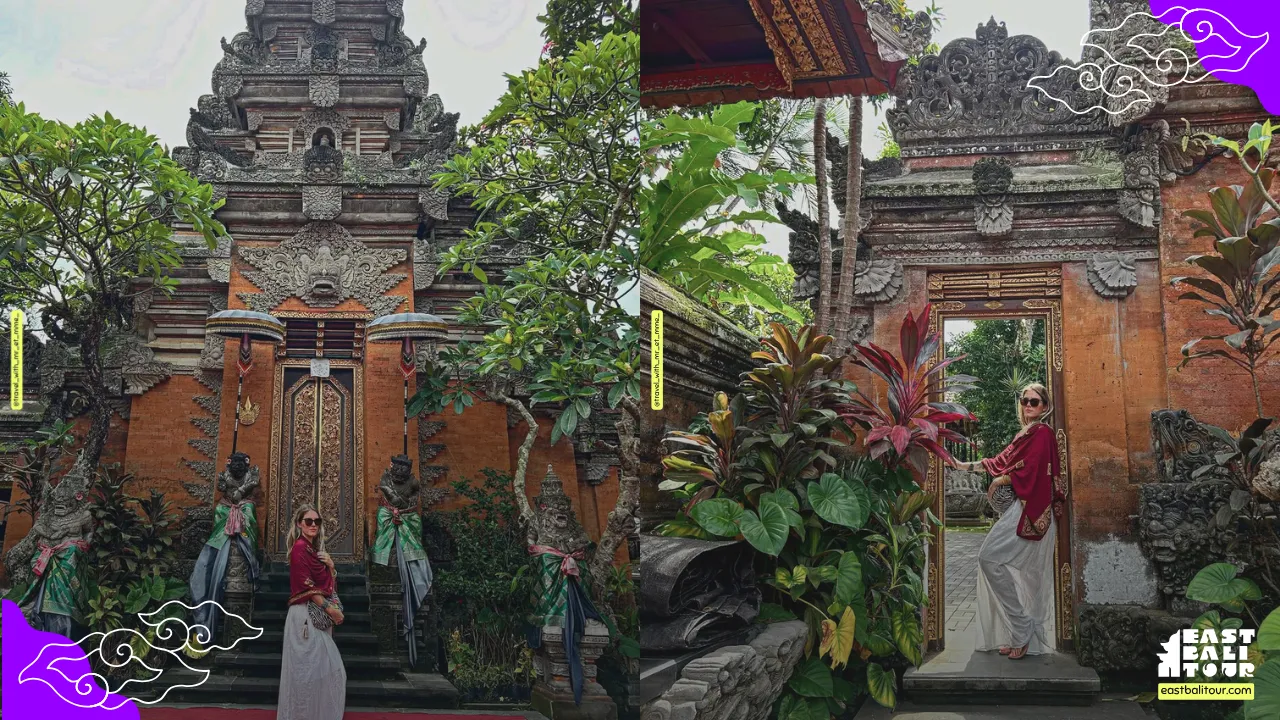
The visitor experience at Puri Saren is layered. During the daylight hours, the palace functions as a quiet sanctuary. Walking through the courtyards, one is struck by the meticulous maintenance of the gardens—tropical flowers like frangipani and hibiscus offer a fragrant contrast to the weathered stone walls.
The Sunset Transformation
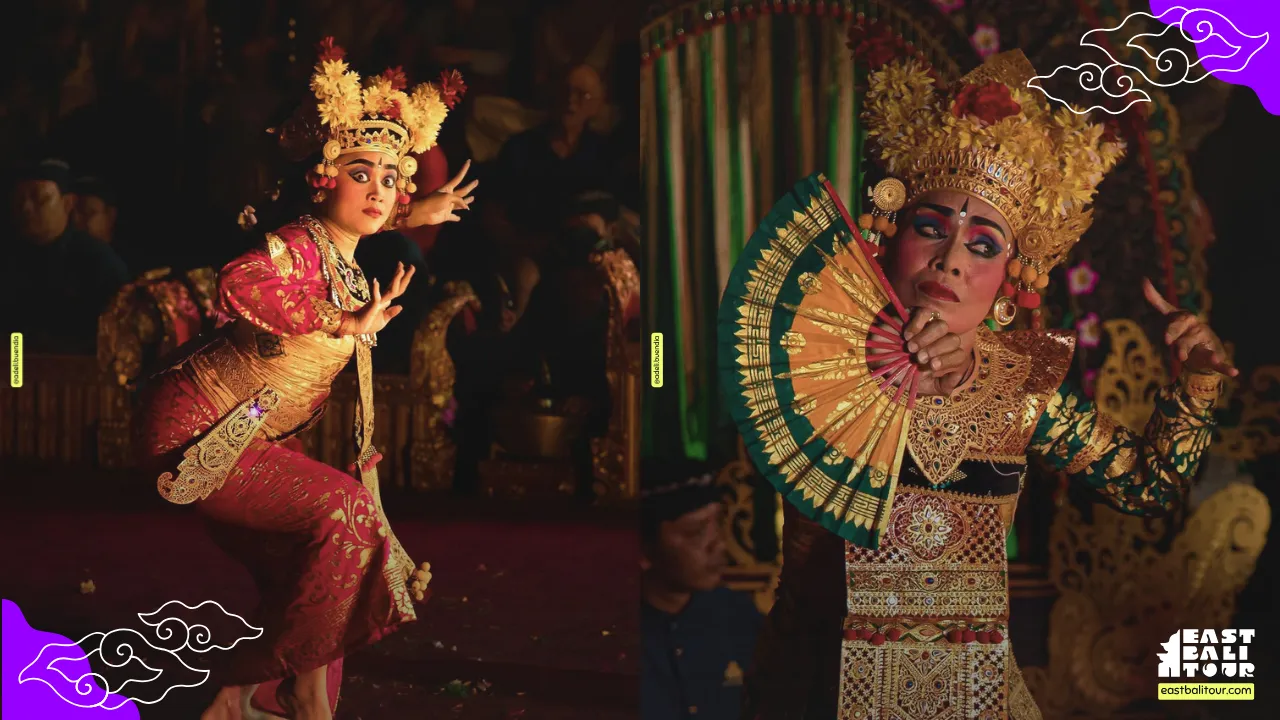
The true magic of the palace awakens after sunset. Every evening, the central courtyard is transformed into a stage for the Legong Dance or the Ramayana Ballet.
The Atmosphere: As the sun dips below the horizon, the courtyard is illuminated by the warm, flickering glow of traditional oil lamps.
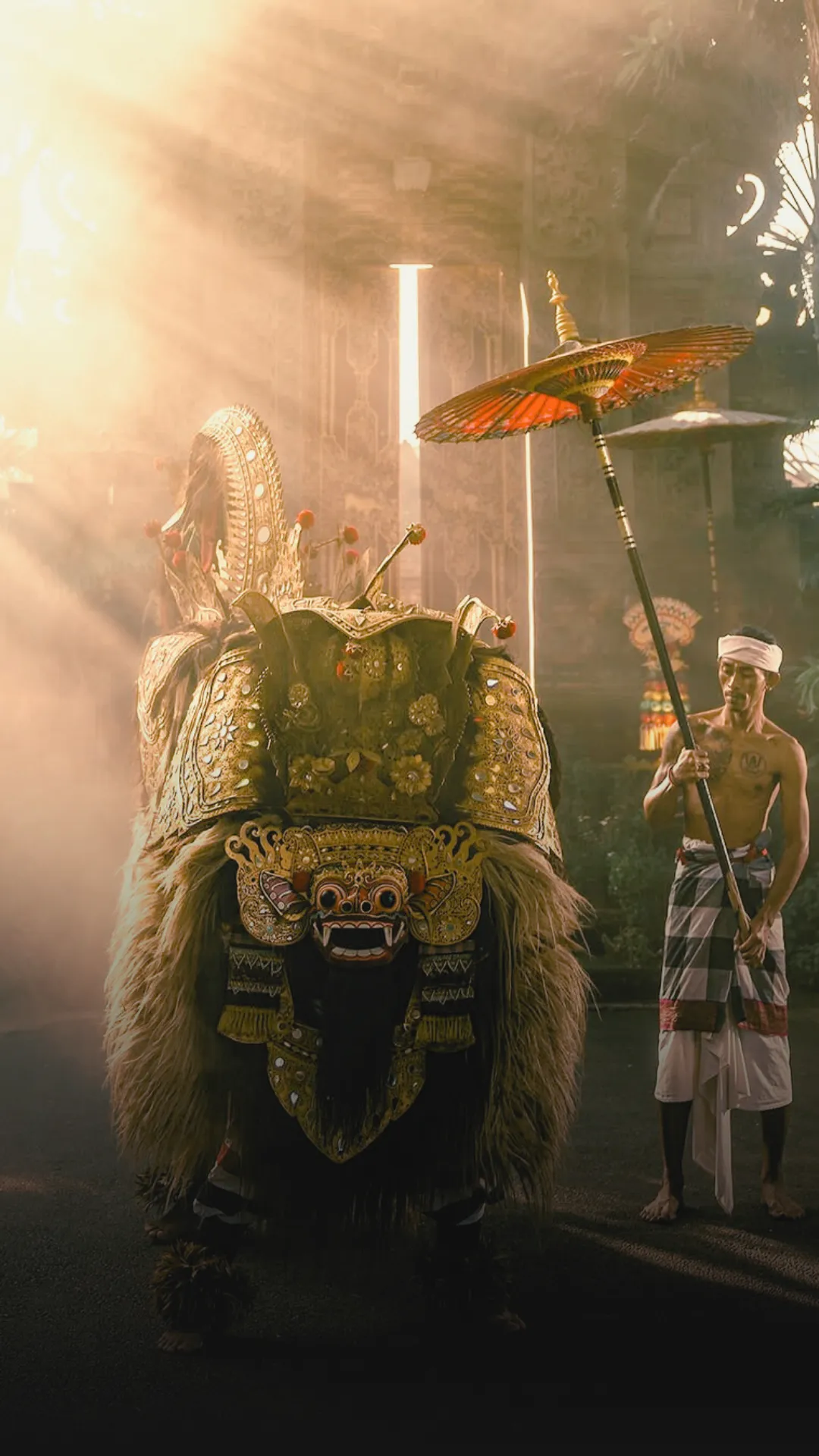
The Performance: Performers adorned in intricate gold-leaf costumes and elaborate headpieces move with a precision that defies belief. Every finger movement, every glance of the eye, and every sway of the hip tells a complex story from ancient Sanskrit epics.
The Soundscape: The performance is accompanied by a live Gamelan orchestra. The hypnotic, metallic rhythms of the bronze gongs and percussion instruments create an ethereal soundscape that seems to echo the very spirit of Bali.
5. Practical Visitor Information
Navigating the palace successfully requires a blend of planning and respect.
Best Time to Visit
Early Morning (8:00 AM – 10:00 AM): The best time to photograph the architecture without the crowds. The morning light provides a softer, golden hue that highlights the textures of the stone carvings.
Evening (7:00 PM – 9:00 PM): Essential for the cultural performances. It is recommended to arrive by 6:30 PM to secure a good seat, as the courtyard can get quite busy.
What to Wear to Ubud Palace
Ubud Palace is a sacred site and the home of the royal family. To show proper respect:
Modesty is Key: Both men and women should ensure their shoulders and knees are covered.
Sarong Protocol: Even if you are wearing long pants, wearing a sarong is a wonderful sign of respect in Balinese culture. If you arrive unprepared, sarongs are readily available for rent at the entrance gates.
How to Get Tickets for Dance Performances
The nightly traditional dance performances (such as the Legong or Ramayana Ballet) are a highlight of any Ubud visit.
Where to Buy: Tickets are typically sold at the palace entrance booth throughout the day.
Pro-Tip: Performances often sell out during the high season. To avoid disappointment, purchase your ticket earlier in the day when you first arrive in Ubud, or book through your tour operator in advance.
Accessibility and Location
The palace is situated at the intersection of the town’s two main thoroughfares. Traffic in Ubud can be notoriously difficult; if you are staying outside the central hub, it is highly recommended to use a local driver or a scooter. Parking for cars is very limited, so planning drop-offs and pick-ups is essential.
Respectful Etiquette
Because this is a functioning palace and a sacred site:
Dress Code: Visitors are required to dress modestly. Both shoulders and knees should be covered. If you do not have a sarong, they are often available for rent at the entrance.
Residential Zones: Please respect the signs indicating private royal living quarters. Keep conversations low and ensure you are not obstructing paths used by the residents.
6. Nearby Attractions and Planning Your Trip
Ubud Palace is perfectly positioned to serve as the hub for a broader exploration of the region.
Ubud Art Market: Located directly across the road from the palace, this market is a treasure trove of local craftsmanship. After immersing yourself in the history of the palace, browse the market for locally woven baskets, silk scarves, and hand-carved wooden goods.
Sacred Monkey Forest Sanctuary: A 15-minute walk south will lead you to this dense forest, home to hundreds of long-tailed macaques and three sacred temples. It provides a natural, jungle-centric balance to the architectural elegance of the palace.
Curating a Day Trip: A balanced day tour could look like this: Start your morning at the Tegallalang Rice Terrace to beat the heat, head back to central Ubud for a traditional Balinese lunch at a local warung, spend the afternoon exploring the Ubud Palace and the adjacent Art Market, and conclude your day with an evening performance at the palace gates.
Want to experience the Palace as part of a curated day trip? Check our Ubud Day Tour that includes local transport and skip-the-line guidance
7. Conclusion: Why Puri Saren Ubud Remains Essential
In an era where travel often feels like a checklist of “likes” and “shares,” Puri Saren Ubud demands something deeper: presence. It is not a place to be rushed through. It is a destination that requires you to slow your pace, observe the intricate details of the stone carvings, and sit in the silence between the beats of the Gamelan music.
The palace stands as a bridge between the ancient traditions of the Balinese royal court and the modern world of international tourism. It reminds us that culture is not stagnant; it is something that must be lived, practiced, and passed down. Whether you are a history buff, a lover of the arts, or simply a traveler looking to connect with the authentic heart of Bali, Puri Saren Ubud offers an experience that is as enduring as the island’s own spirit. A visit here is not just a tour; it is a profound step into the soul of Bali.