Tegenungan Waterfall
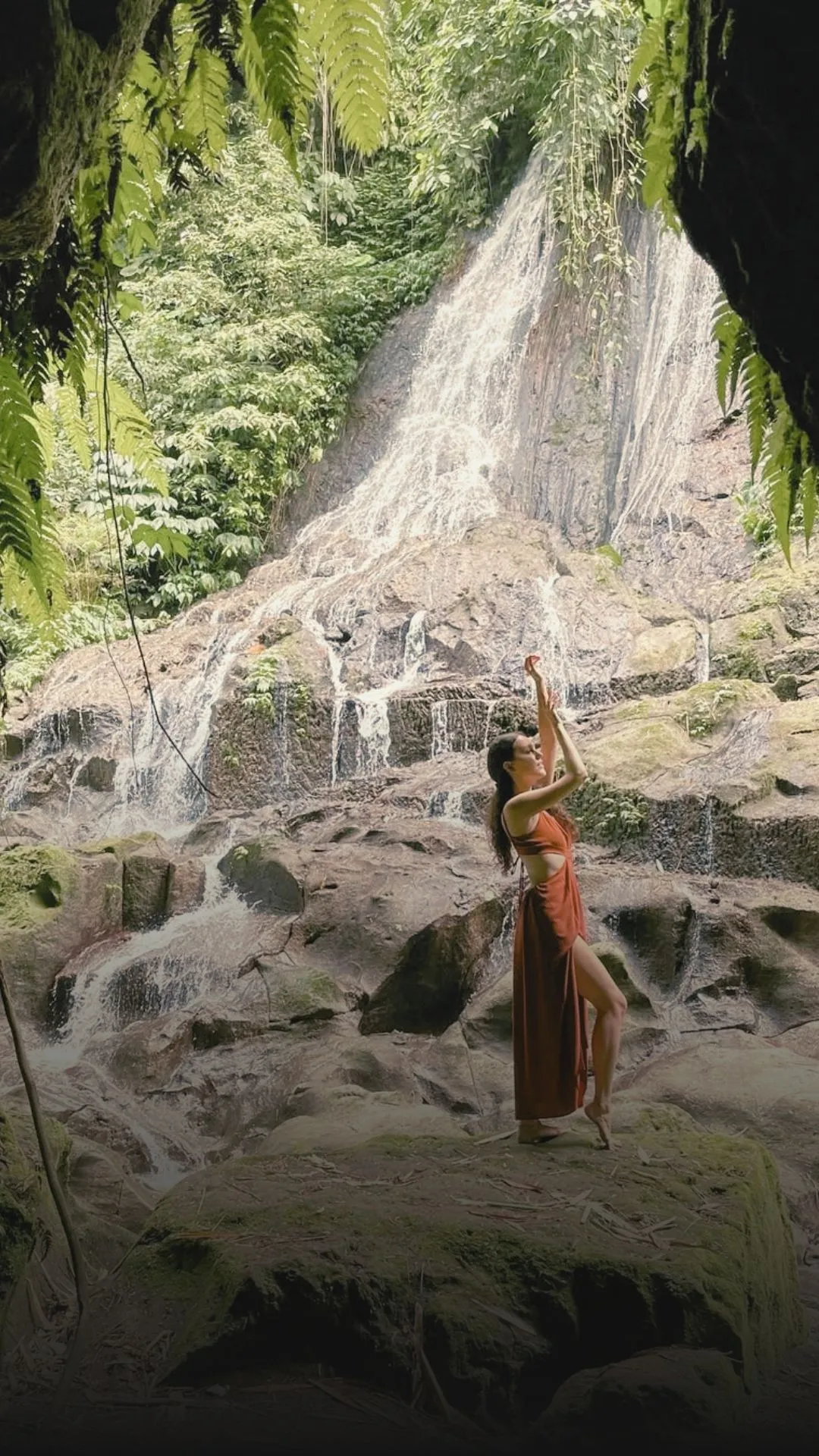
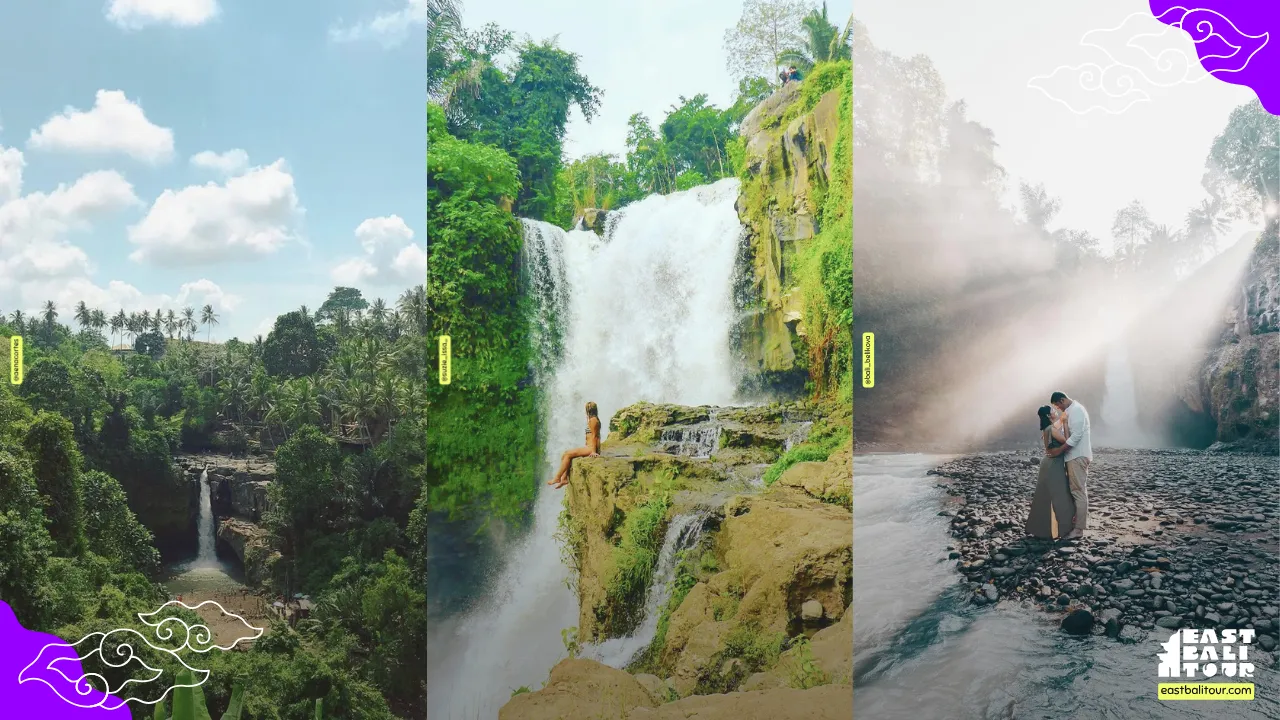
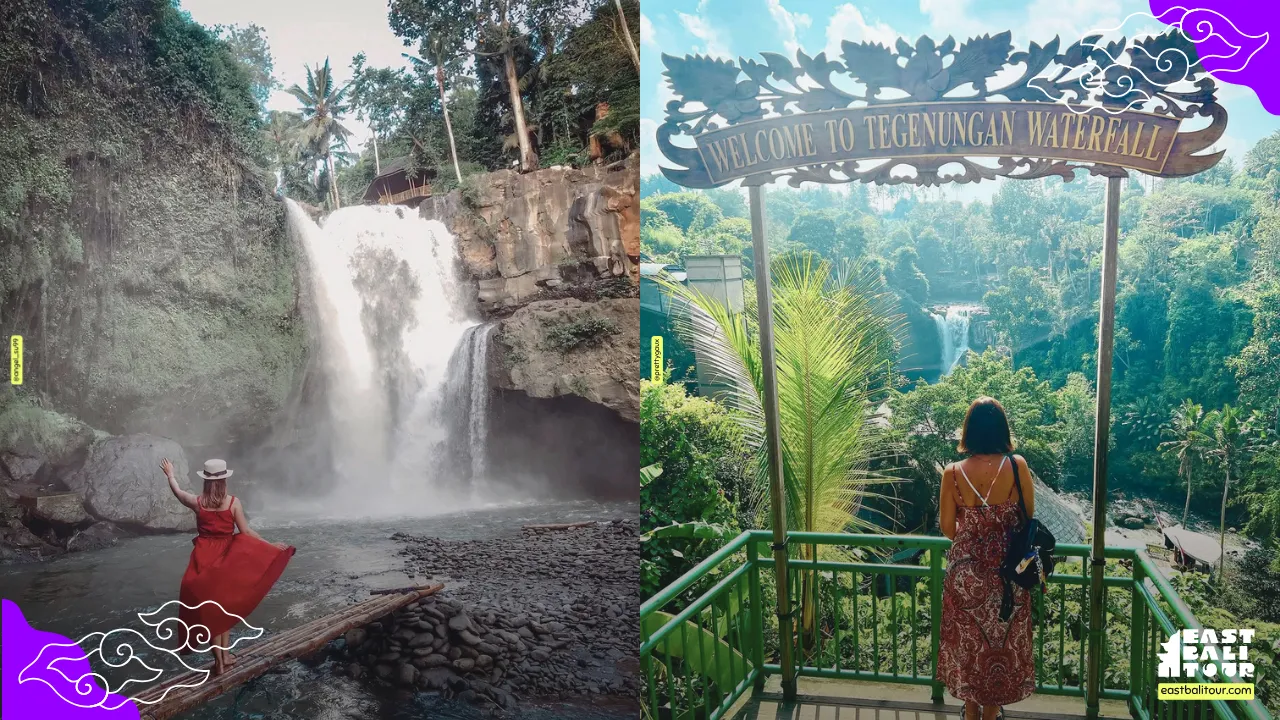
Tegenungan Waterfall. Nestled within a lush, green valley just outside the cultural heart of Ubud, Tegenungan Waterfall stands as one of the most iconic natural landmarks in Bali. Unlike many of the island’s hidden cascades that require arduous jungle treks down remote cliffs, this spectacular Ubud waterfall offers a powerful display of nature’s forces paired with unparalleled accessibility. It has firmly established itself as a must-visit destination for nature lovers, avid photographers, and casual holidaymakers alike.
What makes Tegenungan Waterfall truly unique is its geographical setting. While most famous Bali waterfalls are tucked away in the steep, mountainous highlands of north or central Bali (such as Munduk or Sekumpul), Tegenungan is uniquely situated in the lowlands. Thundering down a rugged cliff face into a wide, swimmable basin, it provides an dramatic tropical escape without requiring hours of driving.
Over the years, it has transformed from a secluded local secret into a vibrant eco-tourism hub, complete with curated viewing platforms, cliffside cafes, and artistic photo installations that blend seamlessly with the surrounding jungle canopy. Whether you are chasing the perfect Instagram shot or looking to cool off in refreshing river waters, Tegenungan delivers an unforgettable Balinese adventure.
Location and How to Get There
Tegenungan Waterfall is located in the village of Kemenuh, within the Sukawati District of the Gianyar Regency. It is remarkably close to Ubud, making it the most accessible major waterfall for travelers staying in Bali’s cultural capital.
◽ Distance and Travel Times
Because of its strategic location in south-central Bali, Tegenungan is easily reached from several major tourist hubs on the island. Approximate travel times and distances include:
- From Ubud Center: Around 10 kilometers (6.2 miles) south, taking roughly 20 to 25 minutes by scooter or car depending on local traffic.
- From Sanur: Approximately 18 kilometers (11 miles) north, requiring about 35 to 45 minutes of travel time.
- From Kuta / Seminyak: About 30 kilometers (18.6 miles) northeast, which translates to a 1 to 1.5-hour drive depending on peak traffic windows.
- From Ngurah Rai International Airport (DPS): Roughly 34 kilometers (21 miles), taking about an hour via the Dr. Ida Bagus Mantra bypass road.
◽ Transportation Options
Navigating your way to Tegenungan Waterfall is straightforward, and travelers can choose from several convenient modes of transport:
- Scooter Rental: For solo travelers or couples seeking maximum flexibility, renting a scooter is highly popular. Rates typically hover between IDR 80,000 and IDR 150,000 per day. Using navigation apps like Google Maps is highly reliable for this route, as the roads leading to the Kemenuh area are well-paved and clearly signposted.
- Private Car Charter with Driver: For families, groups, or those who prefer to avoid navigating Bali’s chaotic traffic, hiring a private driver for the day is the most comfortable option. You can book a Custom Ubud Private Car Charter to seamlessly combine Tegenungan with other nearby waterfalls.
- Ride-Hailing Apps (Grab / Gojek): Both cars and motorbikes can be booked easily via Grab or Gojek from Ubud or Sanur to drop you off at the entrance. However, note that while getting a ride to the waterfall is simple, securing a return ride directly via the app from the parking lot can sometimes be challenging due to local transport regulations. It is often wiser to arrange a round-trip agreement with your driver.
Entrance Fee and Opening Hours
To ensure a seamless visit, it is vital to keep up with the latest operational details and ticketing structures for Tegenungan Waterfall. The site is well-managed, and the small admission fee goes directly toward the maintenance of the paths, safety lifeguards, and cleanliness of the valley.
◽ Entrance Fee Details
The ticket pricing structure for international and domestic visitors is straightforward:
| Ticket Category | Price (IDR) | Approx. USD / AUD |
| Adult Admission | IDR 20,000 | ~$1.30 USD / $2.00 AUD |
| Child Admission | IDR 10,000 | ~$0.65 USD / $1.00 AUD |
| Vehicle Parking (Scooter) | IDR 2,000 | ~$0.15 USD |
| Vehicle Parking (Car) | IDR 5,000 | ~$0.35 USD |
Note: It is highly recommended to carry cash in Indonesian Rupiah (IDR), as the ticket booth may not always accept international credit cards or digital wallets.
◽ Opening Hours
Tegenungan Waterfall is open to the public daily from 6:30 AM to 6:30 PM.
The ticket office operates throughout these hours. Entering early in the morning allows you to beat the commercial tour buses, while arriving late in the afternoon offers a cooler climate as the sun dips behind the canyon walls.
What Makes Tegenungan Waterfall Special
While there is no shortage of breathtaking cascades across the Indonesian archipelago, Tegenungan holds a distinct charm that secures its rank among the best waterfalls in Bali.
◽ Natural Scenery and Volume
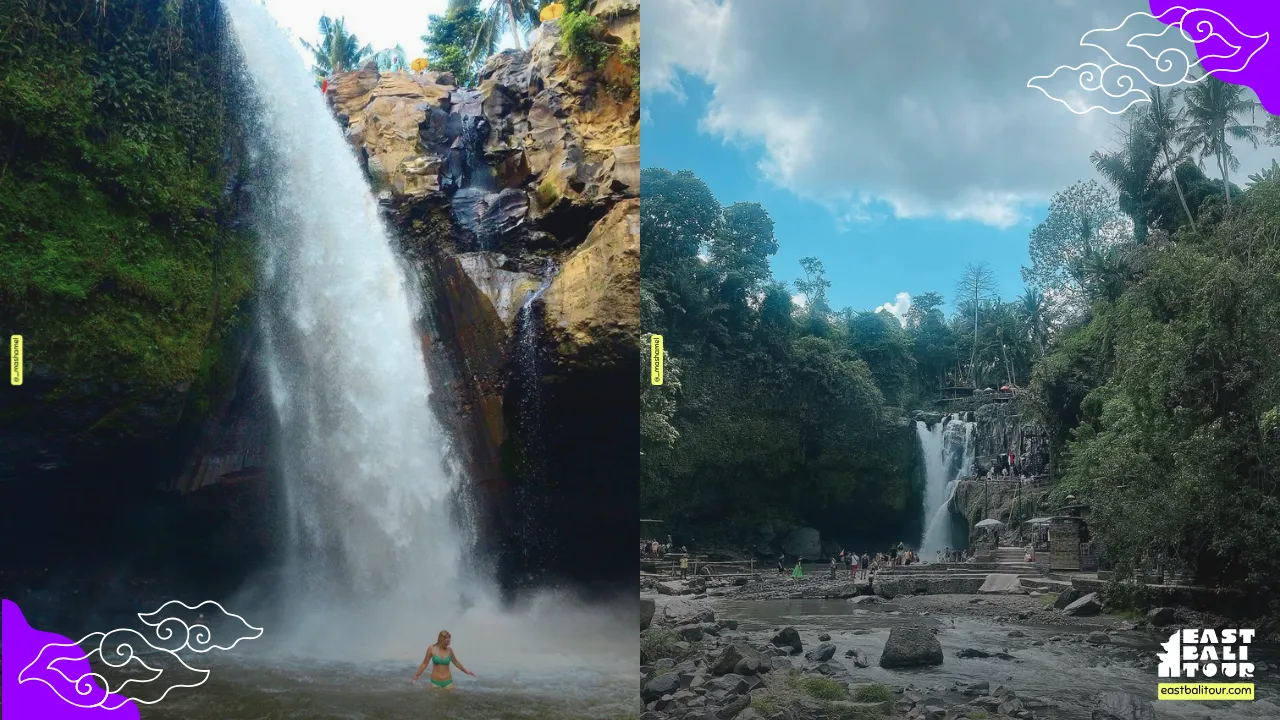
The defining characteristic of Tegenungan is its massive volume of water. Fed by the Petanu River, it is a plunge-type waterfall where a wide, heavy torrent of water drops fiercely over a 15-meter (50-foot) cliff into a spacious plunge pool below. The sheer force of the water creates a perpetual mist that cools the entire canyon, fostering a microclimate where vibrant mosses, ferns, and wild tropical vines drape over the rocky amphitheater.
◽ A Unique Lowland Geolocation
Most of Bali’s famous waterfalls require traveling deep into mountainous terrain, down narrow, slippery jungle ravines. Tegenungan breaks this mold by being situated in a lush lowland river valley. This means visitors don’t have to acclimatize to high altitudes or brave dangerous mountain passes to witness a world-class natural wonder.
◽ Dual Experiences: Tegenungan vs. Blangsinga
An interesting geographical quirk of this attraction is its dual identity. The waterfall sits on the border of two villages. When accessed from the western bank (Gianyar/Ubud side), it is known universally as Tegenungan Waterfall. If you access the exact same waterfall from the eastern bank (Saba side), it is referred to as Blangsinga Waterfall. Each side has its own distinct entrance fee, parking area, and vantage points, giving travelers two unique ways to view the exact same roaring cascade.
Things to Do at Tegenungan Waterfall
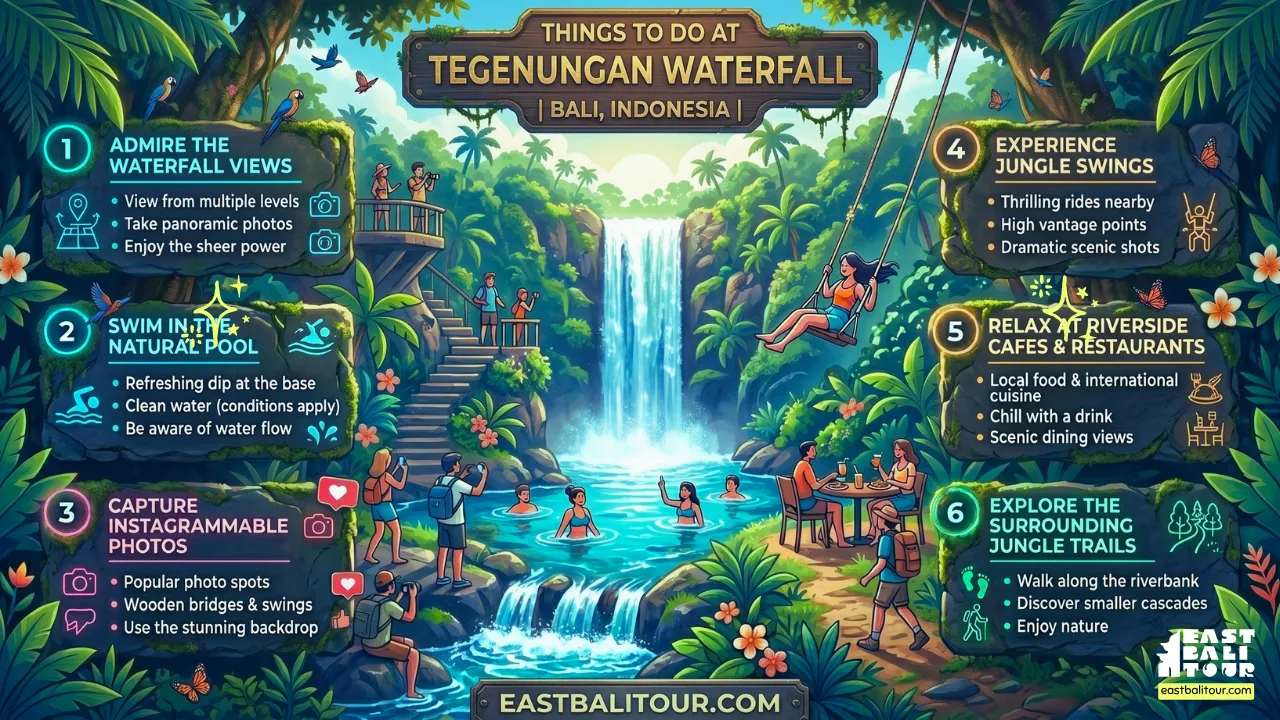
Tegenungan is much more than a quick look-and-leave viewpoint. The area has been thoughtfully developed to offer an array of activities that cater to casual sightseers, thrill-seekers, and relaxation enthusiasts alike.
◽ Photography and Content Creation
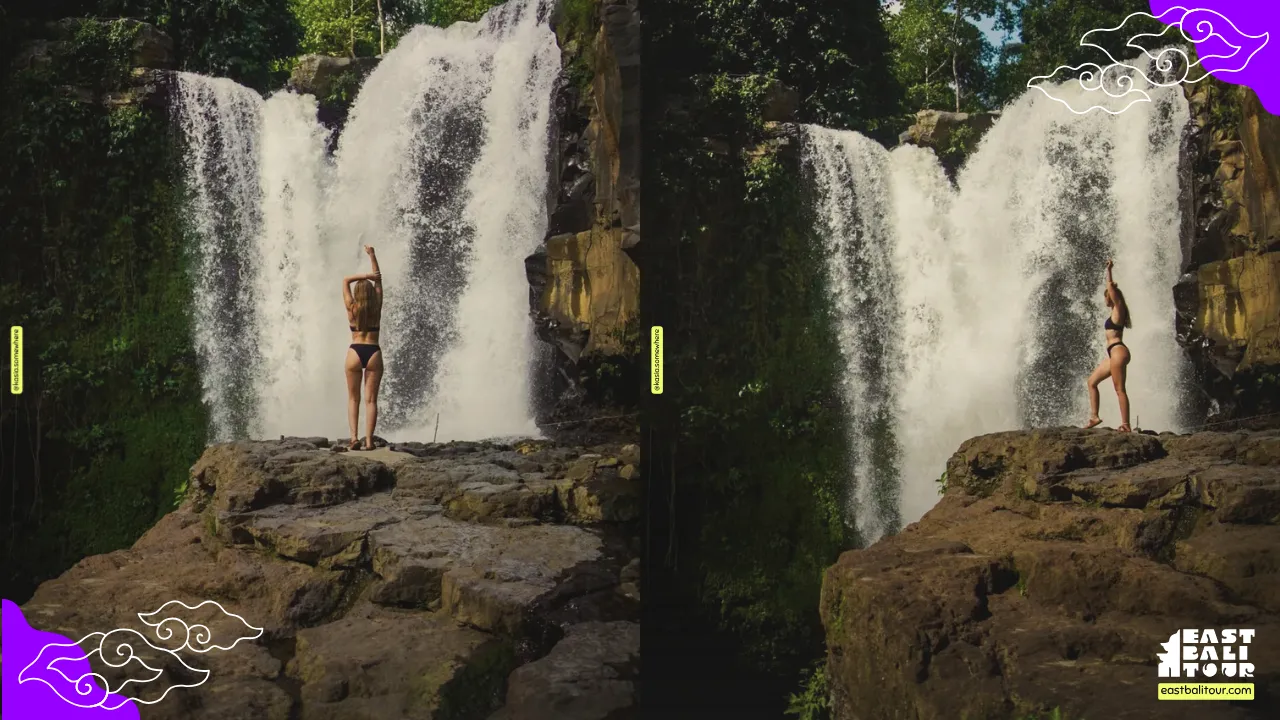
From the second you step past the ticket gate, the photographic opportunities are endless. The upper rim of the canyon provides a sweeping panoramic view of the entire waterfall framed by the deep green Balinese jungle. As you descend, the local community has constructed a variety of creative photo props, including oversized wicker bird nests, heart-shaped bamboo frames, and swings hanging over the valley edge, allowing you to capture stunning memories with the roaring waterfall as your backdrop.
◽ Swimming in the Plunge Pool
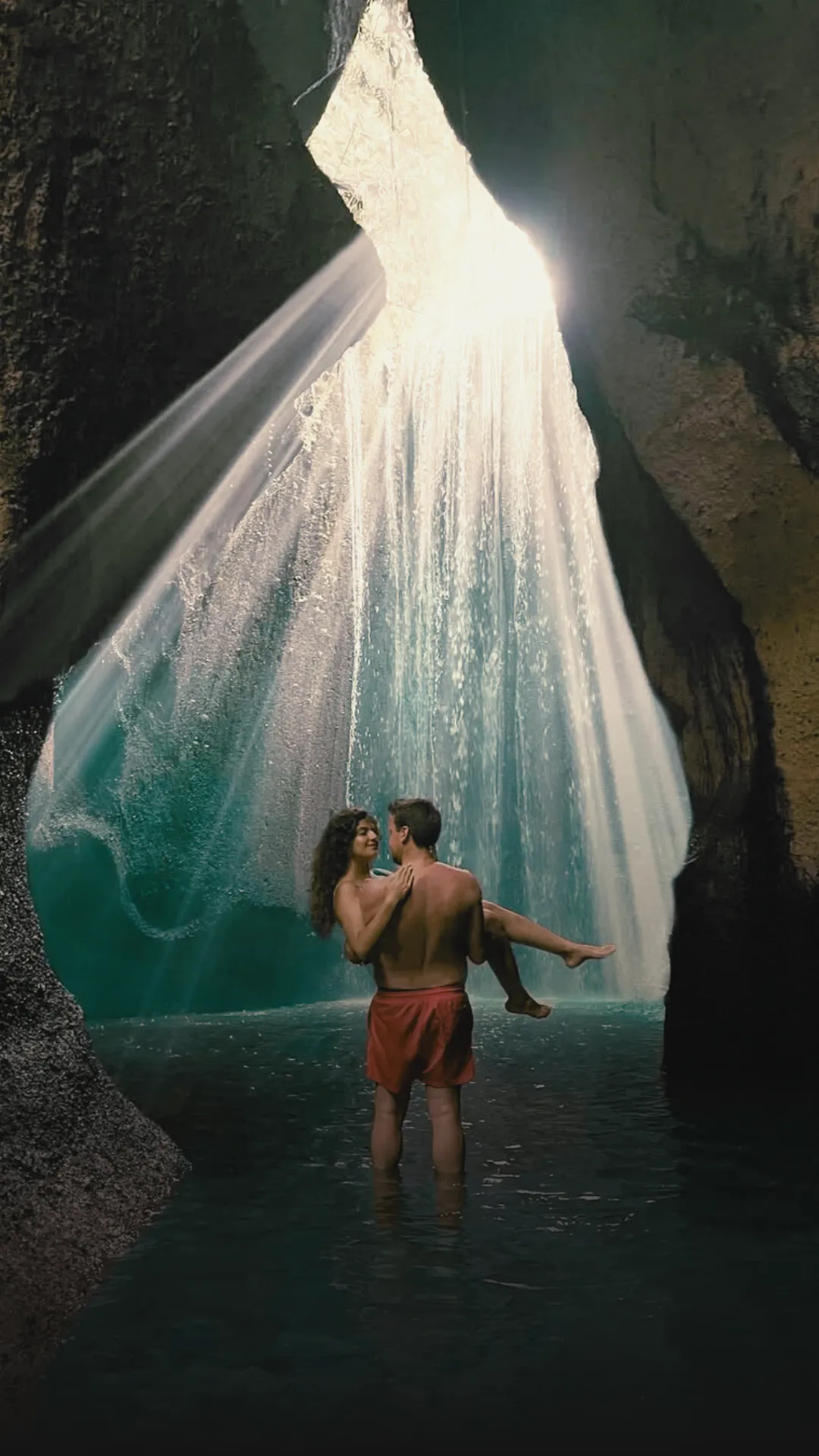
During the dry season, the large natural basin at the base of the waterfall transforms into an inviting swimming hole. The water is cool, crisp, and incredibly refreshing after the walk down the stairs. While you can swim quite close to the falling water, safety flags and on-site lifeguards clearly demarcate boundaries to keep swimmers safe from the powerful undercurrents directly beneath the drop zone.
◽ Exploring the Upper and Lower Viewpoints
The trail down to the river is a well-maintained concrete staircase of roughly 150 steps. Along the descent, there are multiple built-in viewing decks that allow you to take a break and appreciate the waterfall from different heights. Once at the bottom, you can cross rustic bamboo bridges, explore the rocky riverbed, and discover smaller, gentler streams trickling along the canyon walls.
◽ Relaxing at Trendy Day Clubs and Cafes
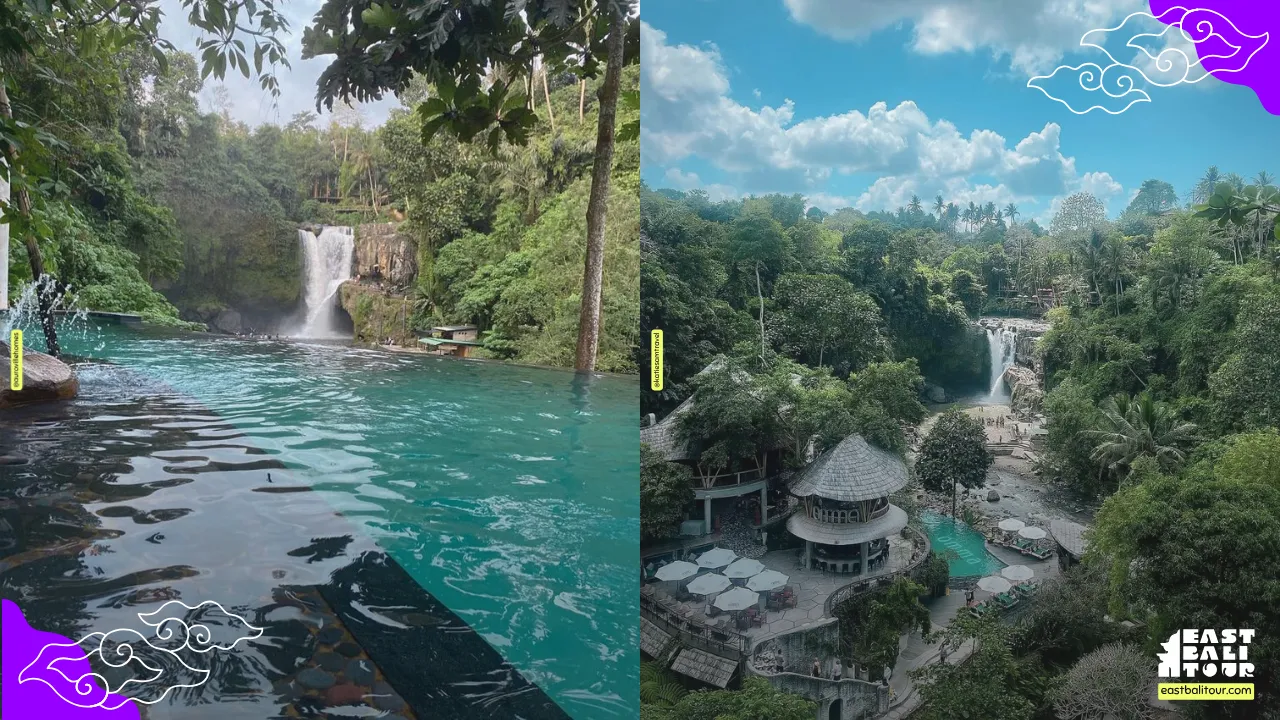
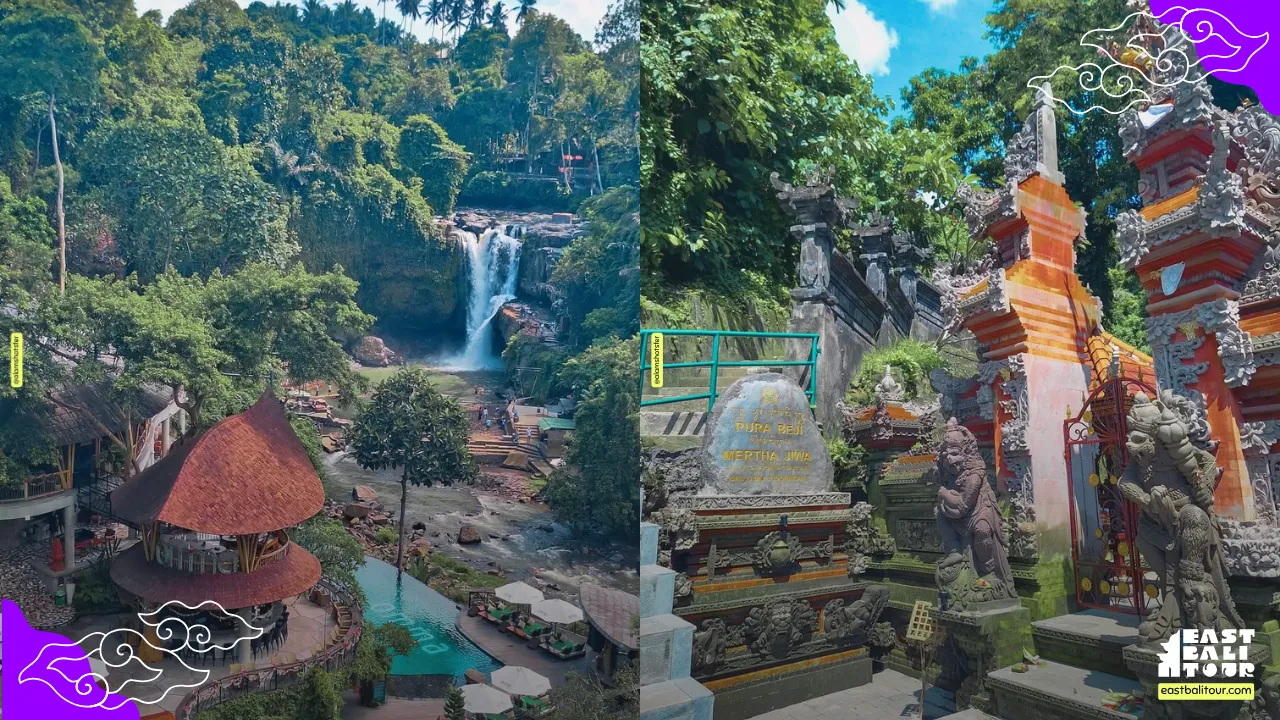
If you prefer a slower pace, you don’t even need to hike down to the water. The cliffs overlooking Tegenungan are lined with modern cafes, local warungs, and high-end day clubs like Omma Dayclub. Here, you can lounge in an infinity pool, sip a cold coconut or cocktail, and enjoy international cuisine while listening to the ambient sound of the waterfall echoing through the gorge.
Facilities Available
Tegenungan Waterfall stands out as one of the most highly developed eco-tourism sites in Bali. Visitors do not have to worry about roughing it out, as the infrastructure ensures a very comfortable trip.
Expansive Parking Area: The site features a massive, organized parking lot that can accommodate hundreds of scooters and dozens of large tour buses. It is safely guarded by local security staff.
Art Markets and Souvenir Shops: The pathway leading from the parking lot to the ticket entrance is lined with dozens of local stalls. Here, you can purchase traditional Balinese handicrafts, sarongs, sundresses, woven bags, and cold drinks at competitive prices.
Clean Restrooms and Changing Rooms: Located at both the top of the cliff and down at the river bed level, well-maintained toilets and changing facilities are available for a nominal fee (usually IDR 2,000 to IDR 5,000) for those planning to change into swimwear.
Dining Options: From authentic local warungs serving classic Nasi Goreng and Ayam Betutu to upscale restaurants and day clubs featuring live DJs and international menus, food options are abundant and cater to every budget.
Safety Infrastructure: The concrete stairs feature sturdy handrails all the way to the bottom. Additionally, certified lifeguards are stationed at the edge of the swimming pool during standard operating hours to monitor water conditions and assist tourists.
Best Time to Visit Tegenungan Waterfall
Timing your visit to Tegenungan can completely redefine your experience, shifting it from a peaceful communion with nature to a high-energy social outing.
◽ Dry Season vs. Rainy Season
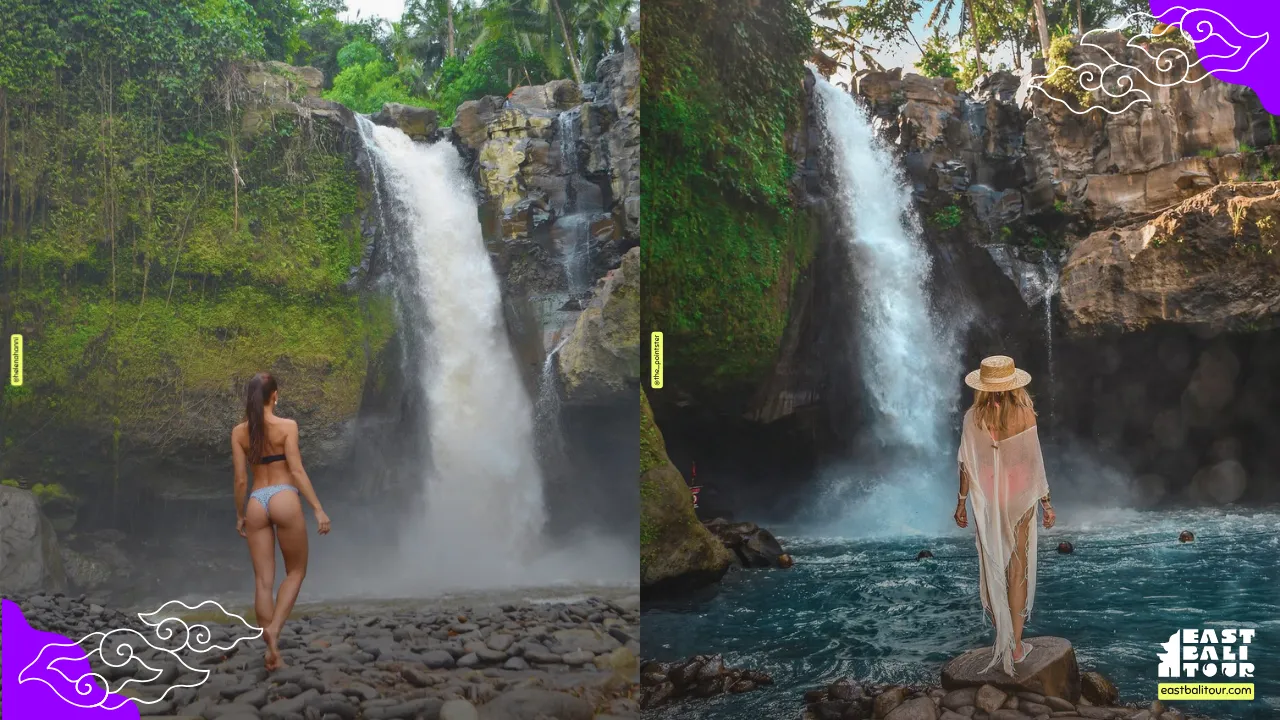
The Dry Season (April to October): This is widely considered the ideal time to visit if your goal is swimming and enjoying clear blue skies. During these months, the water flow is steady, clean, and possesses a beautiful, greenish-blue tint. The paths are dry and safe to walk down.
The Rainy Season (November to March): If you want to witness the raw, terrifying power of nature, the monsoon season causes the Petanu River to swell dramatically. The waterfall turns into an absolute torrent, roaring loudly through the valley. However, the water shifts to a muddy brown color due to upstream sediment runoff, and swimming is strictly prohibited due to dangerous currents.
◽ Morning vs. Afternoon
The Early Morning (6:30 AM – 9:00 AM): This is the ultimate window for peace seekers, photographers, and independent travelers. The air is crisp, the temperature is cool, and you will likely share the entire waterfall with only a handful of other people.
The Mid-Day and Afternoon (11:00 AM – 4:00 PM): This is peak tourist hours. Tour buses arrive, and the area becomes lively and energetic. While it is great for people-watching and enjoying the sunny weather in the water, it makes clean photography much more difficult.
Travel Tips Before Visiting
To maximize your comfort and ensure a flawless excursion to Tegenungan Waterfall, keep these practical tips in mind before setting off:
Wear Appropriate Footwear: While the entire path is paved with concrete stairs, it can become slippery due to the constant waterfall spray or occasional rain. Skip the flimsy flip-flops and opt for secure sandals with good grip or running shoes for the walk down.
Pack a Change of Clothes and a Towel: Even if you do not plan on swimming, the airborne mist near the base of the waterfall can leave your clothes damp. Packing a lightweight travel towel and a fresh set of clothes is highly recommended.
Stay Hydrated: Climbing back up the 150 stairs in the humid tropical climate of Bali can be physically taxing. Buy a bottle of water at the top before you make the descent.
Respect Local Signage: Pay close attention to safety flags and signs placed by the lifeguards. If a flag indicates that swimming is closed due to high currents, do not venture into the water.
Keep Cash on Hand: Small change is invaluable here for paying parking fees, using the restrooms, tipping local photo assistants, or purchasing a cold coconut at the bottom of the canyon.
Nearby Attractions You Can Combine With Your Visit
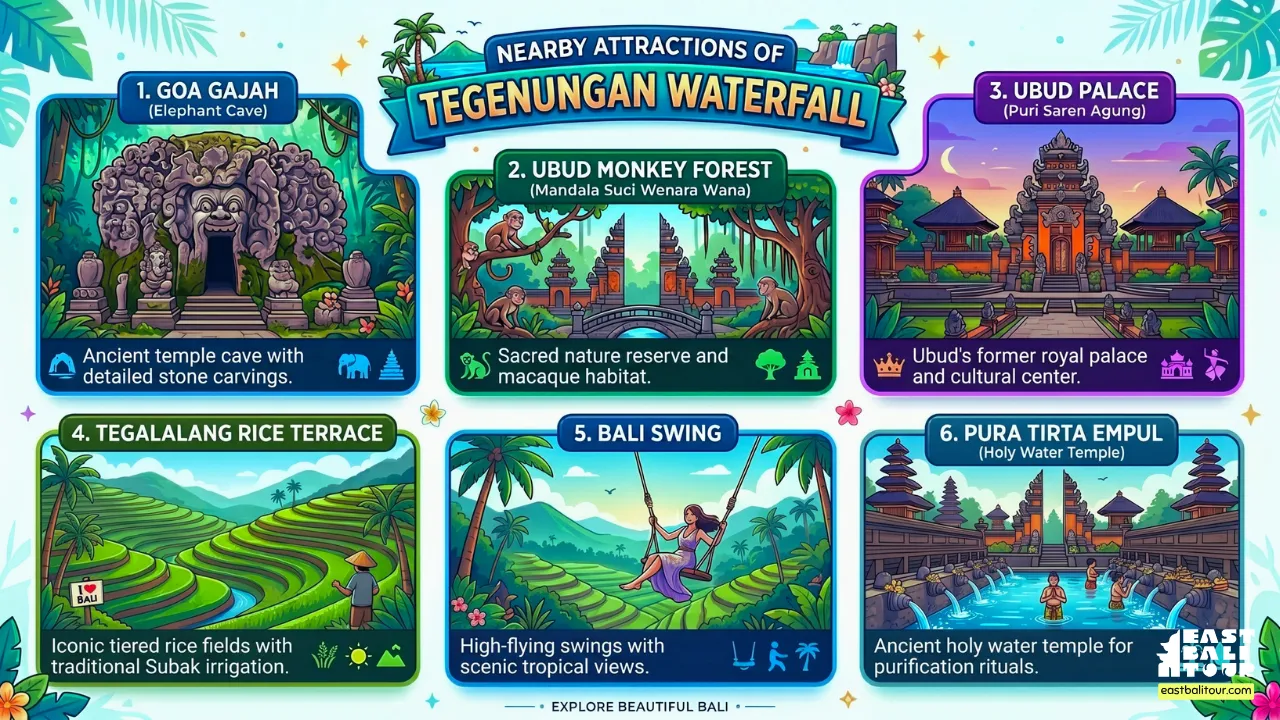
Because Tegenungan Waterfall is centrally located in Gianyar, it serves as the perfect anchor point for a comprehensive day-trip itinerary through south-central Bali. You can easily pair your visit with these world-renowned cultural landmarks:
◽ Goa Gajah (Elephant Cave)
Located just 15 minutes north of Tegenungan, this ancient 9th-century Hindu archaeological site features an iconic demon-faced cave entrance, historical bathing pools, and beautiful rock-wall carvings.
◽ Ubud Monkey Forest
Roughly 20 minutes away, this sacred sanctuary is home to over a thousand long-tailed Balinese macaques roaming freely through a dense, mystical banyan forest filled with ancient temples.
◽ Ubud Palace (Puri Saren Agung)
Situated in the absolute center of Ubud, this historical residence of the Ubud royal family showcases pristine traditional Balinese architecture and hosts evening cultural dance performances.
◽ Tegalalang Rice Terrace
Located about 35 minutes north of the waterfall, these world-famous terraced rice paddies offer dramatic, undulating valley views and are a prime location for experiencing the ancient Subak cooperative irrigation system.
◽ Bali Swing
Scattered throughout the valleys surrounding Ubud and Tegalalang, these thrilling high-altitude swings let you soar over deep jungle ravines and coconut groves for the ultimate adrenaline rush and photo opportunity.
Is Tegenungan Waterfall Worth Visiting?
Without question, Tegenungan Waterfall is absolutely worth adding to your Bali travel itinerary, particularly if you are based in Ubud, Sanur, or the southern beach enclaves.
◽ Pros and Highlights
Unmatched Accessibility: No intense jungle trekking required; a short, well-maintained walk makes it accessible to almost anyone.
Excellent Amenities: Great food, safety monitoring, and changing rooms make it incredibly stress-free.
Massive Visual Impact: The sheer power and volume of the Petanu River create an unforgettable natural spectacle.
If you’re ready to experience this incredible lowland cascade firsthand, let our local experts handle the driving and itinerary. Book your Best Ubud Day Tour today and explore the Monkey Forest, Rice Terraces, and Tegenungan Waterfall all in one unforgettable trip.
◽ Who Should Visit?
Tegenungan is the perfect match for families traveling with children, older adults who want to see a major Bali waterfall without hazardous hiking, and content creators looking for highly cinematic backdrops. However, if you are an extreme adventurer looking for a completely isolated, untouched, off-the-beaten-path wilderness experience, you may find the commercialized layout and crowds a bit overwhelming, and might prefer heading further north to the rugged falls of Munduk or Aling-Aling. For the vast majority of tourists, Tegenungan delivers a world-class blend of tropical beauty and modern comfort.