Tirta Gangga Water Palace
Perched on the eastern slope of Bali, the Tirta Gangga Water Palace is one of the island’s most atmospheric royal sites. Built in 1946 by the Raja of Karangasem, I Gusti Bagus Jelantik, the palace was designed as a royal retreat — and today the Tirta Gangga Water Palace is one of East Bali’s best-known royal gardens and bathing complexes fed by natural mountain springs. The name Tirta Gangga translates as “holy water of the Ganges” — a nod to the sacred river of India that holds deep meaning in Balinese Hindu cosmology.
This complete visit guide to the Tirta Gangga Water Palace covers the palace’s history, landmarks, entrance fees, opening hours, etiquette, and photography tips — plus how to combine Tirta Gangga with Lempuyang, Taman Ujung, and Sidemen on a comfortable East Bali day trip.
1. History & Cultural Significance
Perched on the eastern slope of Bali, the Tirta Gangga Water Palace is one of the island’s most atmospheric royal sites. Built in 1946 by the Raja of Karangasem, I Gusti Bagus Jelantik, the palace was designed as a royal retreat and bathing complex fed by natural mountain springs. The name Tirta Gangga translates as “holy water of the Ganges” — a nod to the sacred river of India that holds deep meaning in Balinese Hindu cosmology.
Unlike the better-known Ubud Monkey Forest or the cliff-top Uluwatu Temple, Tirta Gangga sits quietly in the rice fields of Ababi village, offering travelers a glimpse of royal Balinese life before the mass tourism era. The palace complex blends Balinese and Chinese-inspired decorative elements — a reflection of the Karangasem royal family’s far-reaching trade connections.
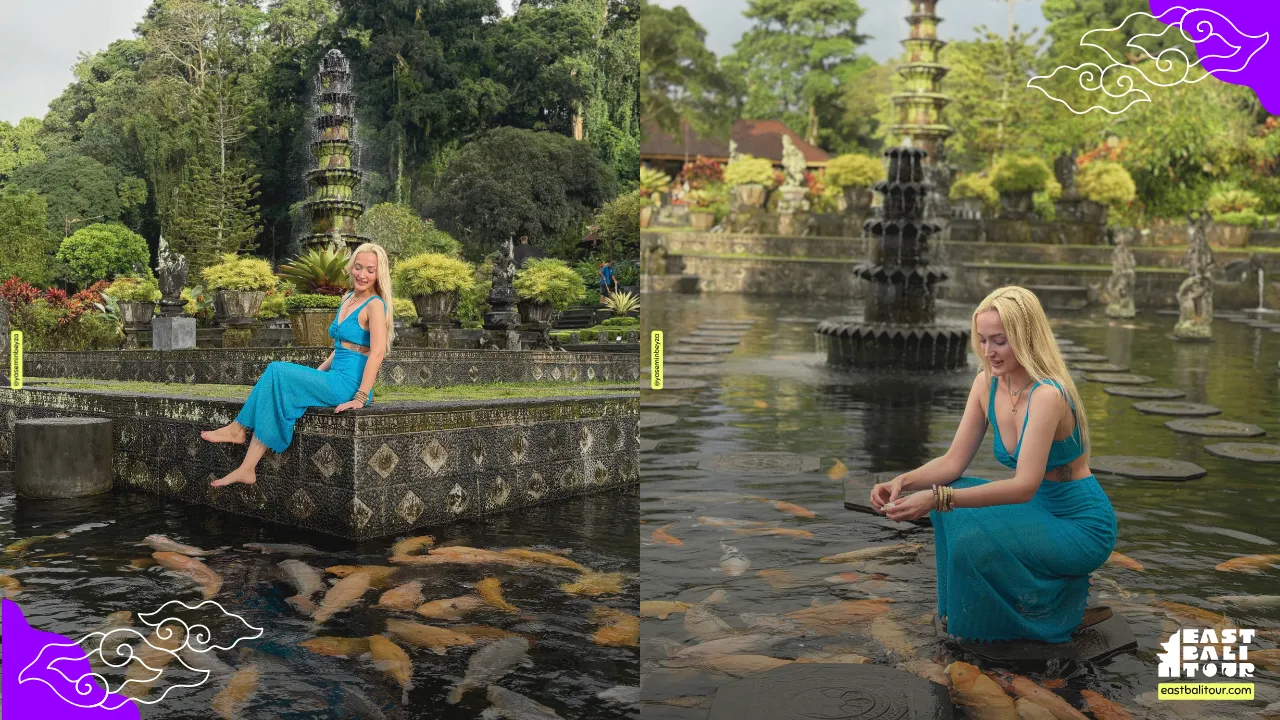
The complex was designed by the royal family’s own engineers and craftsmen, drawing on water features common to the palaces of Southeast Asia while adding distinctly Balinese ornament. The name itself — Tirta Gangga, or holy water of the Ganges — links the palace’s spring-fed pools to the sacred river of India, and the same spring still feeds the fountains today. For the Karangasem court, the site was both a place of leisure and a spiritual statement, and parts of the grounds remain ceremonial spaces used for temple anniversaries and purification rituals.
After the royal era, the palace fell into a period of quiet decline. The 1963 eruption of Mount Agung buried parts of the grounds in ash, and later damage required further repairs to parts of the walls and water channels. Restoration work in the 1980s and 1990s, carried out by local artisans trained in traditional stone carving, rebuilt the fountains and pools piece by piece. Today the Tirta Gangga Water Palace stands as one of the best-preserved royal water gardens in Bali, and its restoration is a point of local pride in Karangasem Regency.
The water itself is the heart of the complex. Spring water flows from a source high on Mount Agung and is channeled through the palace in a series of pools, channels, and fountains before continuing into the surrounding rice fields. That same water is used in purification ceremonies, and local families still visit the site to pray and collect holy water during temple festivals. For Balinese Hindus, the Tirta Gangga Water Palace is not only a royal garden but a working spiritual landscape where water connects the mountain, the temple, and the harvest below.
The Karangasem royal family used the complex as a summer retreat and a place to host foreign guests. The palace is associated with the Karangasem royal family. Visitor displays and facilities can change, so check what is open and available when you arrive. This mix of influences is visible throughout the Tirta Gangga Water Palace — from the split gates at the entrance to the carved naga serpents that guard the pools.
of Mount Agung damaged the palace, and it was carefully restored in the decades that followed. Today, the site is a living cultural landmark where visitors can walk the same stone paths once used by Balinese royalty.
2. The Water Palace & Its Landmarks
The complex is compact but rich in detail. Most travelers spend between one and two hours exploring the pools, gardens, and shrines. Below are the landmarks that define a visit.
The 11-Tier Fountain
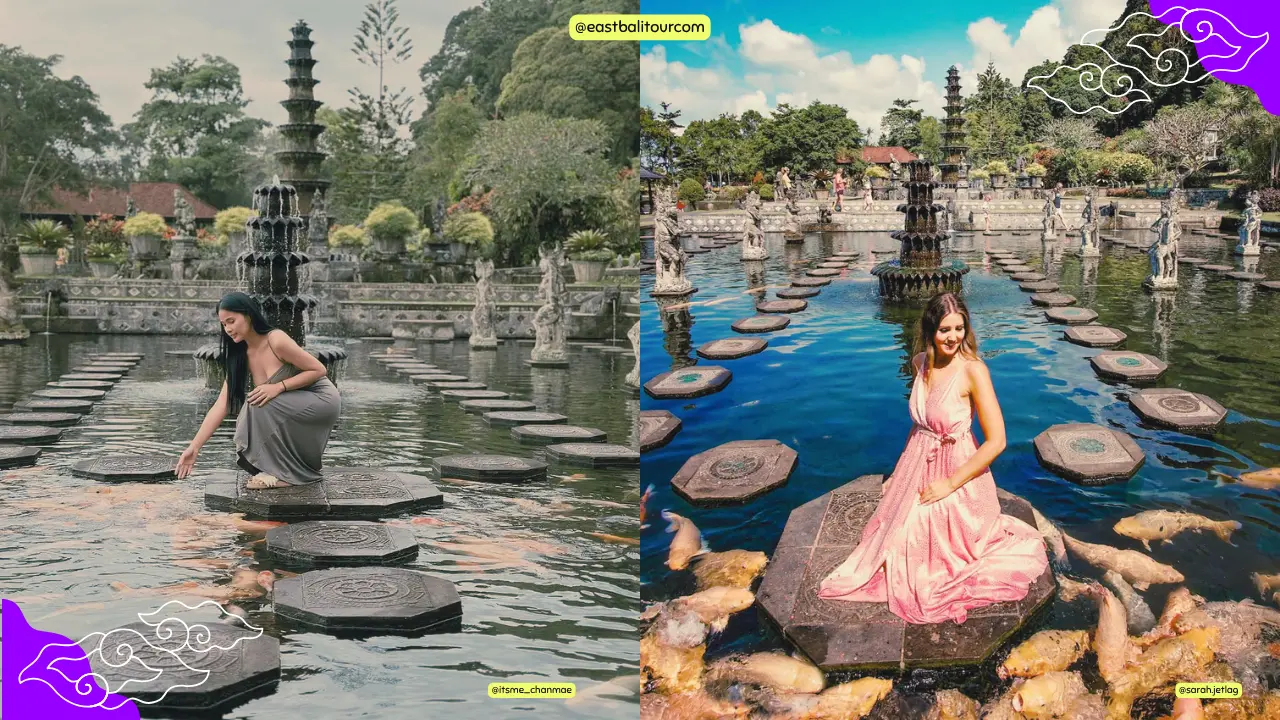
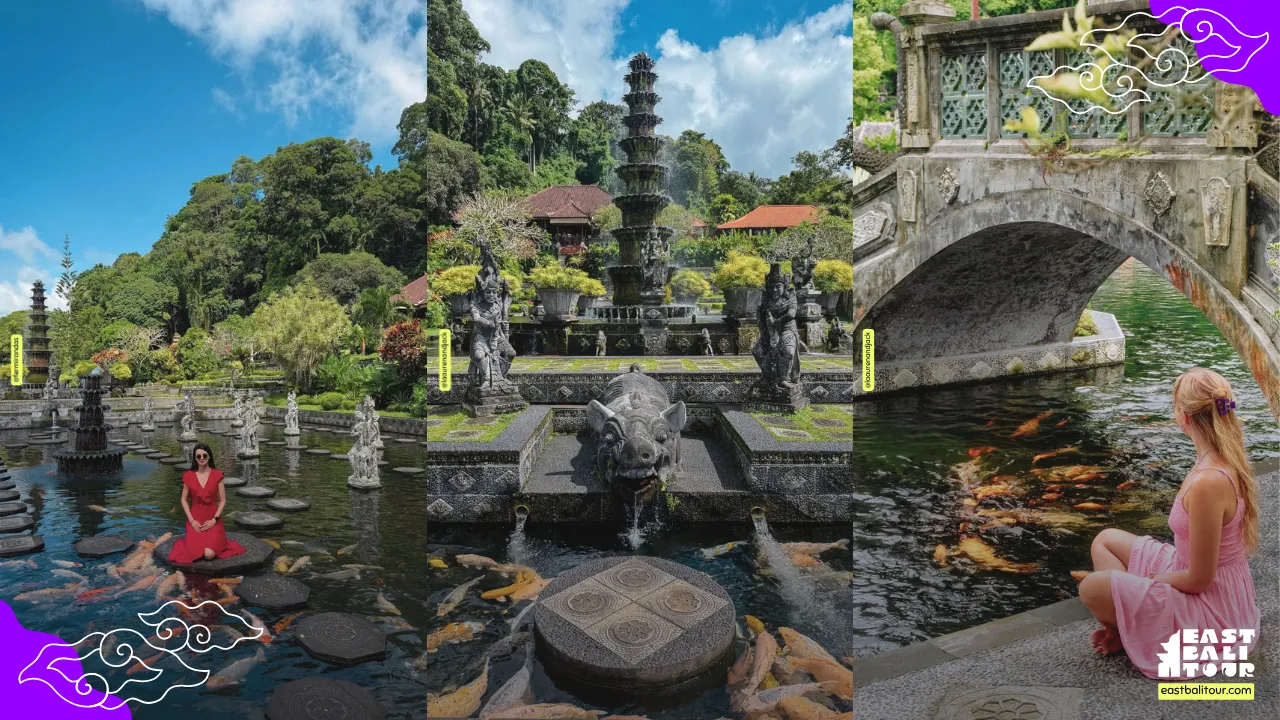
The 11-tier fountain is the iconic centrepiece of the Tirta Gangga Water Palace. Water surges from the top tier and cascades down into a koi-filled pool, creating one of the most photographed scenes in East Bali. Early morning light — just after the gates open — produces the clearest reflections.
Koi Pools & Stepping Stones
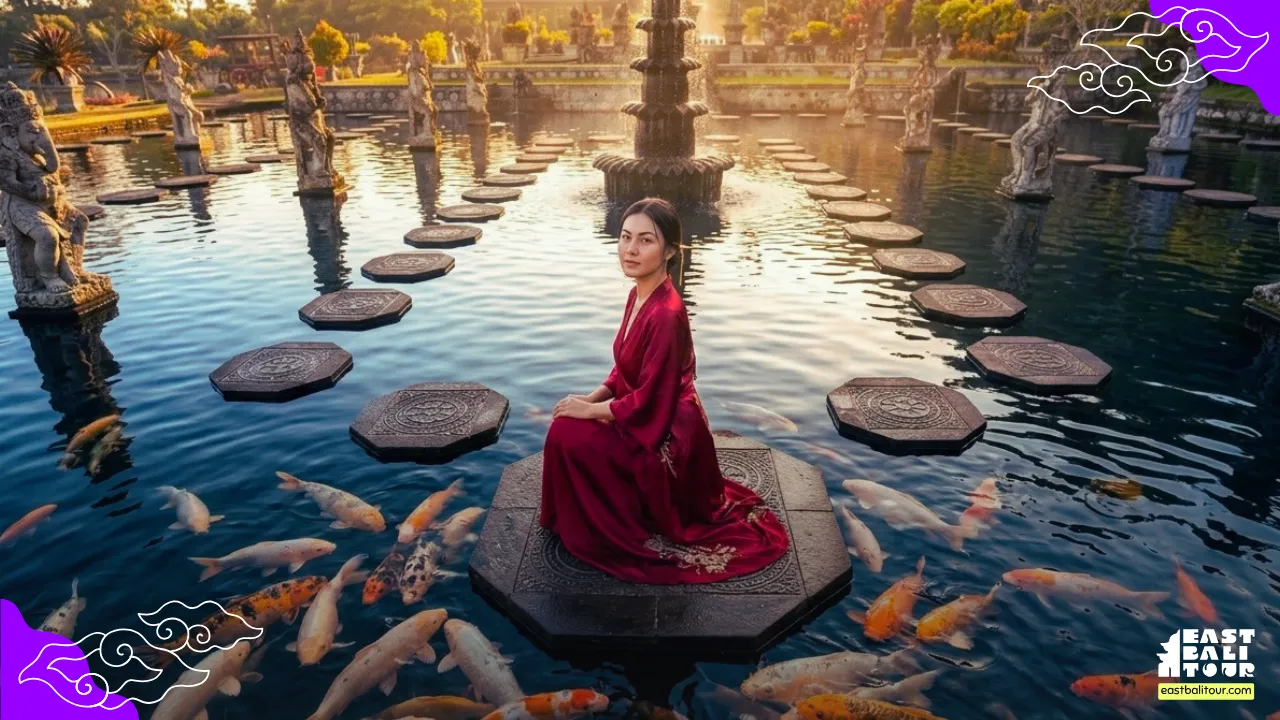
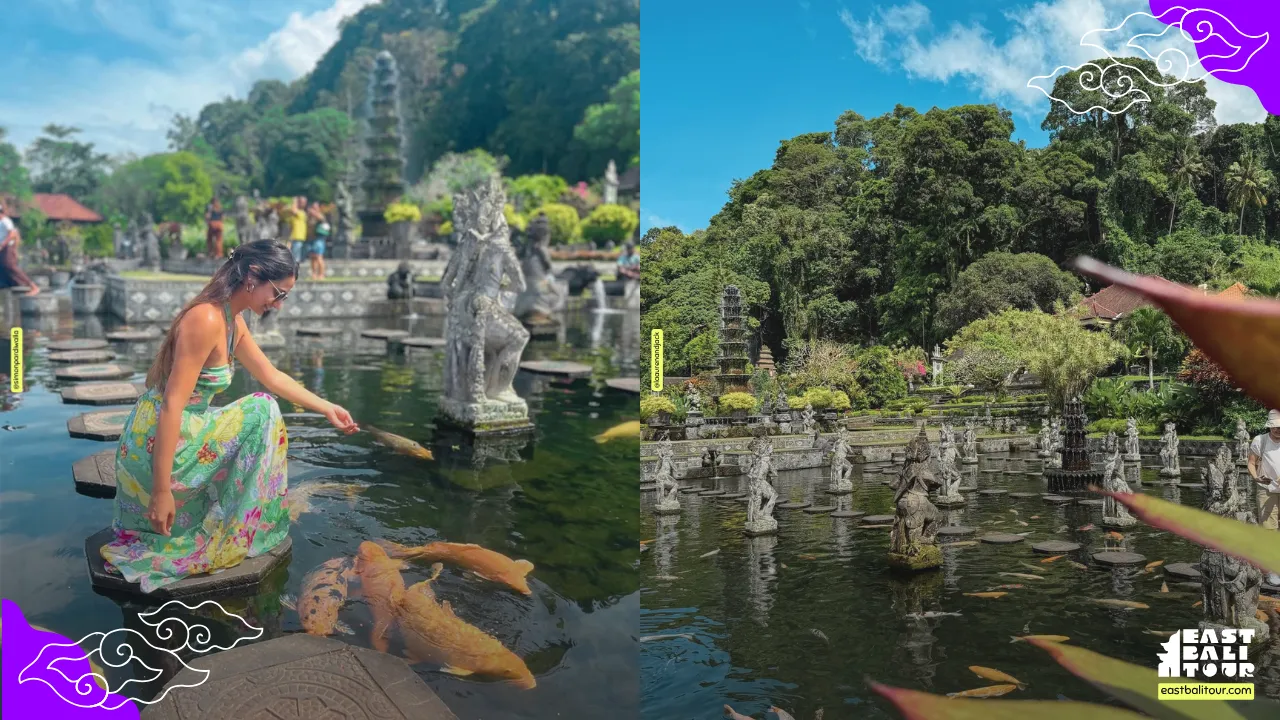
A series of koi pools with carved stepping stones winds through the garden. Visitors can walk across the stones (slowly, and one at a time) while giant koi circle beneath. The stepping stones make a natural photo spot, but wet stone is slippery — appropriate footwear is essential.
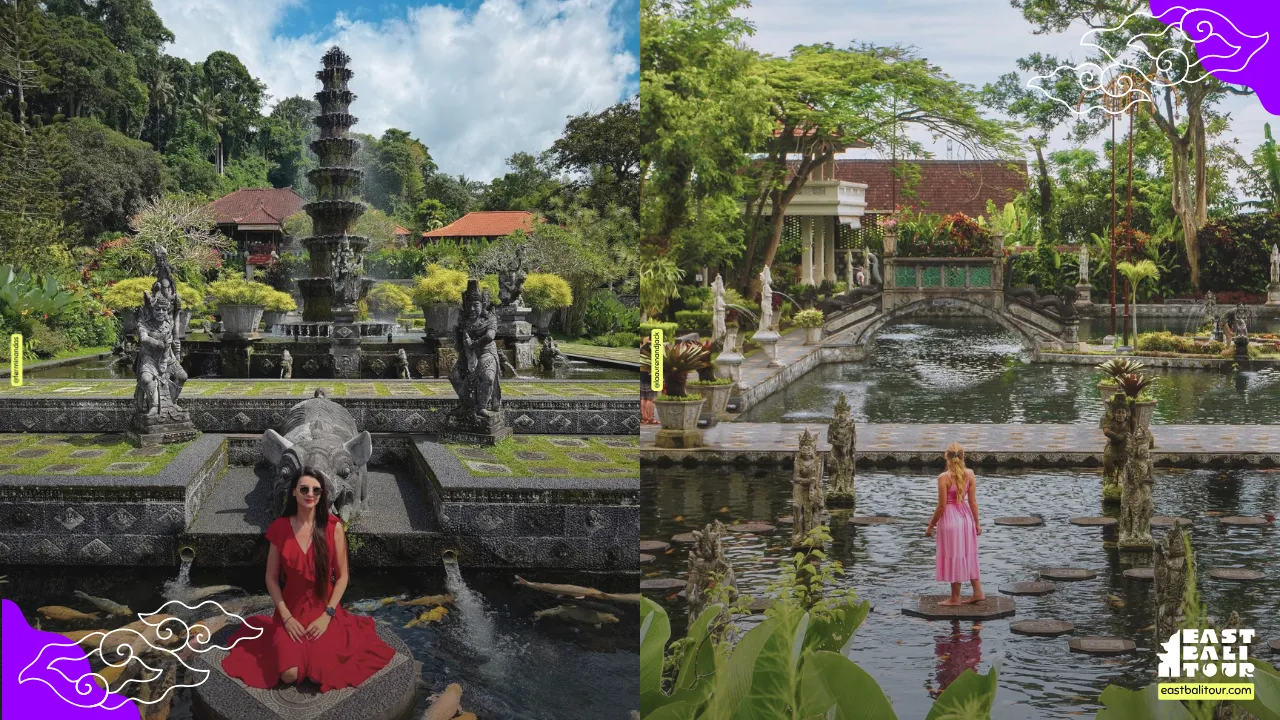
Stone Garden & Royal Bathing Pools
The stone garden is a maze of statues, water spouts, and tropical plants. Behind it lie the royal bathing pools, fed by the same mountain springs. Visitors can wade into the cold, clear water — a refreshing break after the drive from Ubud or Candidasa. Any interpretation space or historical display may change; ask staff what is open during your visit.
3. The Water Pools & Gardens
The heart of the Tirta Gangga Water Palace experience is water itself. The springs that feed the palace rise on the slopes of Mount Agung, and the water is considered holy (suci) by local residents. The largest pool is open for swimming, while smaller pools are reserved for ritual purification.
Swimming in the Main Pool
Visitors can swim in the main pool for a small fee, though lifeguards are not always on duty. The water is bracingly cold even in the dry season, and the pool floor is lined with stone — water shoes are recommended. Modest swimwear is expected; a sarong or T-shirt over swimwear is the local norm.
The Gardens
The surrounding gardens are meticulously maintained, with frangipani, hibiscus, and lotus framing the pools. Benches shaded by large trees make this an easy place to pause for an hour. Photographers should bring a wide lens — the fountain, gardens, and Mount Agung backdrop (on clear days) compose beautifully together.
4. Visitor Information & Practical Details
Here’s everything needed to plan a smooth visit to the Tirta Gangga Water Palace — entrance fees, opening hours, and practical tips.
Location & access
- The palace is in Ababi village, Abang district, Karangasem Regency, East Bali.
- The Tirta Gangga Water Palace sits roughly 85 km (about 2.5 hours) from Ngurah Rai International Airport (DPS), and about 1.5 hours from Ubud by private car.
- Access to the Tirta Gangga Water Palace is easy by private car charter — the palace has an on-site parking area for cars and scooters. For travelers comparing routes, the fastest option is the southern road via Candidasa, while the scenic mountain route through Sidemen adds roughly 30 minutes but rewards with rice-terrace views. There is no direct public transport to the entrance, so most visitors arrive by private car charter, scooter rental, or a pre-booked day trip.
Best time to visit the Tirta Gangga Water Palace
Mornings are the sweet spot at the Tirta Gangga Water Palace. Arriving between 8:00 and 10:00 AM keeps you ahead of the tour groups, gives you soft light for the fountains, and leaves the gardens far less crowded for photographs. The palace is an outdoor site, so midday heat can be intense between 11:00 AM and 2:00 PM, especially in the dry season from April to October. If you visit during the wet season, bring a light rain jacket and expect short tropical showers that usually pass within an hour.
Most travelers spend 45 minutes to an hour and a half walking the grounds. Photography stops at the 11-tier fountain, the koi ponds, and the stepping stones stretch that time, and many visitors add another 20 minutes for the small museum and the upper garden viewpoint. Plan the Tirta Gangga Water Palace as the slow, contemplative stop of your East Bali route rather than a rushed photo-op — the site rewards patience.
Verify before you go — check the latest entrance fee and reviews on TripAdvisor (Tirta Gangga Water Palace), and see the exact location on Google Maps.
Opening hours at the Tirta Gangga Water Palace
- Opening hours can change; confirm the current hours at the entrance or through the attraction’s current visitor-information channel.
- Hours can vary with ceremonies and the wet season — travelers should check ahead.
Entrance fee & additional costs
Rates change. Confirm the latest entrance, parking, swimming and other fees at the ticket counter before paying.
- International adults: approximately the current rate; children (5–12): around the current rate; seniors: around the current rate.
- Domestic visitors: approximately the current rate for adults.
- Parking: Car the current rate; scooter the current rate.
- Extras: swimming in the main pool the current rate; boat hire the current rate; drone permit the current rate (subject to availability and local rules).
Best time to visit the Tirta Gangga Water Palace
The Tirta Gangga Water Palace is busiest between 9:00 AM and 11:00 AM, when day-trippers from Ubud and the cruise pier arrive in convoy. For a calmer experience, arrive at opening time, when the koi ponds are quiet and the morning light softens the stone carvings. Late afternoon, after 3:00 PM, is another good window — the crowds thin out again and the golden hour makes the fountains photograph beautifully. Weekends and Balinese holidays such as Galungan and Kuningan draw local families, so weekday mornings are the most reliable choice for travelers who want space to explore.
What to bring and how long to stay
Plan for 1 to 1.5 hours inside the palace grounds: enough time to walk the koi ponds, photograph the 11-tier fountain, visit the small museum, and — for visitors who want to — swim in the main pool. Bring modest clothing if you plan to enter the temple areas, a sarong or towel for swimming, and small bills in IDR for parking and lockers. Sunscreen and a hat are useful because much of the complex is open-air, and the stone paths can be slippery after rain, so comfortable shoes matter more than sandals.
Because the Tirta Gangga Water Palace is a royal heritage site rather than a commercial theme park, facilities are simple: there are toilets, a small warung area, and parking, but no large restaurant inside. Most visitors combine the palace with lunch in nearby Sidemen or Amed, or with the picnic lawns at Taman Ujung, which makes the stop feel like part of a proper East Bali day rather than a rushed photo break.
confirm the latest rates at the ticket counter.
Dress code and behaviour
- The palace is a sacred site: shoulders and knees should be covered out of respect for worshippers, especially near shrines and purification pools.
- Swimming is limited to the designated main pool; do not climb on statues or the fountain.
- Keep noise low near prayer areas, and avoid disturbing local ceremonies.
Best time to visit
- Arrive early (6:30–9:00 AM) for soft light, cool temperatures, and fewer visitors.
- The dry season (April–October) offers the most reliable weather; the wet season (November–March) brings lush greenery and occasional rain showers.
Facilities
- Parking, ticket office, restrooms, a small café/warung, and souvenir stalls are available on site.
- Cash is recommended — card acceptance is limited.
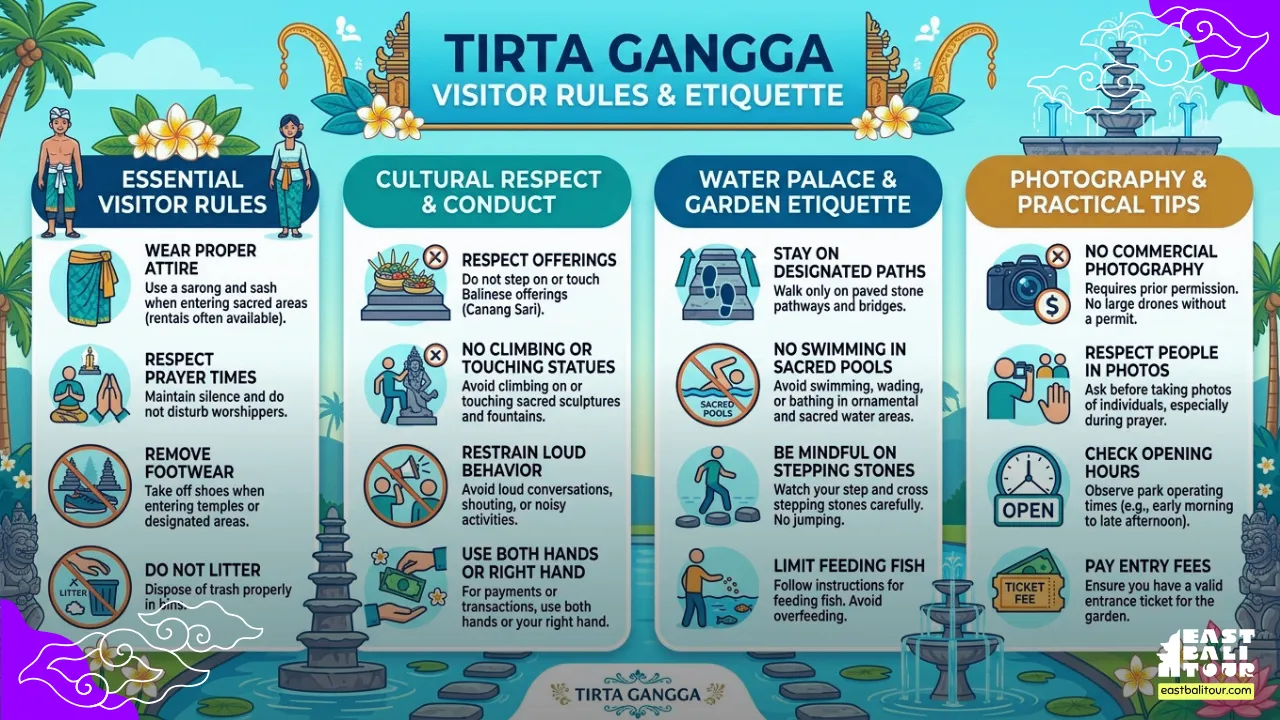
5. Rules & Etiquette
Because Tirta Gangga remains an active sacred site, a few simple rules keep the visit respectful and safe:
- Do not climb the fountain or statues.
- Wear modest clothing near shrines; sarongs can be rented at the entrance.
- Swim only in the designated main pool.
- Fish feeding etiquette: Only feed the koi with approved fish food pellets purchased on-site; never throw bread, human food, or rubbish into the ponds.
- Respect ceremonies — step back quietly if a ritual is in progress.
- Watch your step — wet stone and stepping stones become slippery.
6. Unique Highlights & Photography Tips
- The 11-tier fountain at sunrise: The first hour after opening delivers mirror-still reflections and near-empty walkways.
- Koi & stepping stones: A low-angle shot from pool level captures the fish circling beneath the carved stones.
- Mount Agung backdrop: On clear mornings, the volcano rises behind the gardens — a rare East Bali landscape shot.
- Water spouts & statues: The stone garden’s moss-covered carvings reward close-up detail photography.
- Golden hour before closing: Warm late-afternoon light softens the palace’s stone and water textures.
Tip: A polarizing filter cuts glare on the pools and deepens the blue of the sky — the single most useful accessory at this location.
7. Nearby Attractions & Tour Ideas
Tirta Gangga is the natural anchor of an East Bali day trip itinerary. The palace sits minutes from several major East Bali landmarks, making it easy to build a full day around it:
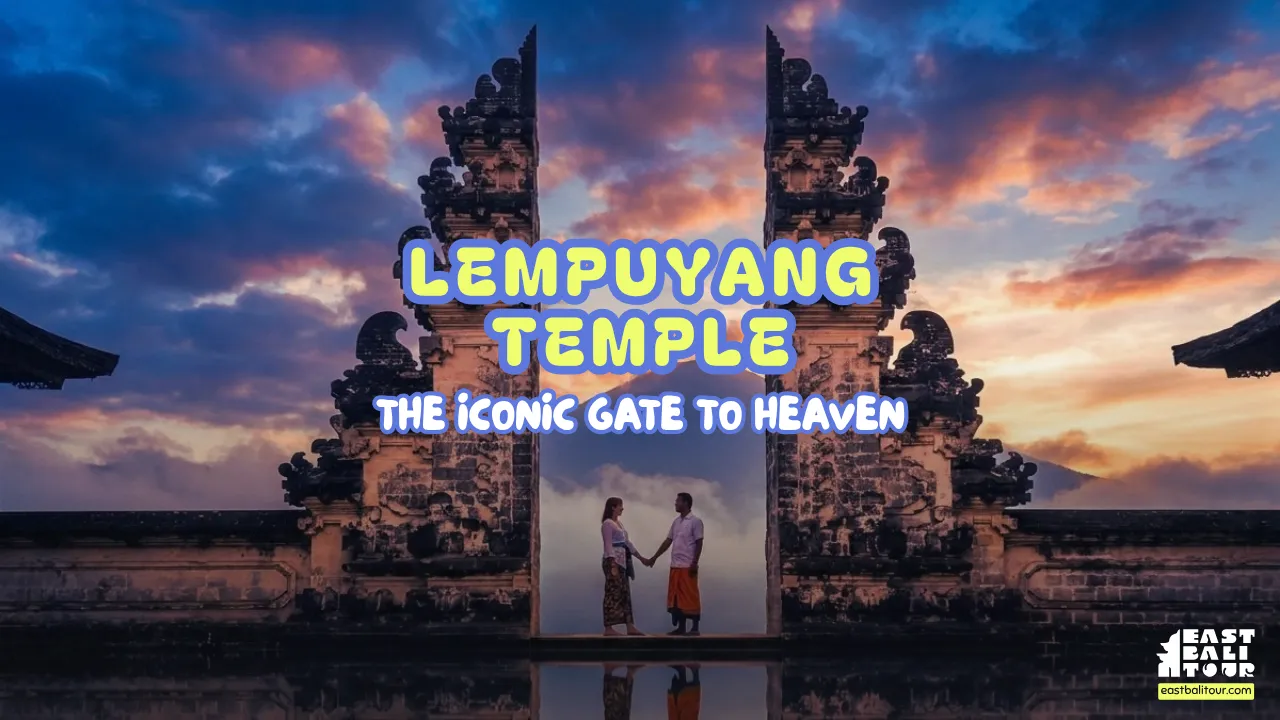
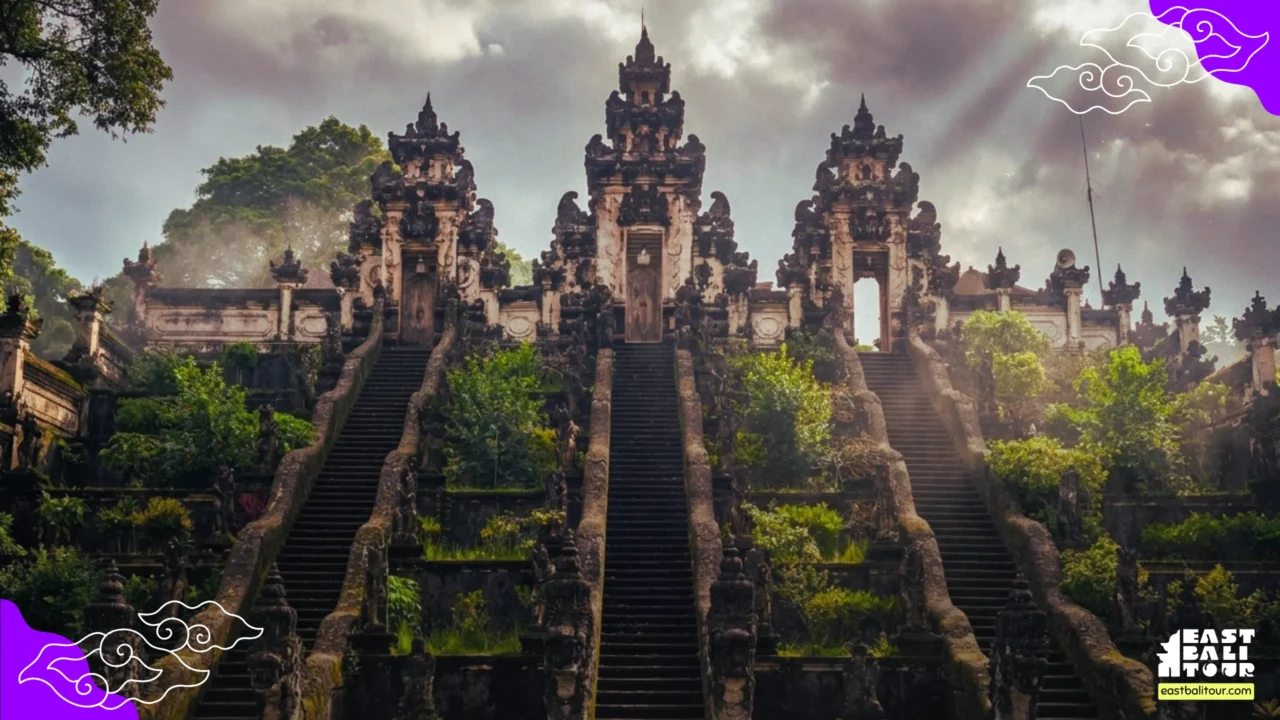
- Lempuyang Temple (Gates of Heaven) — about 20–30 minutes away, famous for its mirror-pond photo spot and sunrise views of Mount Agung.
- Taman Ujung Water Palace — a short drive south, another royal water palace with sweeping lawns and sea views.
- Sidemen Valley — 30–40 minutes west, with rice terraces, warungs, and sunrise hikes.
- Amed & Jemeluk Bay — 40–50 minutes east, a relaxed beach town for snorkeling and sunsets.
- Telaga Waja River — rafting runs through the valley below, ideal for active travelers.
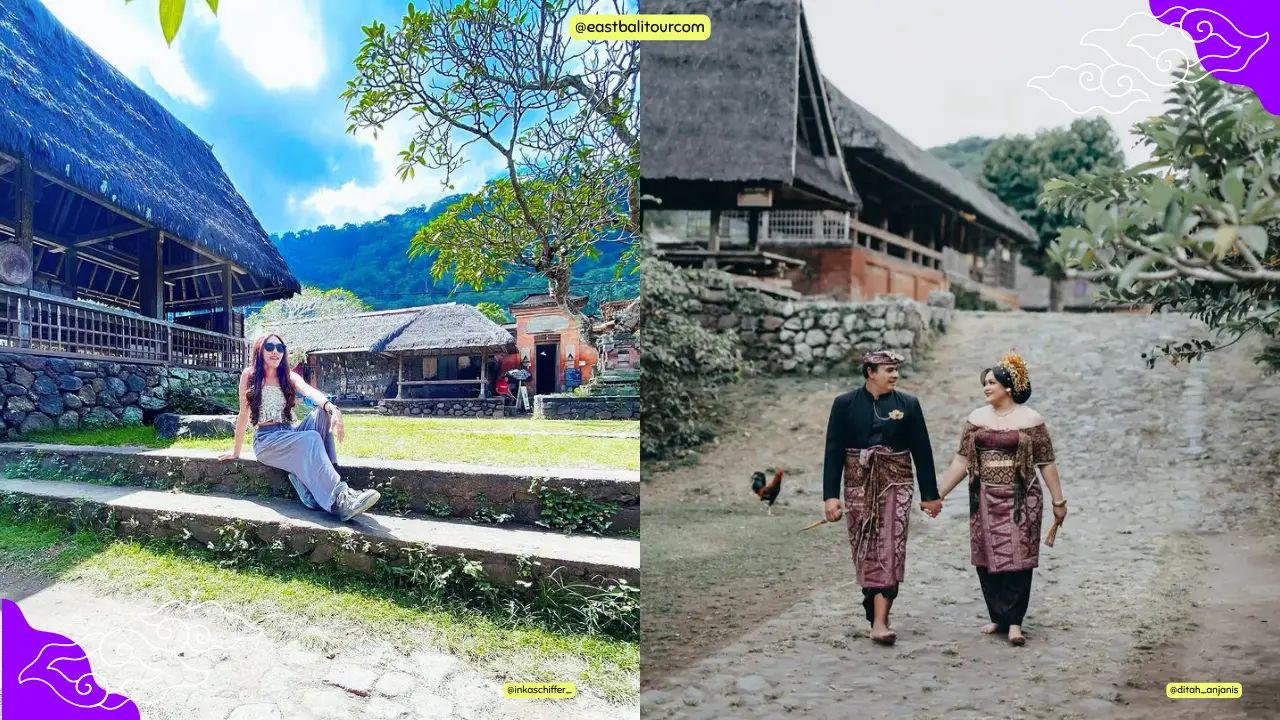
Just south of the palace, Tenganan Pegringsingan is one of Bali’s oldest villages, famous for its woven geringsing double-ikat cloth and its annual Mekare-kare ritual. A visit adds cultural depth to the same driving route: travelers can combine the Tirta Gangga Water Palace, Tenganan, and Taman Ujung in one comfortable morning, then continue to a beach lunch in Amed or a sunset stop at Lempuyang. Distances between these East Bali landmarks are short — most are within 10 to 40 minutes of each other — which makes the region ideal for a private-car day rather than a rushed tour bus schedule.
For travelers who prefer to move at their own pace, the Tirta Gangga Water Palace also works well as a mid-route break between Sidemen’s rice terraces and the coast. Stopping here after a sunrise hike in Sidemen, for example, gives the day a natural rhythm: morning in the valley, late-morning among the fountains, and afternoon snorkeling or beach time in Amed before the drive back to Ubud or Candidasa.
>East Bali tours combine Tirta Gangga, Lempuyang, and Taman Ujung in a single comfortable day with a private driver.
For a relaxed single-day route, leave your accommodation around 7:30 AM, reach the Tirta Gangga Water Palace by 9:00 AM, and spend the morning here before continuing to Lempuyang or Taman Ujung. The roads through Karangasem are winding but well paved, and a private car makes the drive comfortable. Lunch options are simple warungs along the main road near Ababi village and at the palace parking area — expect local Indonesian dishes rather than international restaurants.
If you are staying in Amed or Candidasa, the Tirta Gangga Water Palace is less than an hour away and works beautifully as the first stop of a loop that includes the salt farms at Kusamba, the Goa Lawah bat cave, and the beaches of the east coast. Drivers familiar with East Bali will also suggest a stop at Tenganan, the ancient Bali Aga village a short drive from Candidasa, where traditional double ikat weaving is still practiced. A well-planned day combines two water palaces with a traditional village and still leaves time for a relaxed dinner by the sea.
Museum, Village, and Practical Access
The Museum & Restoration Story
The complex is connected with the Karangasem royal family and was affected by the 1963 Mount Agung eruption. Information displays and restoration details can change, so treat the current on-site information as the reference during your visit. Do not assume that a museum, particular exhibit or restoration display is open unless it is confirmed at the entrance.
What to Do After the Main Loop
Once the fountain, koi ponds, gardens, and bathing pools have been explored, travelers often pause at the shaded cafe for a coffee before continuing south. The palace grounds are compact enough to allow a relaxed pace, and the surrounding village of Ababi is worth a short wander — a genuine working Balinese village with warungs selling coffee, fruit, and local snacks. For those travelling with a private driver, the stop can be flexibly extended into the early afternoon before moving on to Lempuyang or Taman Ujung.
How to Get to Tirta Gangga Water Palace
The drive from Ubud to Tirta Gangga takes roughly 1.5 hours and crosses increasingly quiet mountain roads as the route climbs into Karangasem. A private car charter lets travelers combine the palace with Lempuyang Temple, Taman Ujung Water Palace, and the Sidemen rice valleys in one comfortable day, with an English-speaking driver who knows the ceremony calendar and the quietest photo hours. For travelers who prefer not to negotiate narrow mountain roads themselves, this is by far the most relaxing way to see the palace.
Combining Tirta Gangga with a North Route
Although Tirta Gangga sits on the eastern side of the island, it pairs naturally with the main East Bali car charter route that runs through Ubud, the Sidemen valley, and on to Lempuyang before looping toward Amed or Candidasa. Many travelers schedule the palace mid-morning after a Lempuyang sunrise, using the gardens as a calm reset before the return drive. The proximity of Taman Ujung — a second, younger royal water palace with open lawns and sea views — makes the eastern loop unusually rich in water-inspired architecture.
8. Why Choose a Private Tour
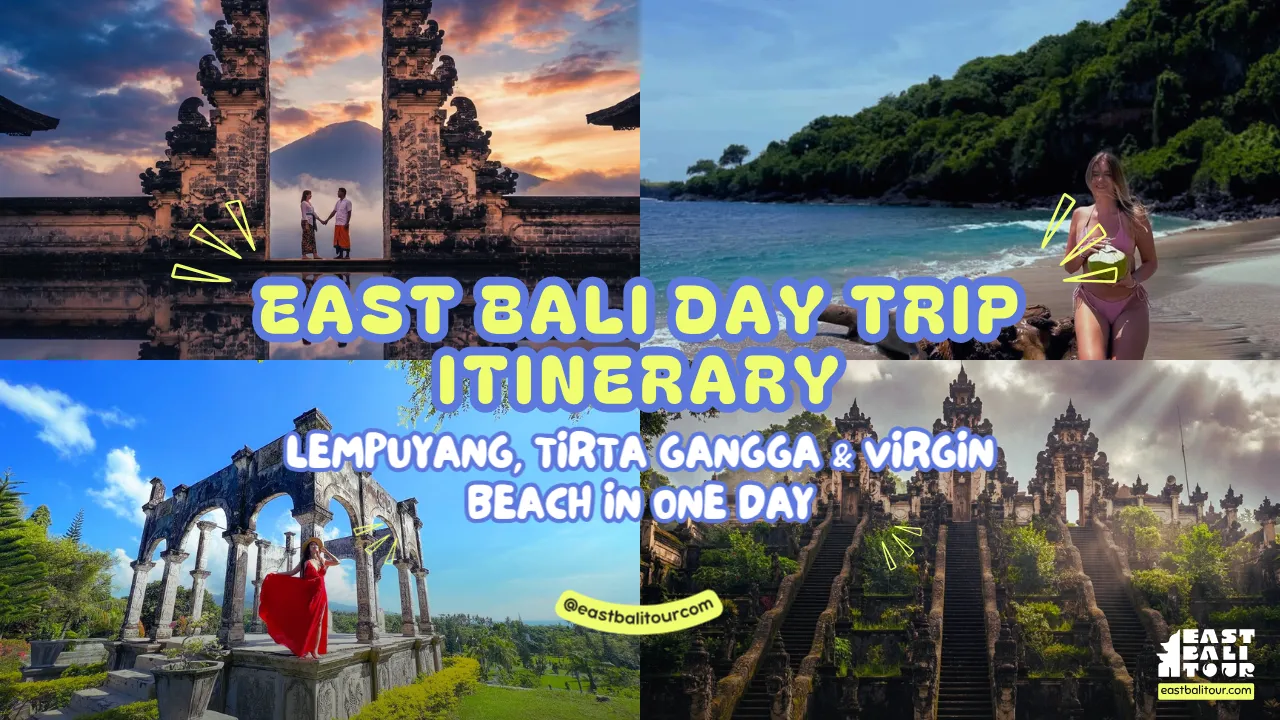
Tirta Gangga is a featured highlight on our full-day East Bali Day Tour, connecting the royal water palace with Lempuyang Temple, Tenganan Village, and Goa Lawah in one seamless route.
A private car charter removes the two biggest frictions of visiting Tirta Gangga: the long drive and the return journey. the two biggest frictions of visiting Tirta Gangga: the long drive and the return journey. The palace is a two-hour-plus drive from Ubud and much longer from the airport — doing it without a reliable driver turns a peaceful cultural stop into a stressful logistics puzzle.
- Door-to-door convenience: pick-up from Ubud, Candidasa, Sanur, or the airport, with an air-conditioned vehicle and an English-speaking driver.
- Flexible timing: leave early for opening time, or add Lempuyang at sunrise and Tirta Gangga mid-morning.
- Local knowledge: drivers know the ceremony calendar, the best photo spots, and the quietest hours.
- Safe mountain roads: the route crosses narrow, winding stretches — an experienced driver makes the journey smooth.
Book a private car charter with East Bali Tour to build a custom day around Tirta Gangga, Lempuyang, Taman Ujung, and Sidemen at a pace that suits the group.
9. Conclusion
The Tirta Gangga Water Palace is more than a photo stop — it is a window into East Bali’s royal heritage, sacred water traditions, and quiet mountain beauty. Its tiered fountains, koi-filled pools, and the terraced gardens of this Tirta Gangga Water Palace reward travelers who arrive early and move slowly.
Whether paired with the temples of Lempuyang, the lawns of Taman Ujung, or the rice terraces of Sidemen, the palace fits naturally into a well-paced East Bali day. For those who prefer to travel without logistics, a private car charter turns the long mountain road into part of the experience — comfortable, flexible, and guided by local knowledge.
Visit Tirta Gangga with a Private Driver
Skip the mountain-road stress. Custom East Bali day trips with door-to-door pick-up, flexible timing, and local knowledge.
🌿 Green travel tip
Arrive before 8:00 AM to beat tour groups, support local guides at the entrance, and keep the pools clean by using the provided showers before swimming. Bring a sarong or rent one on site.