Lempuyang Temple
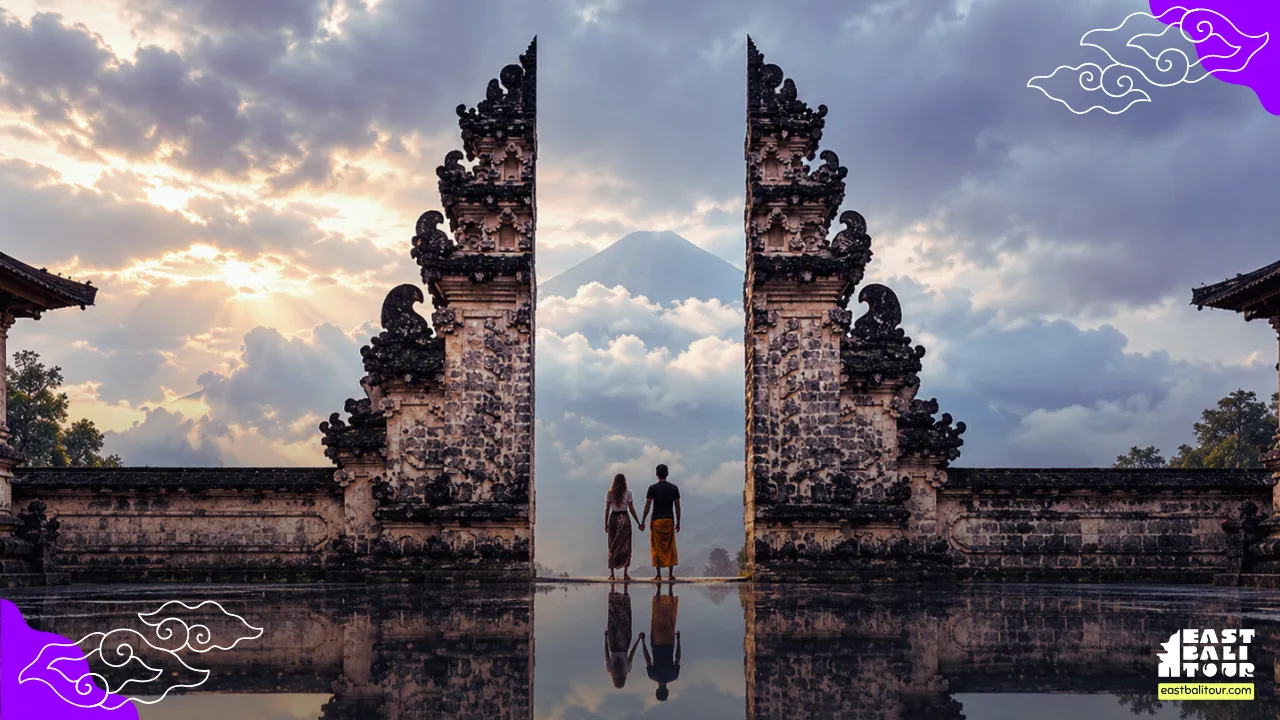
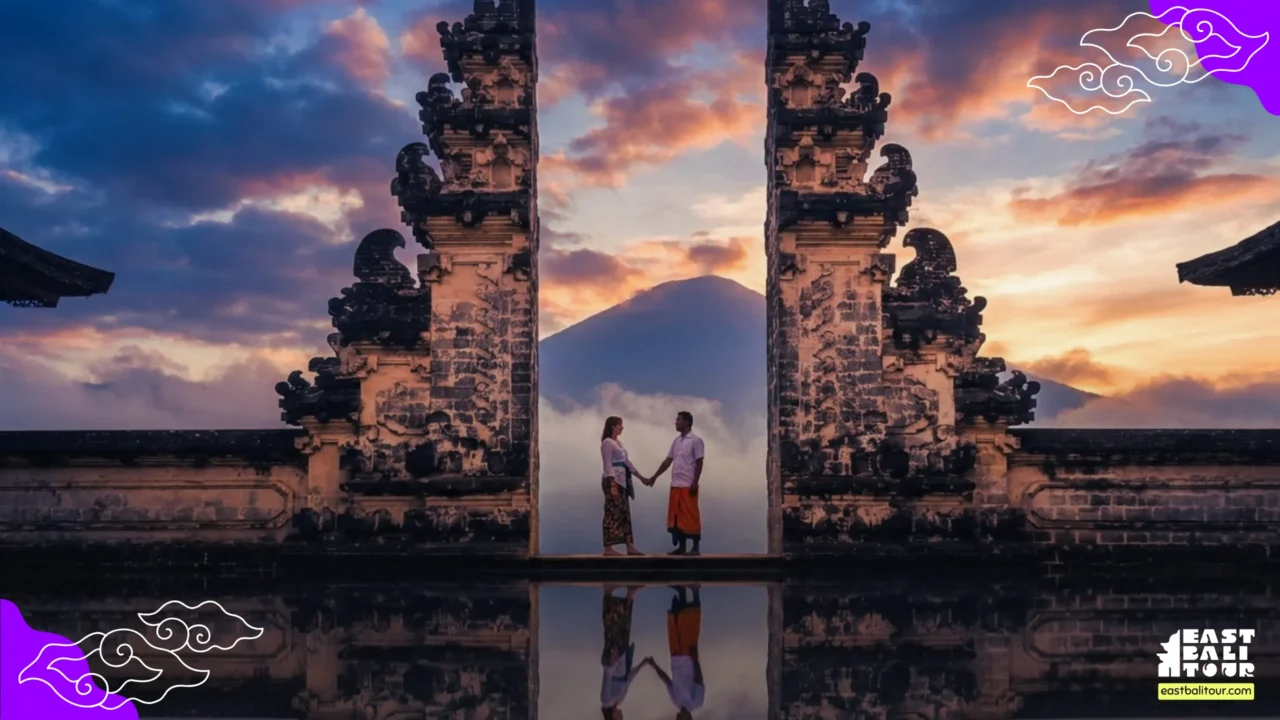
The Lempuyang Temple Gates of Heaven are the split gateways at Pura Penataran Agung Lempuyang in Karangasem, East Bali. The temple is an active Hindu place of worship, not a purpose-built photo set. The gates frame Mount Agung, and a small angled mirror creates the reflective image often seen in visitor photos.
Lempuyang is traditionally counted among Bali’s Sad Kahyangan Jagad, the six principal directional temples associated with the protection of the island, and the lower gate is one part of that religious setting.
1. Gates of Heaven: Quick facts
| Detail | What to know |
|---|---|
| Detail | What to know |
| Location | Pura Penataran Agung Lempuyang, Karangasem, East Bali |
| General access hours | Commonly given as around 07:00 to 18:00, but published hours vary. Confirm before travel. |
| Best arrival window | Near opening, usually around 07:00, to improve your chance of a shorter photo queue |
| Entry cost | Recently reported around IDR 100,000 for international visitors. Some sources quote entry and shuttle together at roughly IDR 100,000 to 150,000. Confirm on arrival. |
| Shuttle | Private cars park below under the shuttle arrangement reported since the parking system changed. The shuttle has recently been reported around IDR 50,000 per person for a return trip. |
| Photo queue | Numbered system. Mid-morning waits of two to three hours have been reported. |
| Full climb | About 1,700 steps or more, depending on how the route is counted. Several hours round trip for many visitors. |
| Dress | Cover shoulders and knees. A sarong and sash are required for temple access. |
| Nearby planning hubs | Amlapura, Tirta Gangga, and Amed, with road times depending on traffic and conditions |
Fees, hours, shuttle procedures, and queue conditions can change. Carry small Indonesian rupiah notes and confirm the amounts and route at the local arrival point.
2. What to expect on arrival
Lempuyang is an early stop on an East Bali day trip. Private cars have been directed to a lower parking area under the shuttle system reported by visitors since the parking arrangement changed. The shuttle then carries visitors up the narrow mountain road toward the temple. Allow time for parking, payment, loading, the uphill ride, and any wait before the gates.
At the lower temple, visitors normally join a numbered photo queue for the mirror photograph. A local attendant manages the mirror and calls visitors when their number is ready.
Numbers can rise quickly after the morning rush. Reports have mentioned numbers from about 50 to 158 or higher, but the number is not a reliable prediction of the wait. By mid-morning, waits of two to three hours have been reported. Arriving near 07:00 is the simplest way to give yourself more time.
The temple may change or pause visitor access for ceremonies, weather, administration, or worship. No arrival time guarantees a clear view of Mount Agung or a photograph. If the gate area is restricted, follow the staff and temple instructions.
3. Getting to Lempuyang Temple
Pura Penataran Agung Lempuyang is in Karangasem Regency, in the eastern part of Bali. The road climbs from the surrounding villages and includes winding sections. From Ubud, the drive commonly takes about 90 minutes to two hours. From the airport area, it can take two and a half hours or more. Traffic, rain, ceremonies, and the exact pickup point can lengthen those estimates.
A private car with a driver is practical for most visitors coming from South Bali or Ubud. The driver can handle an early departure, wait during the temple visit, and continue to another East Bali stop.
Return ride-hailing is less dependable in this rural mountain area. Confident scooter riders can reach the lower parking area, but the final approach is steep and narrow, so a scooter is a poor choice for inexperienced riders, wet weather, or a long day with luggage.
Amlapura is roughly 30 to 40 minutes away by road. Tirta Gangga is about 30 minutes, and Amed is about 60 to 75 minutes, although local road conditions affect every estimate. A focused route is easier to manage than trying to cross the island after a long queue.
For a first visit, ask the driver to keep the morning open rather than booking several timed attractions. Lempuyang can take longer than expected even when the road is quiet. A queue number, shuttle loading, a short ceremony pause, or a change in the gate access can all alter the schedule. If the mountain view is hidden, Tirta Gangga or a coastal stop can still make a sensible second destination.
The lower temple is the practical choice for visitors who want the landmark photograph without committing to a mountain pilgrimage. It has steps and uneven surfaces, but the experience is very different from walking the complete route to Pura Lempuyang Luhur. Families, older travelers, and anyone recovering from an injury should discuss the amount of walking with their driver before setting out.
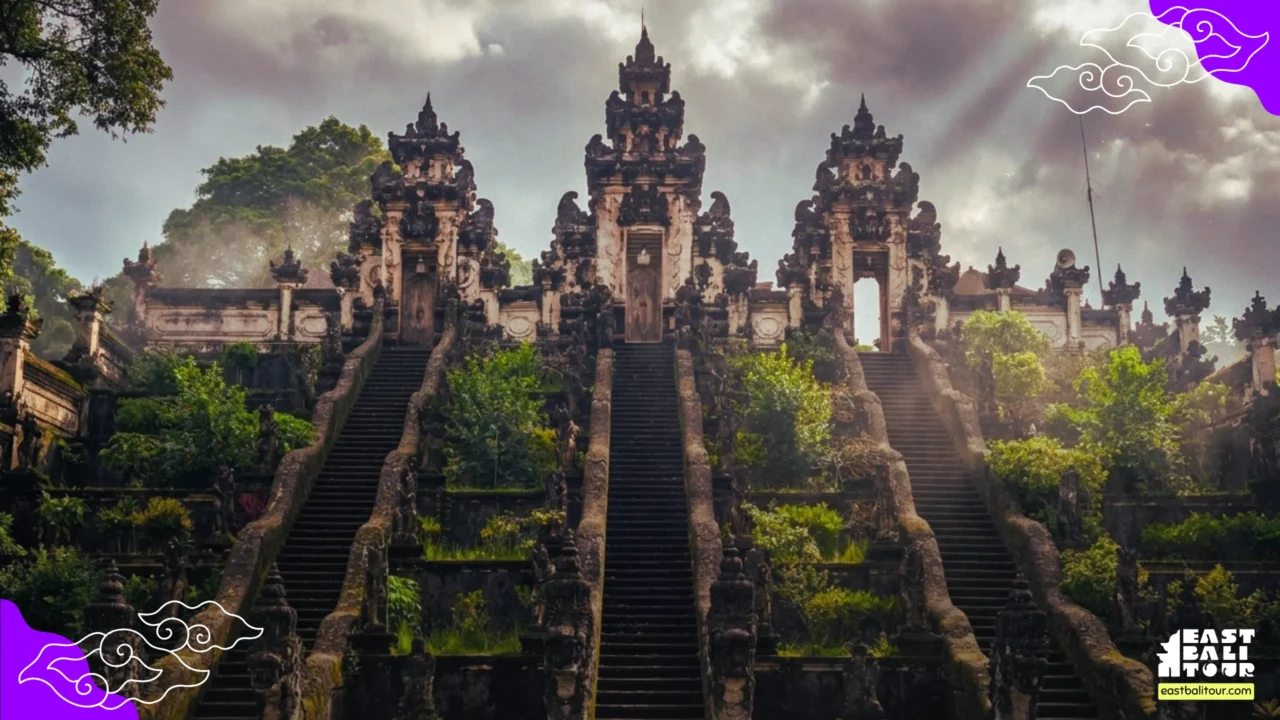
4. Hours, fees, and the shuttle
Local visitor guidance commonly gives access as early morning to late afternoon, around 07:00 to 18:00. Published listings differ, and temple hours can change for ceremonies or local administration. Check the access window before leaving your hotel rather than treating 07:00 to 18:00 as a fixed promise. Arriving near opening remains the most reliable way to find a shorter queue and cooler air.
Recent visitor and travel reports describe two separate payments:
- Entry: recently reported around IDR 100,000 for international visitors. Other sources quote entry and shuttle together in a rough range of IDR 100,000 to 150,000, which may reflect a different fee structure.
- Shuttle: recently reported around IDR 50,000 per person for a return trip.
These are reported ranges, not a guaranteed tariff. Confirm the amount and what it covers at the arrival point. Parking may also involve a small local fee. Do not assume parking, temple entry, shuttle transport, photo assistance, sarong arrangements, or tips are included in one ticket.
The shuttle arrangement reported since the parking system changed means visitors should follow the local parking and loading instructions. Do not try to drive a private car beyond the permitted point. Shuttle departures may be handled in batches according to visitor flow, so build some slack into the itinerary.
5. Dress and temple etiquette
Cover your shoulders and knees before entering. A sarong around the waist and sash across the body are standard requirements. Sarongs and sashes may be available near the entrance, but modest clothing and a personal sarong make the process easier.
Loose, breathable clothes are useful in the heat, and a light layer helps during an early mountain start. Swimwear, very short clothing, and bare shoulders are unsuitable for the temple setting.
Lempuyang remains a working Balinese Hindu temple. Stay in areas open to visitors, keep your voice low near prayer areas, and step aside for worshippers or ceremonies. Do not climb or lean on the gates, touch sacred objects, stand on offerings, sit on temple walls, or point your feet toward shrines.
Ask before photographing priests or worshippers closely. A queue number gives you a turn for the photo, not access to every courtyard.
Ceremonies can alter the route or close the photo area. Such changes are part of visiting a living temple. Visitors should not argue for a photograph or treat a restricted area as a service failure. Follow the attendant, temple staff, and local guide even when the queue or photograph is disappointing.
Waste should be carried to a proper bin or taken away when no bin is available. Plastic, food packaging, and cigarette smoke are especially unsuitable around a sacred complex. Responsible behavior also protects the mountain environment used by pilgrims.
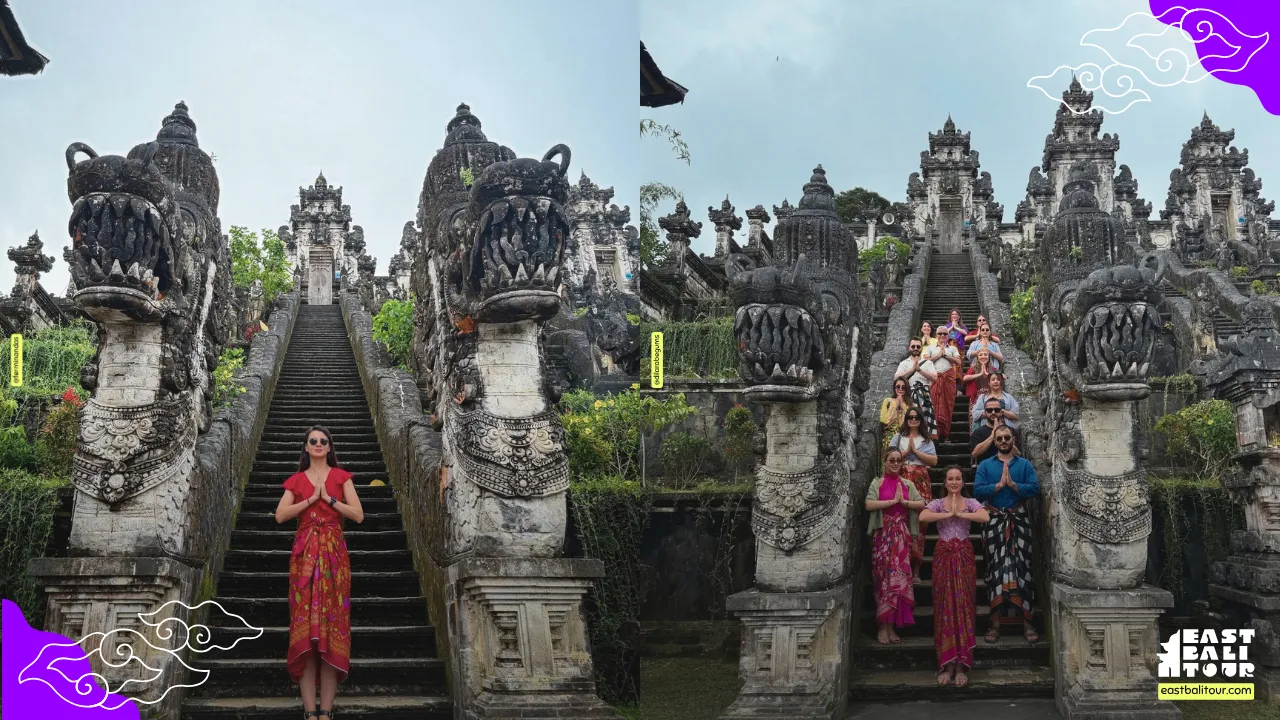
6. The Gates of Heaven and the mirror photo
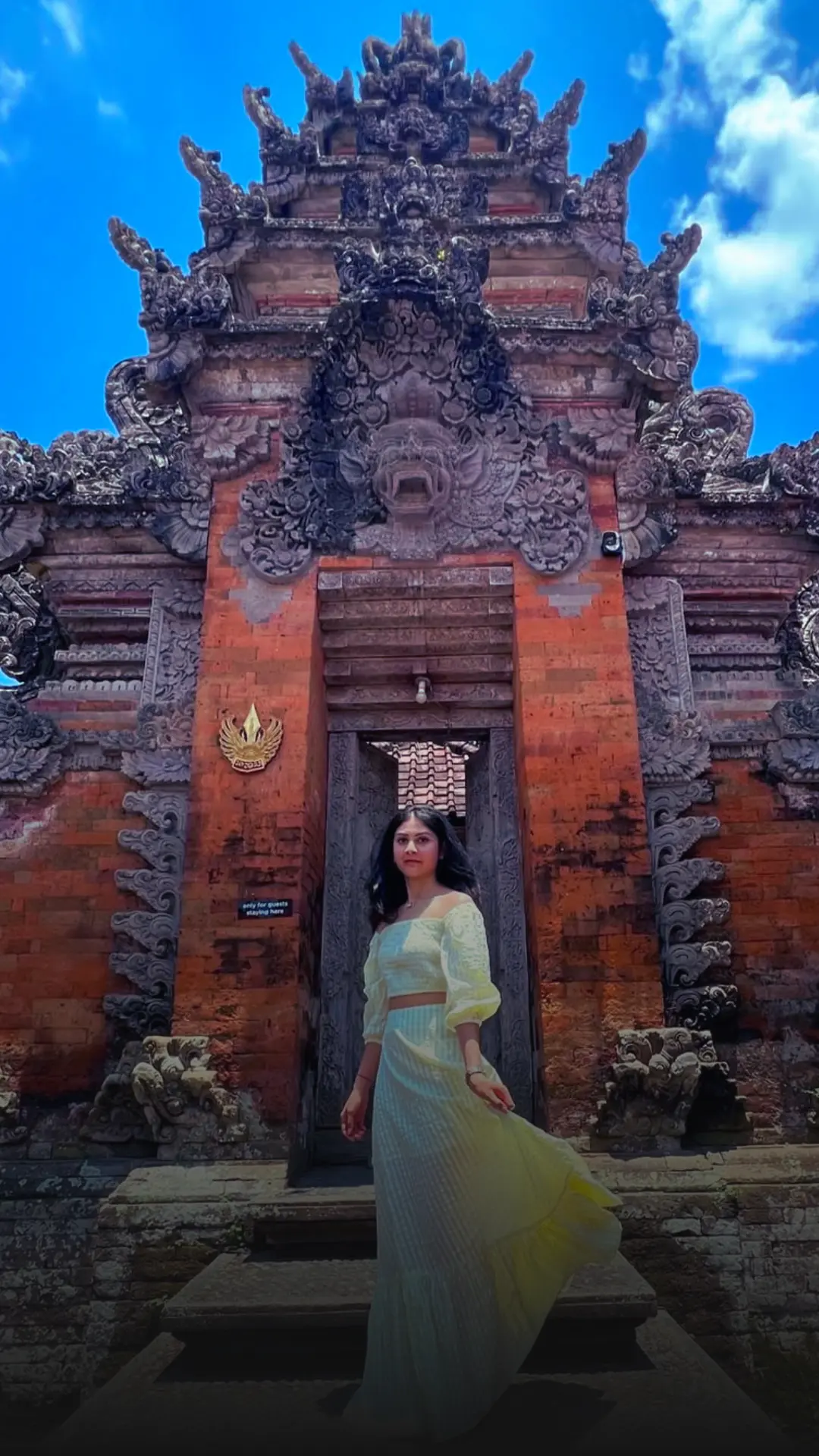
The gateway is a Candi Bentar, a split gate made from two matching vertical structures. Its central opening creates a sightline toward Mount Agung. The architecture marks a threshold between spaces, while the mountain view changes with cloud, haze, and light.
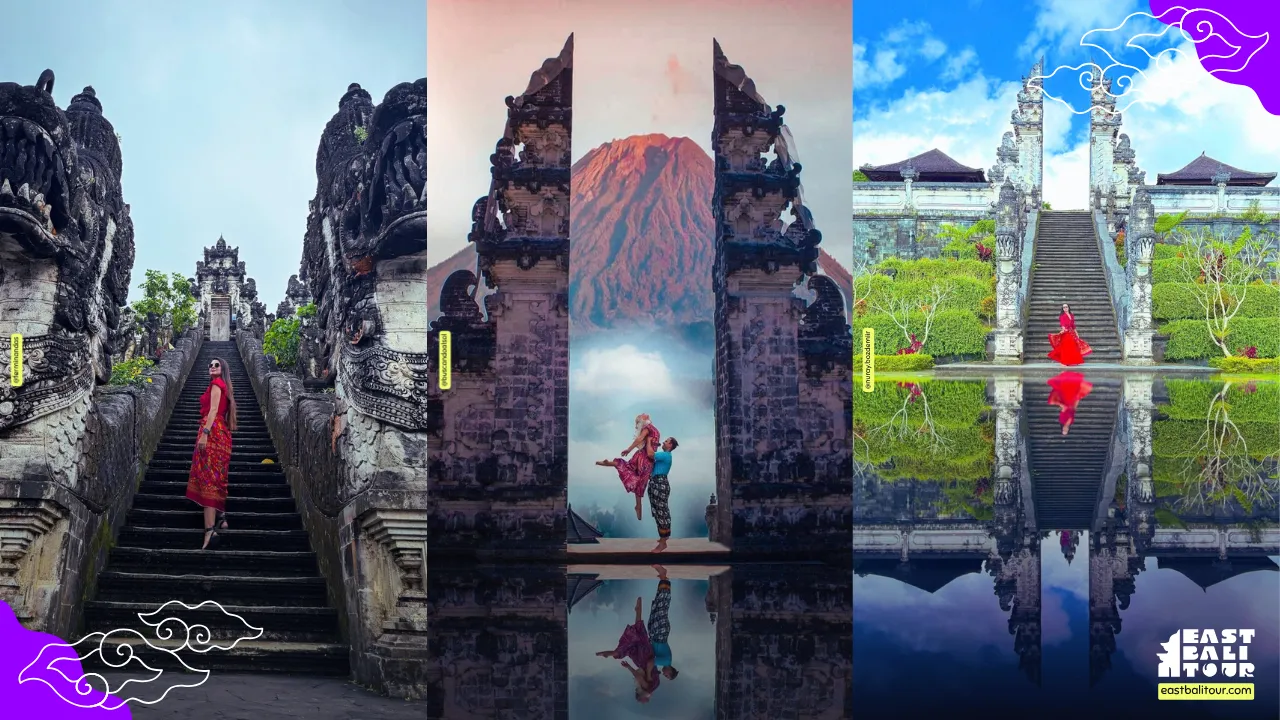
The reflective photograph uses a small angled mirror placed near the camera. It reflects the sky and part of the scene into the lower frame, making the image look as if it was taken beside a pool. There is no permanent reflecting pool beneath the gates. The local photo attendant usually positions the mirror and directs the pose.
Keep your phone or camera level and stand centrally between the gate halves. A solid color can separate the subject from the sky, but respectful coverage comes first. Prepare your camera before reaching the front of the queue. A charged battery, free storage, and a clean lens prevent delays.
Take ordinary photographs of the stonework, stairs, offerings, shadows, and vegetation too. Do not bring large reflective equipment or move the established mirror setup.
Mount Agung may appear as a clear cone, a partial silhouette, or not at all. Dry-season mornings, roughly April through October, can bring favorable conditions, but no season guarantees a clear mountain. Cloud and ceremonial activity remain possible throughout the year.
The best mirror trick is the one already used by the local attendant. Visitors should not create a private setup in the queue area because the established process protects access and keeps the line moving.
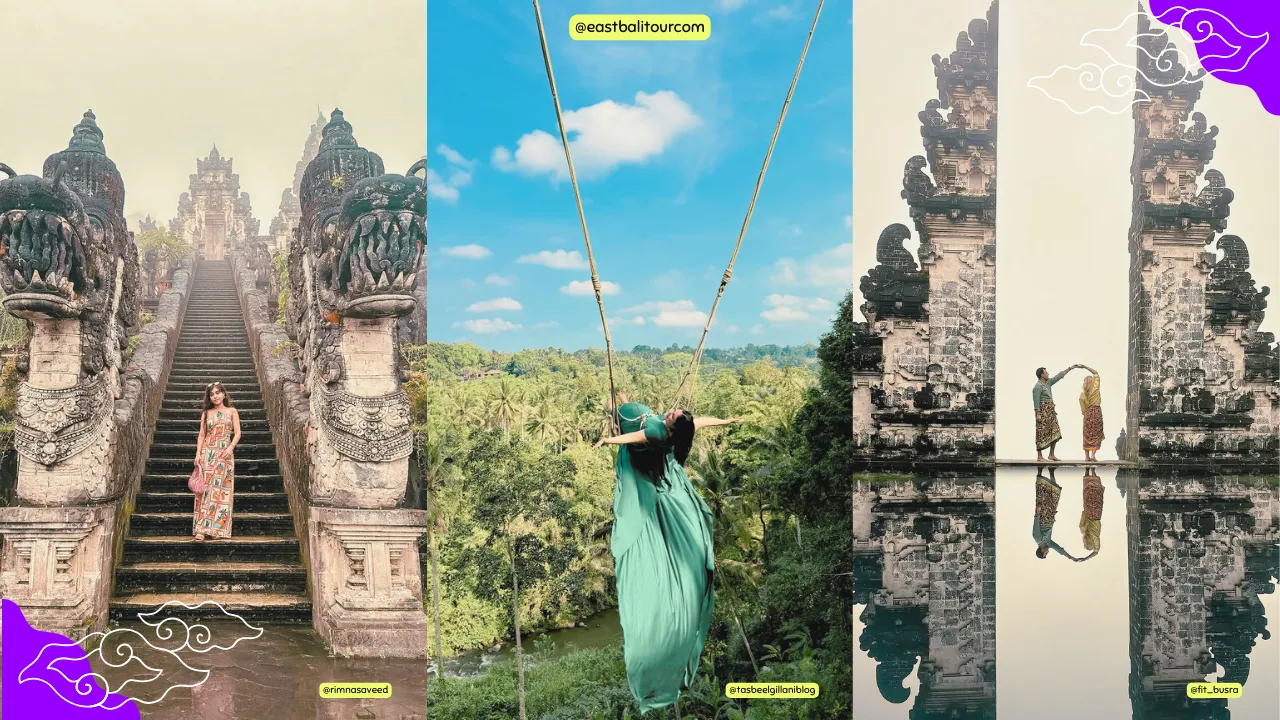
7. The seven-temple complex and full climb
Pura Penataran Agung is the lower and most accessible temple in the Lempuyang complex. Tradition places the temple among Bali’s Sad Kahyangan Jagad, the six principal directional temples associated with the protection of the island. The gate that appears in visitor photographs is one element of a larger sacred site.
The complex is commonly described as seven temples, with Pura Penataran Agung at the lower level and Pura Lempuyang Luhur at the summit. Names and descriptions of intermediate shrines vary in local explanations, but the route is a connected sacred ascent through forest, stairs, and additional prayer spaces.
The seven-temple tradition adds context to a Gates of Heaven visit. The lower photo area is the first major stop in a mountain pilgrimage that continues through forest, stairs, shrines, and changing views.
The complete climb is often described as about 1,700 steps or more. Treat that as an approximate planning figure, not a precise survey. The ascent takes several hours round trip for many visitors, depending on pace, heat, fitness, rest stops, and conditions. Carry water, food, sun protection, a charged phone, and shoes with good grip.
The summit route is a pilgrimage, not a quick extension of the photograph. Pura Lempuyang Luhur is the highest and most sacred temple associated with the complex. The upper route passes through additional shrines and more secluded mountain areas. There may be fewer facilities, changing weather, steeper sections, and stronger expectations of quiet conduct.
Visitors with limited mobility, health concerns, young children, or a tight schedule can remain at the lower temple. Confirm upper-route access locally, especially during ceremonies or poor weather.
8. Facilities and what to bring
Facilities are more limited than those at a city attraction. Basic parking, shuttle points, toilets, and small local stalls may be available around the lower approach, but availability and opening times can vary. Food and drink options become less dependable farther along the climb.
Beyond the lower approach, toilets, food, water, and payment facilities should not be assumed, and mobile coverage can be inconsistent. Water should be carried before entering the ascent, and small cash is useful for donations, shuttle arrangements, parking, and tips.
Visitors attempting the full climb should bring water, light snacks, sun protection, a charged phone, and footwear with reliable grip. Those visiting only the lower temple still benefit from a small day pack and a spare layer. Keep rubbish with you until you find a proper bin.
9. Planning an East Bali route
Lempuyang is a practical first stop on a Karangasem route. The distance from southern resorts makes a single-site visit a long drive, while nearby attractions make for a more balanced route. Tirta Gangga and the coast near Amed provide different settings after the mountain temple, but the queue and shuttle can make the day longer than expected.
The Bali attractions in East Bali hub can help compare nearby stops, while the East Bali day trip itinerary gives a broader route framework.
Tirta Gangga Royal Water Palace is approximately 30 minutes away by road. Its pools, carved stone features, gardens, and koi give a different setting after the mountain temple. Amed lies along the east coast and is suitable for travelers extending the route toward snorkeling or a coastal overnight stay. The Amed snorkeling guide helps compare sea conditions, access points, and planning considerations before adding a beach activity.
Virgin Beach, also known as Pasir Putih, provides a quieter coastal stop with sand, shade, and local food stalls. Ujung Water Palace is another Karangasem royal garden, while Besakih can suit a longer religious and mountain-focused route. These choices should be selected according to opening conditions and available daylight.
Travelers starting in Ubud can combine the temple with central Bali landmarks only if the schedule allows. The Ubud Palace attraction page, Tegallalang Rice Terrace guide, and Sacred Monkey Forest Sanctuary guide are better suited to a separate Ubud day because adding all of them after Lempuyang creates excessive road time.
Waterfall stops may be less logical after an early mountain departure, but visitors staying near Ubud can compare options through the Tegenungan Waterfall guide.
A longer Bali stay can be planned with the 7-day Bali itinerary. Keep the schedule flexible. A ceremony, a high queue number, rain, or a hidden Mount Agung may change the best next stop.
10. Why use a private East Bali tour?
A private tour helps with the practical parts of Lempuyang: an early pickup from Ubud, Seminyak, Kuta, or elsewhere in South Bali, mountain-road navigation, waiting time, and a route that can change if the queue is unusually long. It does not remove the mandatory shuttle, shorten the temple queue, or guarantee a Mount Agung photograph.
The value is practical rather than exclusive. A private vehicle does not remove the mandatory shuttle or guarantee a mirror-photo queue position. It can, however, reduce uncertainty around parking, onward transport, road navigation, and the timing of nearby stops.
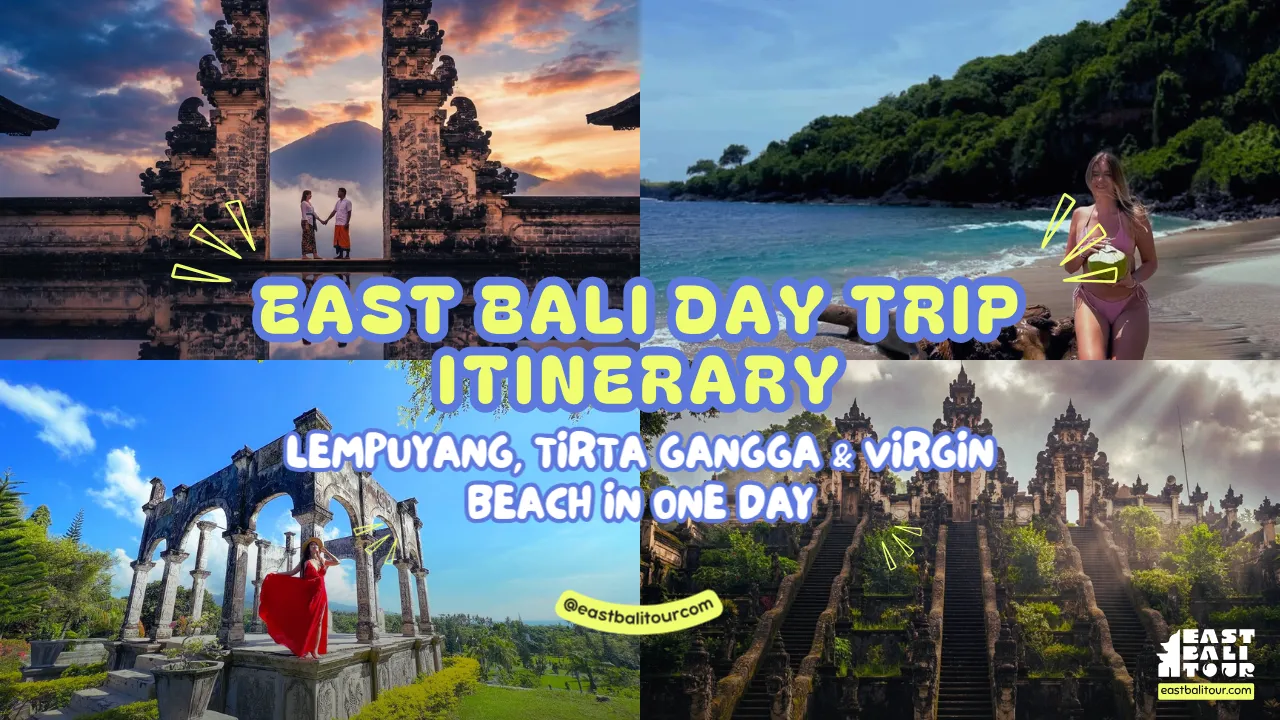
An East Bali Tour route can pair the lower Lempuyang temple with Tirta Gangga, Virgin Beach, Amed, or another suitable attraction. The sequence should account for the requested pickup area, opening conditions, ceremony restrictions, weather, and the time reserved for the queue.
East Bali Tour has private services with an English-speaking driver or guide, flexible itineraries, airport transfers, and custom tours. Stops and timing can be adjusted during the day. The company describes free cancellation with 24 hours’ notice, prices confirmed before the trip begins, and no hidden charges. Booking support is available through WhatsApp, with same-day booking possible when availability allows.
The relevant Discover East Bali tour combines Lempuyang and Tirta Gangga. Travelers can also compare Affordable Bali tours, browse Bali tour ideas, or review the main Bali tour options. Ask before booking whether the quote covers the driver, fuel, parking, and waiting time. Entry, donations, and shuttle costs may remain separate local payments and should be confirmed on arrival.
The official TripAdvisor Lempuyang listing can provide recent visitor perspectives, but reviews should be read alongside local instructions because conditions change. The Google Maps location for Pura Lempuyang Luhur is useful for checking the general mountain position and planning road distances.
Final advice
Plan Lempuyang as a living temple visit with a photo opportunity, not as a guaranteed studio shot. Arriving around opening, dressing modestly, carrying small cash and water, and allowing schedule flexibility create a smoother visit. A private East Bali route can connect Lempuyang with Tirta Gangga, Virgin Beach, Amed, or another nearby attraction without treating the temple as a guaranteed photo stop.
The gates are most rewarding when the photograph is placed in its setting among architecture, mountain scenery, pilgrimage, and living religious practice. Respect for those elements helps preserve access for future travelers and worshippers.